


Anticoagulant Reversal Strategies in the Emergency Department Setting: Recommendations of a Multidisciplinary Expert Panel
- PMID: 31732375
- PMCID: PMC7393606
- DOI: 10.1016/j.annemergmed.2019.09.001
Anticoagulant Reversal Strategies in the Emergency Department Setting: Recommendations of a Multidisciplinary Expert Panel
Abstract
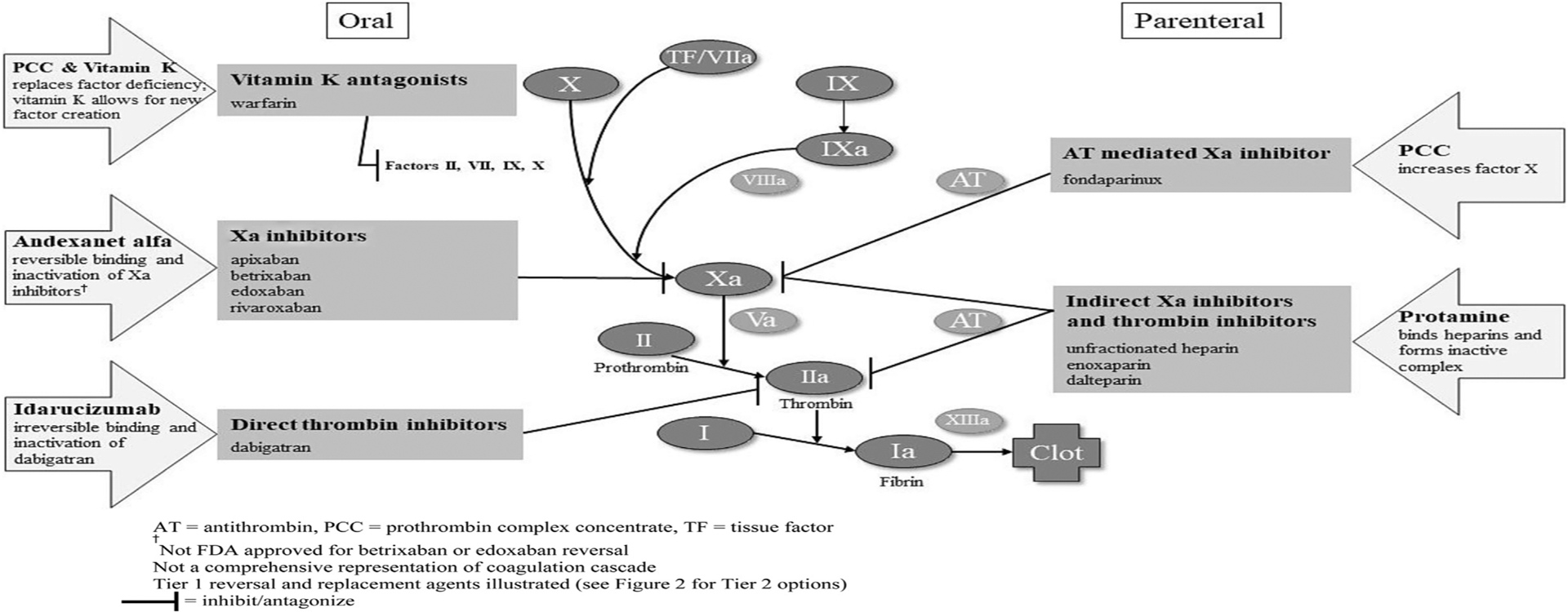
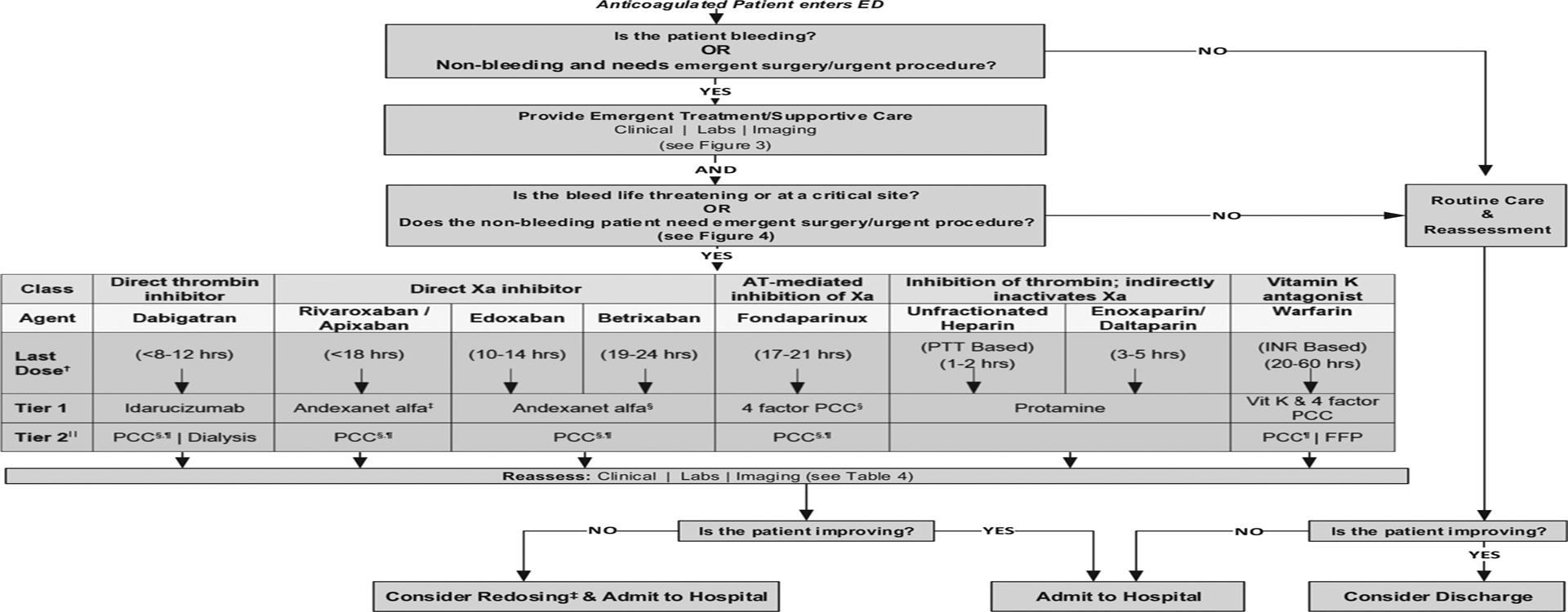
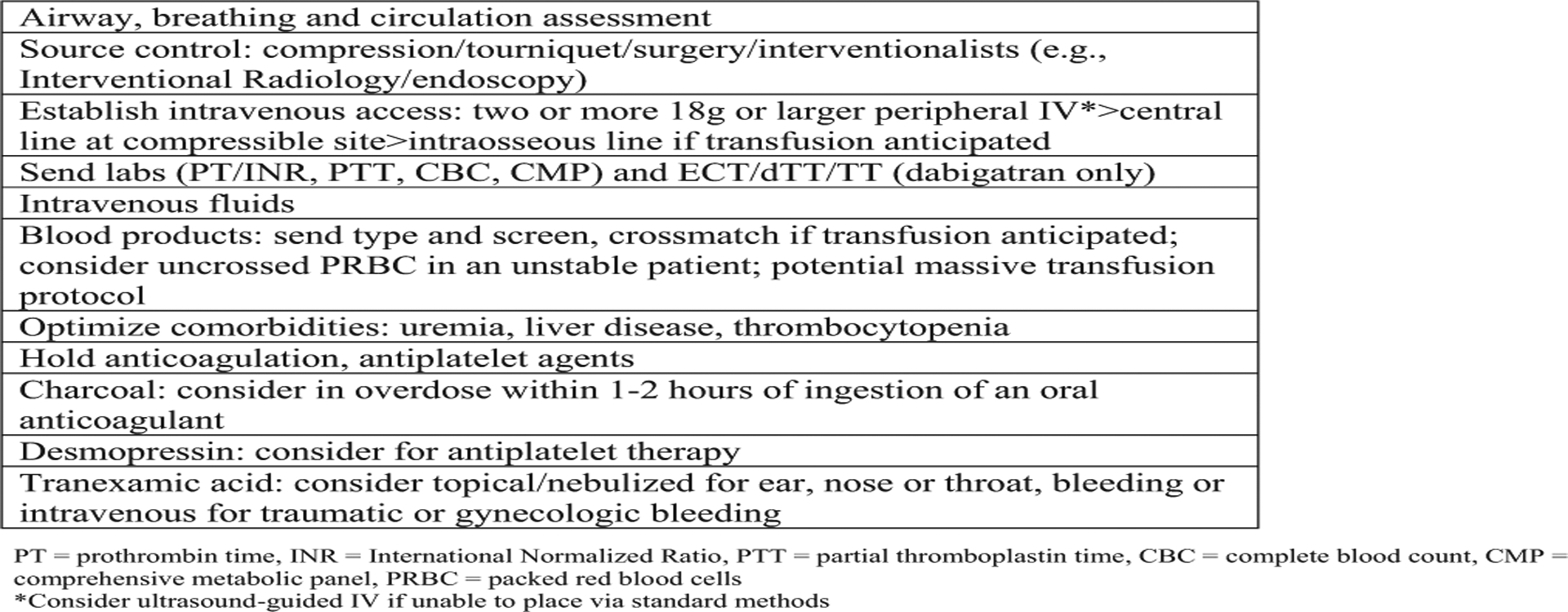
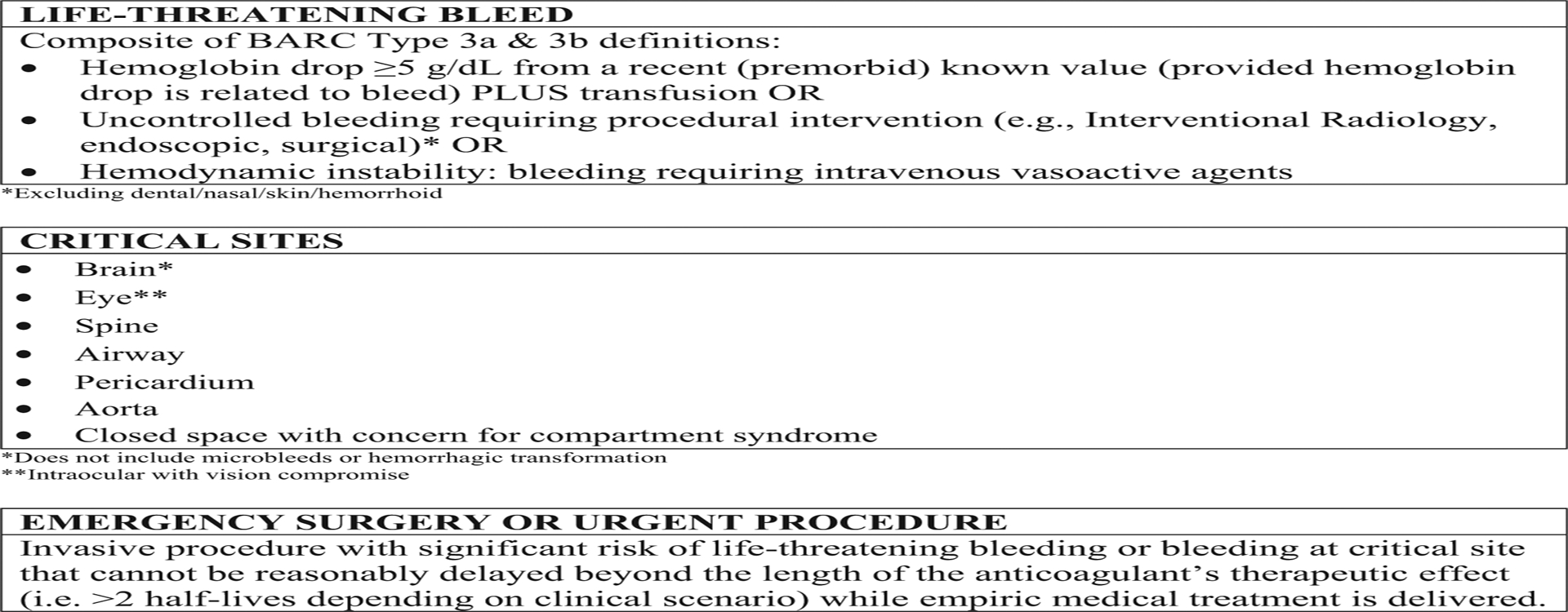
Bleeding is the most common complication of anticoagulant use. The evaluation and management of the bleeding patient is a core competency of emergency medicine. As the prevalence of patients receiving anticoagulant agents and variety of anticoagulants with different mechanisms of action, pharmacokinetics, indications, and corresponding reversal agents increase, physicians and other clinicians working in the emergency department require a current and nuanced understanding of how best to assess, treat, and reverse anticoagulated patients. In this project, we convened an expert panel to create a consensus decision tree and framework for assessment of the bleeding patient receiving an anticoagulant, as well as use of anticoagulant reversal or coagulation factor replacement, and to address controversies and gaps relevant to this topic. To support decision tree interpretation, the panel also reached agreement on key definitions of life-threatening bleeding, bleeding at a critical site, and emergency surgery or urgent invasive procedure. To reach consensus recommendations, we used a structured literature review and a modified Delphi technique by an expert panel of academic and community physicians with training in emergency medicine, cardiology, hematology, internal medicine/thrombology, pharmacology, toxicology, transfusion medicine and hemostasis, neurology, and surgery, and by other key stakeholder groups.
Copyright © 2019 American College of Emergency Physicians. Published by Elsevier Inc. All rights reserved.
Figures
Comment in
-
Emerging Treatment Options for Direct Oral Anticoagulant-Related Bleeding.Ann Emerg Med. 2020 Oct;76(4):486-488. doi: 10.1016/j.annemergmed.2020.05.009. Epub 2020 Jul 9. Ann Emerg Med. 2020. PMID: 32653330 No abstract available.
References
-
- Institute for Safe Medication Practices. QuarterWatch™ (2016 Annual Report) Part II: Oral Anticoagulants—The Nation’s Top Risk of Acute Injury from Drugs. July 27, 2017. Available at: https://www.ismp.org/resources/quarterwatchtm-2016-annual-report-part-ii.... Accessed November 6, 2019.
-
- Weitz JI, Lensing AWA, Prins MH, et al. Rivaroxaban or aspirin for extended treatment of venous thromboembolism. N Engl J Med. 2017;376:1211–1222. - PubMed
MeSH terms
Substances
Grants and funding
LinkOut - more resources
Full Text Sources
Medical
Research Materials
