


Open-Angle Glaucoma: Burden of Illness, Current Therapies, and the Management of Nocturnal IOP Variation
- PMID: 31732872
- PMCID: PMC7054505
- DOI: 10.1007/s40123-019-00222-z
Open-Angle Glaucoma: Burden of Illness, Current Therapies, and the Management of Nocturnal IOP Variation
Abstract
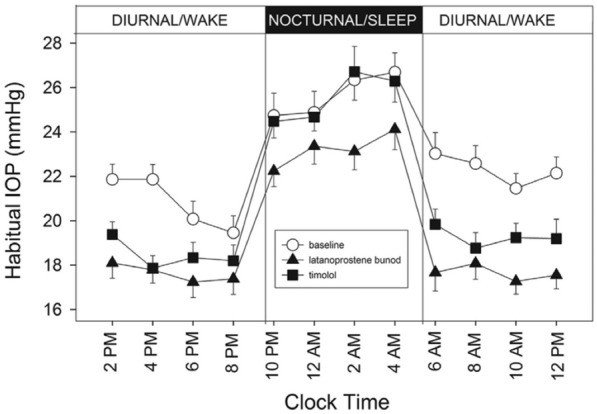
Glaucoma is a chronic, debilitating disease and a leading cause of global blindness. Despite treatment efforts, 10% of patients demonstrate loss of vision. In the US, > 80% of glaucoma cases are classified as open-angle glaucoma (OAG), with primary open-angle (POAG) being the most common. Although there has been tremendous innovation in the surgical treatment of glaucoma as of late, two clinical variants of OAG, normal-tension glaucoma (NTG) and severe POAG, are especially challenging for providers because patients with access to care and excellent treatment options may progress despite achieving a "target" intraocular pressure value. Additionally, recent research has highlighted the importance of nocturnal IOP control in avoiding glaucomatous disease progression. There remains an unmet need for new treatment options that can effectively treat NTG and severe POAG patients, irrespective of baseline IOP, while overcoming adherence limitations of current pharmacotherapies, demonstrating a robust safety profile, and more effectively controlling nocturnal IOP.Funding The Rapid Service Fees were funded by the corresponding author, Tanner J. Ferguson, MD.
Keywords: Glaucoma treatment; Normal-tension glaucoma; OAG; Open-angle glaucoma; Pharmacotherapy; Surgical treatment of glaucoma.
Figures
References
LinkOut - more resources
Full Text Sources
Other Literature Sources
