


Bee pollen and propolis improve neuroinflammation and dysbiosis induced by propionic acid, a short chain fatty acid in a rodent model of autism
- PMID: 31733650
- PMCID: PMC6858724
- DOI: 10.1186/s12944-019-1150-0
Bee pollen and propolis improve neuroinflammation and dysbiosis induced by propionic acid, a short chain fatty acid in a rodent model of autism
Erratum in
-
Correction to: Bee pollen and propolis improve neuroinflammation and dysbiosis induced by propionic acid, a short chain fatty acid in a rodent model of autism.Lipids Health Dis. 2021 Jul 4;20(1):61. doi: 10.1186/s12944-021-01484-y. Lipids Health Dis. 2021. PMID: 34218804 Free PMC article. No abstract available.
Abstract
Background: Neuroinflammation plays a major role in the pathogenesis of autism because the cytokine levels are typically disturbed in the brain in autistic patients. Prebiotics-rich diet maintains the healthy gut microbiota and hence can regulate the neuroinflammation indirectly. The study aimed to investigate the role of bee pollen and propolis in ameliorating neuroinflammation, including cytokine levels, in an animal model of autism.
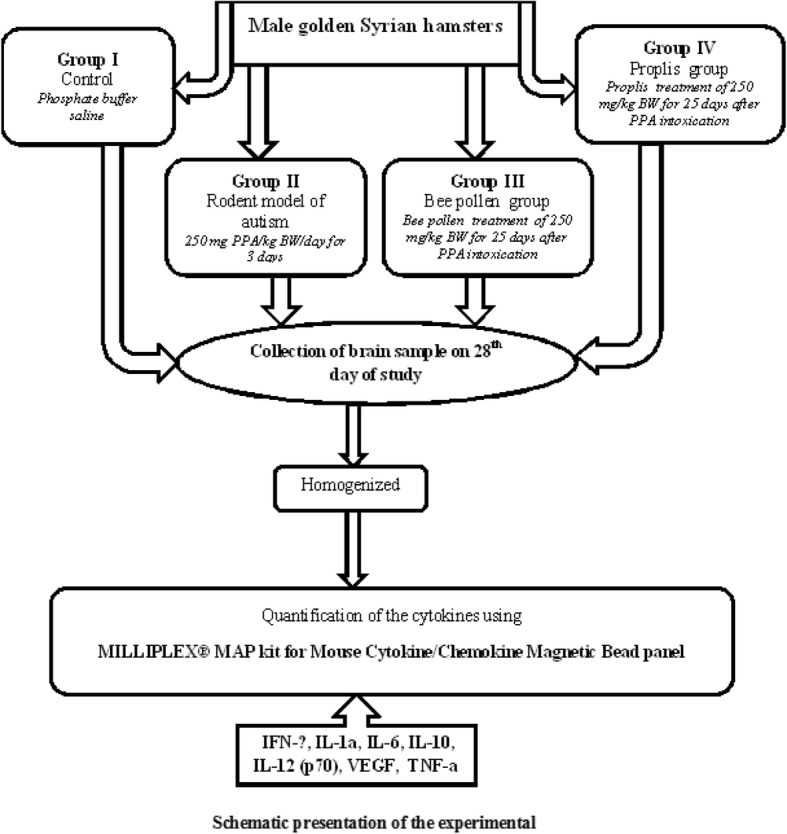
Methods: Hamsters were classified as four groups: Group I, control; Group II, autistic model/animals treated with 250 mg propionic acid (PPA)/kg body weight (BW)/day for 3 days; Group III, animals treated with bee pollen at a dose of 250 mg/kg BW/day for 4 weeks; and Group IV, animals treated with propolis at a dose of 250 mg/kg BW/day for 4 weeks. Neuroinflammatory responses were evaluated using the levels of interferon γ (IFN-γ), interleukin 1 alpha (IL-1α), IL-6, IL-10, IL-12 (p70), vascular endothelial growth factor (VEGF), and tumor necrosis factor α (TNFα).
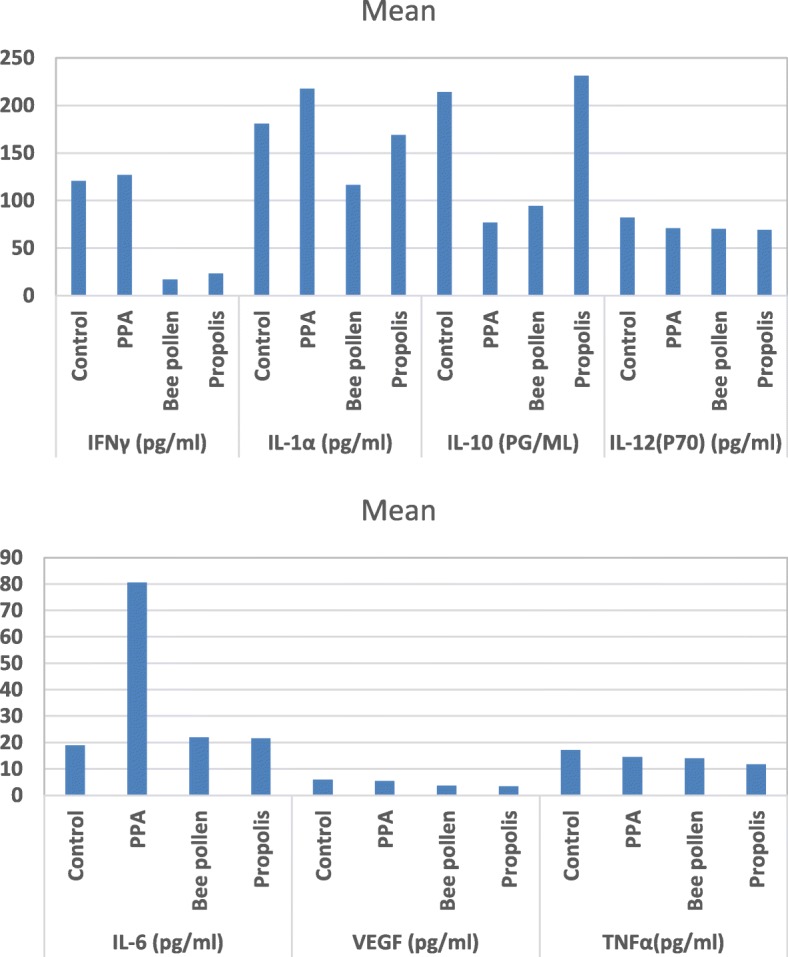
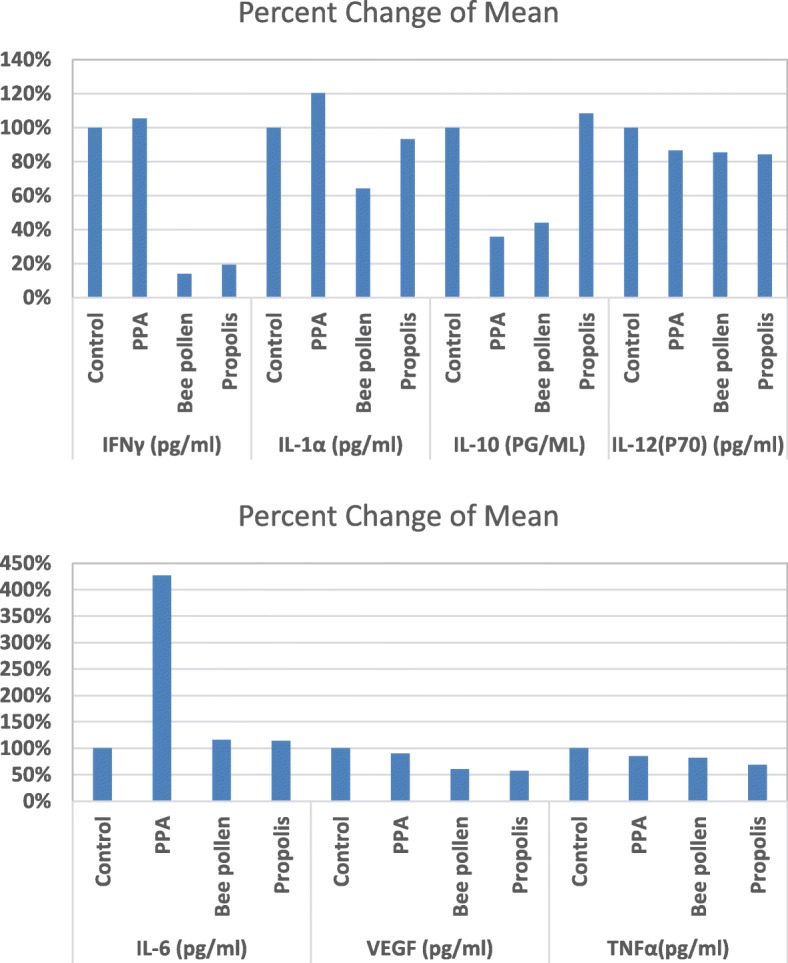
Results: Significant decrease of IL-10 (P<0.026), VEGF (P<0.005), and TNFα(P<0.005) levels and increased IL-1α (P<0.032), IL-6(P<0.028), and IFN-γ (P<0.013) levels were observed between the four studied groups. The neurotoxic effects of PPA was clearly presented as much higher IL-6, as pro-inflammatory cytokine (P<0.05), concomitant with much lower IL-10, as anti-inflammatory cytokine(P<0.015) compared to controls. Both bee pollen and propolis were effective in ameliorating the neurotoxic effects of PPA demonstrating non-significant changes of IL-6 and IL-10 when compared to control healthy hamsters.
Conclusions: Our findings indicate that both bee pollen and propolis protect against neuroinflammation in the rodent model of autism. However, further studies are needed to investigate the clinical benefits of prebiotics-rich diet in neurodevelopmental disorders, such as autism.
Keywords: Autism; Cytokines; Neuroinflammation; Propionic acid.
Conflict of interest statement
The authors declare that they have no competing interests.
Figures
References
-
- Hrabovska SV, Salyha YT. Animal models of autism spectrum disorders and behavioral techniques of their examination. Neurophysiology. 2016;48:380–388. doi: 10.1007/s11062-017-9613-2. - DOI
-
- Al-Lahham SH, Peppelenbosch MP, Rolfson H, Vonk RJ, Venema K. Biological effects of propionic acid in humans; metabolism, potential applications and underlying mechanisms. Biochim Biophys Acta. 1801;2010:1175–1183. - PubMed
MeSH terms
Substances
LinkOut - more resources
Full Text Sources
