


Lubricin as a Therapeutic and Potential Biomarker in Sepsis
- PMID: 31733682
- PMCID: PMC7069234
- DOI: 10.1016/j.ccc.2019.08.005
Lubricin as a Therapeutic and Potential Biomarker in Sepsis
Abstract
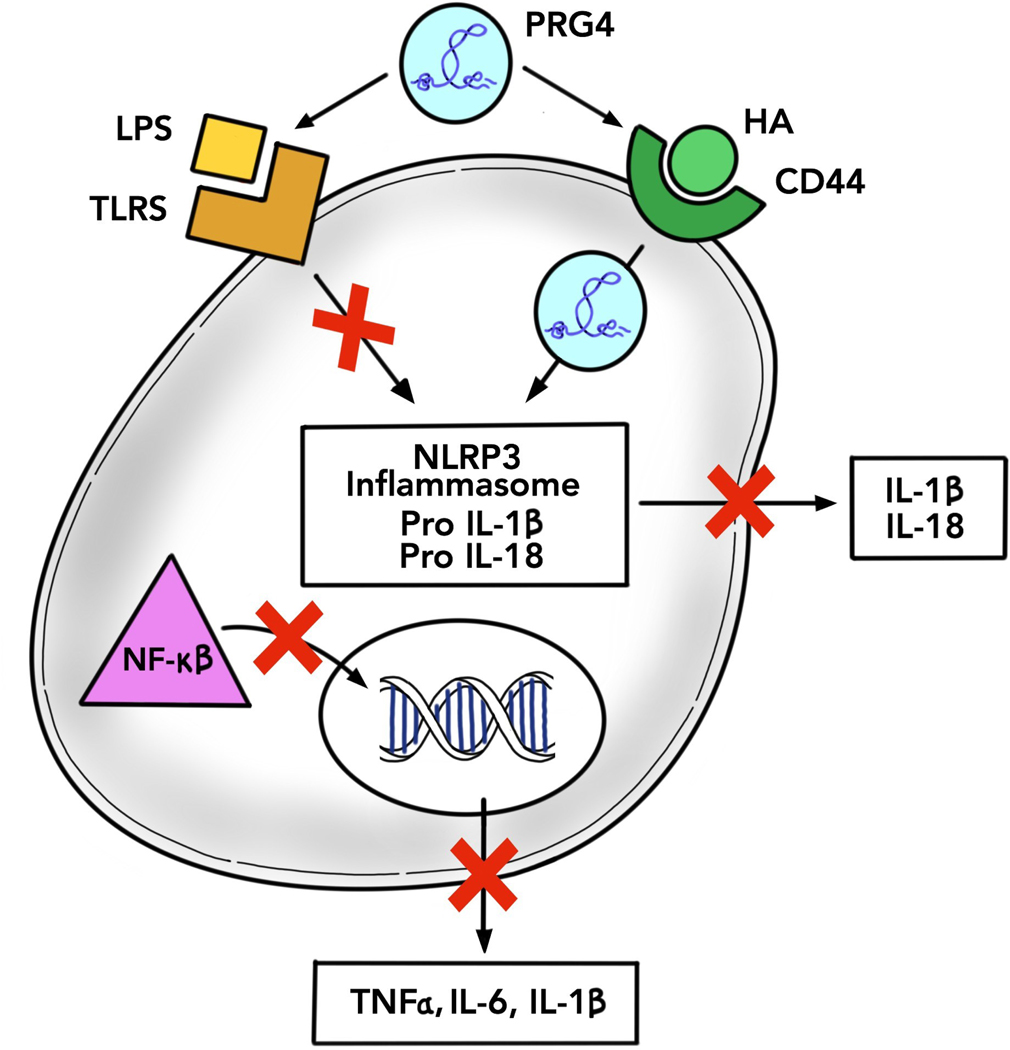
Proteoglycan 4 (or lubricin), a mucin-like glycoprotein, was originally classified as a lubricating substance within diarthrodial joints. More recently, lubricin has been found in other tissues and has been implicated in 2 inflammatory pathways within the cell, via the Toll-like receptors (TLRs) and CD44. Lubricin is an antagonist of TLR2 and TLR4, and appears to enter cells via the CD44 receptor. Because of lubricin's action on these receptors, downstream processes of inflammation are halted, thereby preventing release of cytokines (a hallmark of inflammation and sepsis) from the cell, indicating lubricin's role as a biomarker and possible therapeutic for sepsis.
Keywords: CD44; Inflammasome; Inflammation; Lubricin; NF-κB; PRG4; Toll-like receptors.
Copyright © 2019 Elsevier Inc. All rights reserved.
Conflict of interest statement
Holly Richendrfer has no conflicts of interest
Figures
References
-
- Swann DA, Slayter HS, Silver FH. The molecular structure of lubricating glycoprotein-I, the boundary lubricant for articular cartilage. J Biol Chem. 1981;256(11):5921–5. - PubMed
-
- Swann DA, Hendren RB, Radin EL, et al. The lubricating activity of synovial fluid glycoproteins. Arthritis Rheum. 1981;24(1):22–30. - PubMed
-
- Jay GD, Britt DE, Cha CJ. Lubricin is a product of megakaryocyte stimulating factor gene expression by human synovial fibroblasts. J Rheumatol. 2000;27(3):594–600. - PubMed
Publication types
MeSH terms
Substances
Grants and funding
LinkOut - more resources
Full Text Sources
Medical
Miscellaneous
