


Towards a new taxonomy of primate vocal production learning
- PMID: 31735147
- PMCID: PMC6895554
- DOI: 10.1098/rstb.2019.0045
Towards a new taxonomy of primate vocal production learning
Abstract
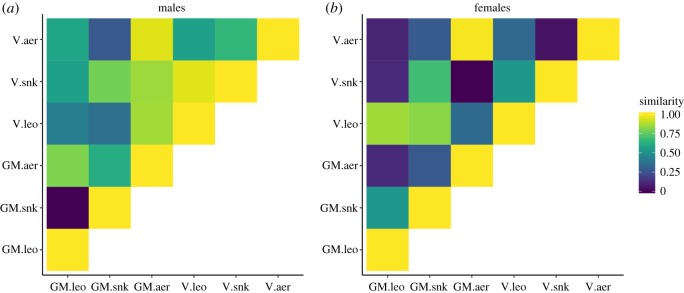
The extent to which vocal learning can be found in nonhuman primates is key to reconstructing the evolution of speech. Regarding the adjustment of vocal output in relation to auditory experience (vocal production learning in the narrow sense), effects on the ontogenetic trajectory of vocal development as well as adjustment to group-specific call features have been found. Yet, a comparison of the vocalizations of different primate genera revealed striking similarities in the structure of calls and repertoires in different species of the same genus, indicating that the structure of nonhuman primate vocalizations is highly conserved. Thus, modifications in relation to experience only appear to be possible within relatively tight species-specific constraints. By contrast, comprehension learning may be extremely rapid and open-ended. In conjunction, these findings corroborate the idea of an ancestral independence of vocal production and auditory comprehension learning. To overcome the futile debate about whether or not vocal production learning can be found in nonhuman primates, we suggest putting the focus on the different mechanisms that may mediate the adjustment of vocal output in response to experience; these mechanisms may include auditory facilitation and learning from success. This article is part of the theme issue 'What can animal communication teach us about human language?'
Keywords: Chlorocebus; Papio; alarm calls; learning; speech evolution; vocal production.
Conflict of interest statement
We declare we have no competing interests.
Figures


References
-
- Seyfarth RM, Cheney DL. 1997. Some general features of vocal development in nonhuman primates. In Social influences on vocal development (eds Snowdon CT, Hausberger M), pp. 249–273. Cambridge, UK: Cambridge University Press.
-
- Fischer J, Hage SR. 2019. Primate vocalization as a model for human speech: scopes and limits. In Human language: from genes and brains to behavior (ed. Hagoort P.), pp. 639–656. Cambridge, MA: MIT Press.
-
- Hammerschmidt K, Freudenstein T, Jürgens U. 2001. Vocal development in squirrel monkeys. Behaviour 138, 1179–1204. (10.1163/156853901753287190) - DOI
Publication types
MeSH terms
LinkOut - more resources
Full Text Sources
Miscellaneous