


Endothelial cells and organ function: applications and implications of understanding unique and reciprocal remodelling
- PMID: 31736207
- PMCID: PMC7155104
- DOI: 10.1111/febs.15143
Endothelial cells and organ function: applications and implications of understanding unique and reciprocal remodelling
Abstract
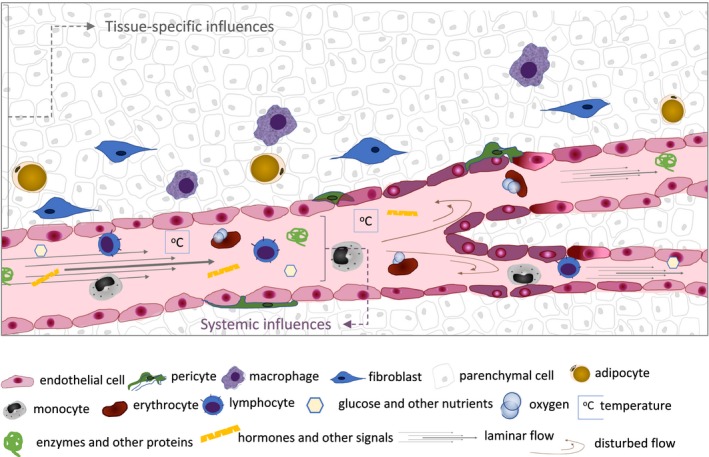
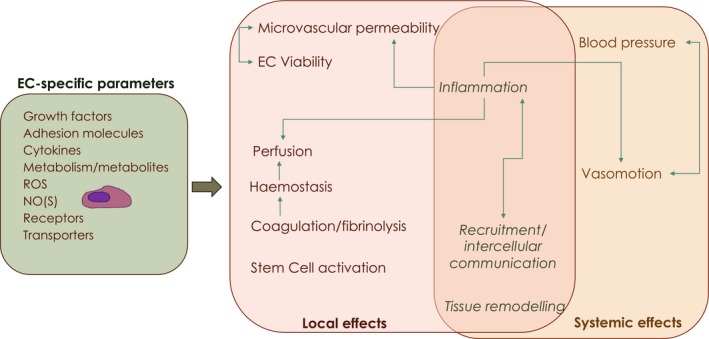
The microvasculature is a heterogeneous, dynamic and versatile component of the systemic circulation, with a unique ability to locally self-regulate and to respond to organ demand and environmental stimuli. Endothelial cells from different organs display considerable variation, but it is currently unclear to what extent functional properties of organ-specific endothelial cells are intrinsic, acquired and/or reprogrammable. Vascular function is a fundamental pillar of homeostasis, and dysfunction results in systemic consequences for the organism. Additionally, vascular failure can occur downstream of organ disease or environmental stress, often driving an exacerbation of symptoms and pathologies originally independent of the local circulation. The understanding of the molecular mechanisms underlying endothelial physiology and metabolism holds the promise to inform and improve diagnosis, prognosis and treatment options for a myriad of conditions as unrelated as cancer, neurodegeneration or pulmonary hypertension, and likely everything in between, if we consider that also treatments for such conditions are primarily distributed via the bloodstream. However, studying endothelial function has its challenges: the origin, isolation, culture conditions and preconditioning stimuli make this an extremely variable cell type to study and difficult to source. Animal models exist but are neither trivial to generate, nor necessarily adequately translatable to human disease. In this article, we aim to illustrate the breadth of microvascular functions in different environments, highlighting current and pioneering studies that have advanced our insight into the importance of the integrity of this tissue, as well as the limitations posed by its heterogeneity and plasticity.
Keywords: endothelial cell; metabolic reprogramming; microvasculature; organ-specific; tissue remodelling.
© 2019 The Authors. The FEBS Journal published by John Wiley & Sons Ltd on behalf of Federation of European Biochemical Societies.
Conflict of interest statement
The authors declare no conflict of interest.
Figures
References
-
- Cines DB, Pollak ES, Buck CA, Loscalzo J, Zimmerman GA, McEver RP, Pober JS, Wick TM, Konkle BA, Schwartz BS et al (1998) Endothelial cells in physiology and in the pathophysiology of vascular disorders. Blood 91, 3527–3561. - PubMed
-
- Michiels C (2003) Endothelial cell functions. J Cell Physiol 196, 430–443. - PubMed
-
- Clarenbach CF, Thurnheer R & Kohler M (2012) Vascular dysfunction in chronic obstructive pulmonary disease: current evidence and perspectives. Expert Rev Respir Med 6, 37–43. - PubMed
Publication types
MeSH terms
Grants and funding
LinkOut - more resources
Full Text Sources
