EGFR T790M detection rate in lung adenocarcinomas at baseline using droplet digital PCR and validation by ultra-deep next generation sequencing
- PMID: 31737495
- PMCID: PMC6835109
- DOI: 10.21037/tlcr.2019.09.18
EGFR T790M detection rate in lung adenocarcinomas at baseline using droplet digital PCR and validation by ultra-deep next generation sequencing
Abstract
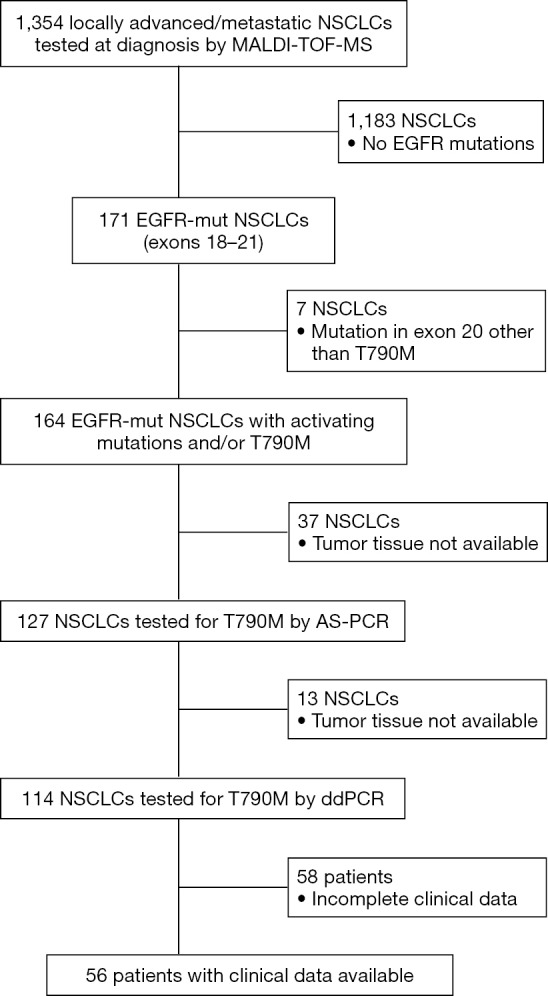
Background: Routine testing of baseline EGFR T790M mutation may have important clinical impact but many discordant data have been reported regarding the diagnostic, prognostic and predictive role of this marker. In this study we aimed to assess T790M frequency in 164 untreated EGFR-mutated NSCLCs using methods with different sensitivity as well as to analyze the relationship between baseline T790M mutation status, patient's clinicopathologic features and tyrosine kinase inhibitors (TKI) treatment outcomes.
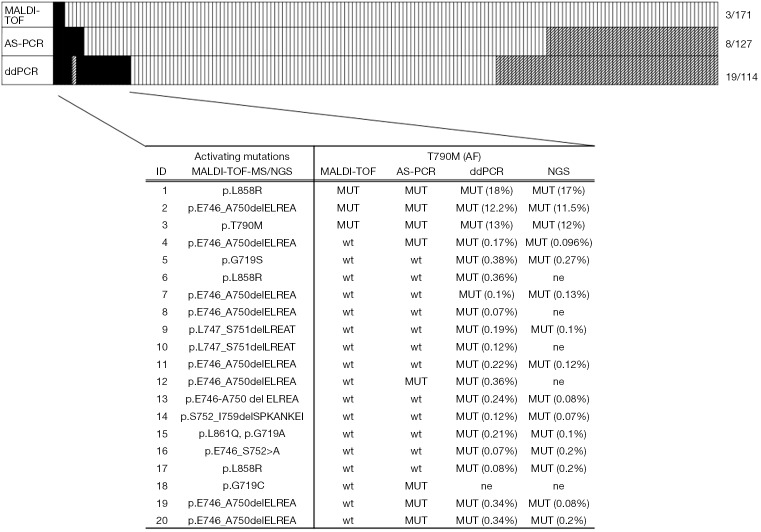
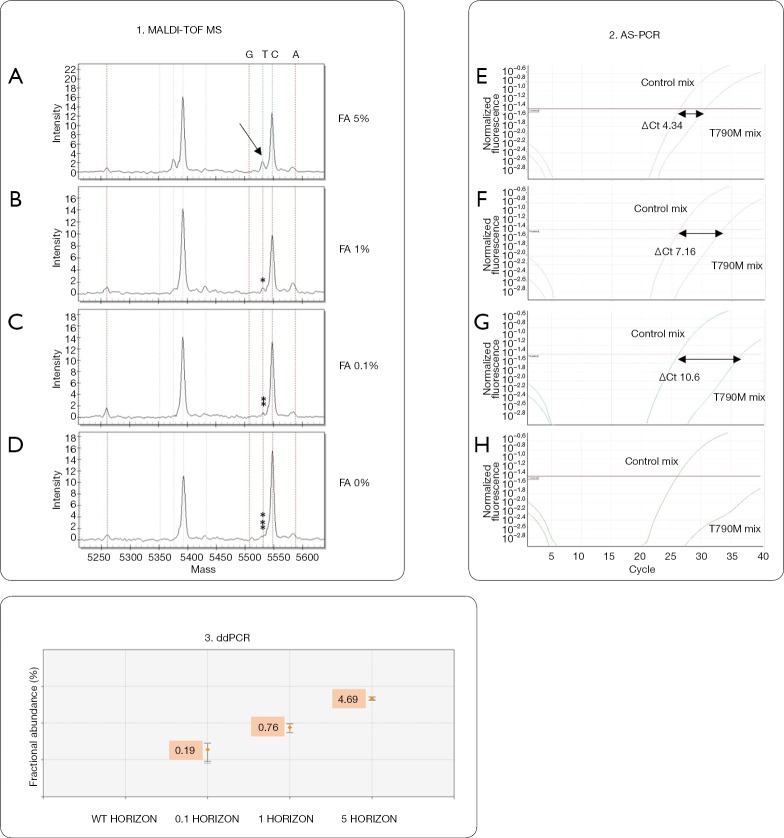
Methods: We compared the diagnostic performance, sensitivity and specificity of three methods, namely MALDI-TOF mass spectrometry (MS), Allele-Specific Real Time PCR (AS-PCR), droplet digital PCR (ddPCR). Ultra-deep next generation sequencing (NGS) validation of T790M-mutant NSCLCs was performed using SiRe® panel.
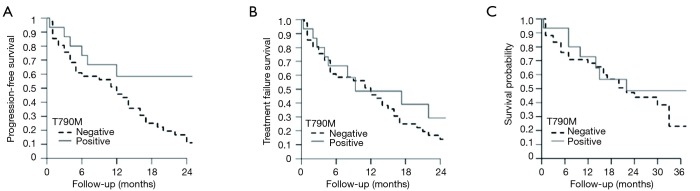
Results: Baseline T790M occurred in 17% of the tumors. Intermediately sensitive techniques such as MALDI-TOF MS (detection limit of T790M ≥5%) allow to detect T790M in 2% of cases exhibiting mutant-allele fractions ranging from 11.5% to 17%. Median overall survival (OS) in these patients was poor (7.3 months) and progression free survival (PFS) was of 3.3 months in patients treated with a 1st generation EGFR TKI. The remaining T790M-positive cases showed very low mutant-allele fractions ranging from 0.07% to 0.38% and required highly sensitive methods such as ddPCR and NGS to be identified. All these cases showed a concurrent sensitizing EGFR mutation (mainly exon 19 deletion), and clinicopathological features similar to those observed in EGFR mutant cancers. Median OS of these patients was 27 months while median PFS after TKI treatment was 20 months.
Conclusions: Routine test of baseline EGFR T790M may have an important role in the prediction to EGFR TKI therapy response and should be performed using highly sensitive and quantitative methods, such as ddPCR and NGS, in order to reliably distinguish NSCLCs with high or very low T790M mutant-allele fraction.
Keywords: EGFR T790M mutation; MALDI-TOF mass spectrometry; droplet digital PCR (ddPCR); real time quantitative PCR (AS-PCR); ultra-deep next generation sequencing (NGS).
2019 Translational Lung Cancer Research. All rights reserved.
Conflict of interest statement
Conflicts of Interest: The authors have no conflicts of interest to declare.
Figures
Comment in
-
From precision medicine to imprecision medicine through limited diagnostic ability to detect low allelic frequency mutations.Transl Lung Cancer Res. 2020 Apr;9(2):180-183. doi: 10.21037/tlcr.2020.03.07. Transl Lung Cancer Res. 2020. PMID: 32420057 Free PMC article. No abstract available.
References
LinkOut - more resources
Full Text Sources
Research Materials
Miscellaneous