


Psychological burden in family caregivers of patients with advanced cancer at initiation of specialist inpatient palliative care
- PMID: 31739802
- PMCID: PMC6862724
- DOI: 10.1186/s12904-019-0469-7
Psychological burden in family caregivers of patients with advanced cancer at initiation of specialist inpatient palliative care
Abstract
Background: This study prospectively evaluated distress, depressive and anxiety symptoms as well as associated factors in family caregivers (FC) of advanced cancer patients at initiation of specialist inpatient palliative care.
Methods: Within 72 h after the patient's first admission, FCs were asked to complete German versions of the Distress Thermometer, Generalized Anxiety Disorder 7-item scale (GAD-7), Patient Health Questionnaire depression module 9-item scale (PHQ-9) for outcome measure. Multivariate logistic regression analyses were used to identify associated factors.
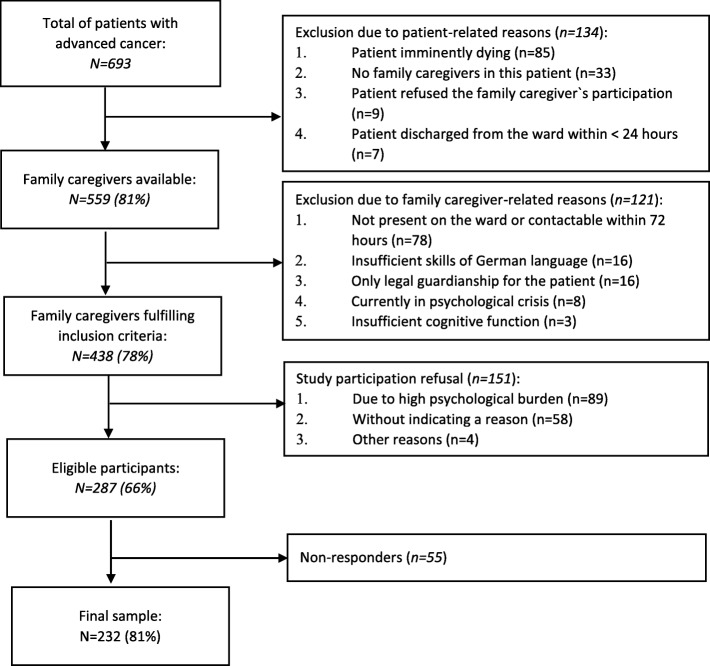
Results: In 232 FCs (62% spouses/partners), mean level of distress was 7.9 (SD 1.8; range, 2-10) with 95% presenting clinically relevant distress levels. Most frequent problems were sadness (91%), sorrows (90%), anxiety (78%), exhaustion (77%) and sleep disturbances (73%). Prevalence rates of moderate to severe anxiety and depressive symptoms were 47 and 39%, respectively. Only 25% of FCs had used at least one source of support previously. In multivariate regression analysis, being female (OR 2.525), spouse/partner (OR 2.714), exhaustion (OR 10.267), and worse palliative care outcome ratings (OR 1.084) increased the likelihood for moderate to severe anxiety symptom levels. Being female (OR 3.302), low socio-economic status (OR 6.772), prior patient care other than home-based care (OR 0.399), exhaustion (OR 3.068), sleep disturbances (OR 4.183), and worse palliative care outcome ratings (OR 1.100) were associated with moderate to severe depressive symptom levels.
Conclusions: FCs of patients presenting with indication for specialist palliative care suffer from high distress and relevant depressive and anxiety symptoms, indicating the high need of psychological support not only for patients, but also their FCs. Several socio-demographic and care-related risk-factors influence mental burden of FCs and should be in professional caregivers' focus in daily clinical practice.
Keywords: Anxiety; Cancer; Depression; Distress; Family caregiver; Palliative care; Regression analysis.
Conflict of interest statement
The authors declare that they have no competing interests.
Figures
References
-
- World Health Organisation . National Cancer Control Programmes: policies and managerial guidelines. 2. Geneva: WHO; 2002.
-
- Candy B, Jones L, Drake R, Leurent B, King M. Interventions for supporting informal caregivers of patients in the terminal phase of a disease. Cochrane Database Syst Rev. 2011;6:CD007617. - PubMed
Publication types
MeSH terms
Grants and funding
LinkOut - more resources
Full Text Sources
Medical
