


A comprehensive review of clinical studies with herbal medicine on polycystic ovary syndrome (PCOS)
- PMID: 31741280
- PMCID: PMC6895349
- DOI: 10.1007/s40199-019-00312-0
A comprehensive review of clinical studies with herbal medicine on polycystic ovary syndrome (PCOS)
Abstract
Background: Polycystic ovary syndrome (PCOS) is a frequent medical condition characterized by both metabolic and reproductive disorders. Different pharmaceutical treatments have been proposed for PCOS. However, side effects of long-term treatments and their probable low efficacy have made complementary and alternative treatments a valuable option. Recent reports have indicated the increased use of complementary treatments. Herbal medicine, as part of complementary medicine, was find introduced in traditional Persian and Chinese medicine. Medicinal herbs have used for a long time in the treatment of gynecological and infertility problems of PCOS patients. In this study, we aimed to review herbal medicines used for PCOS worldwide.
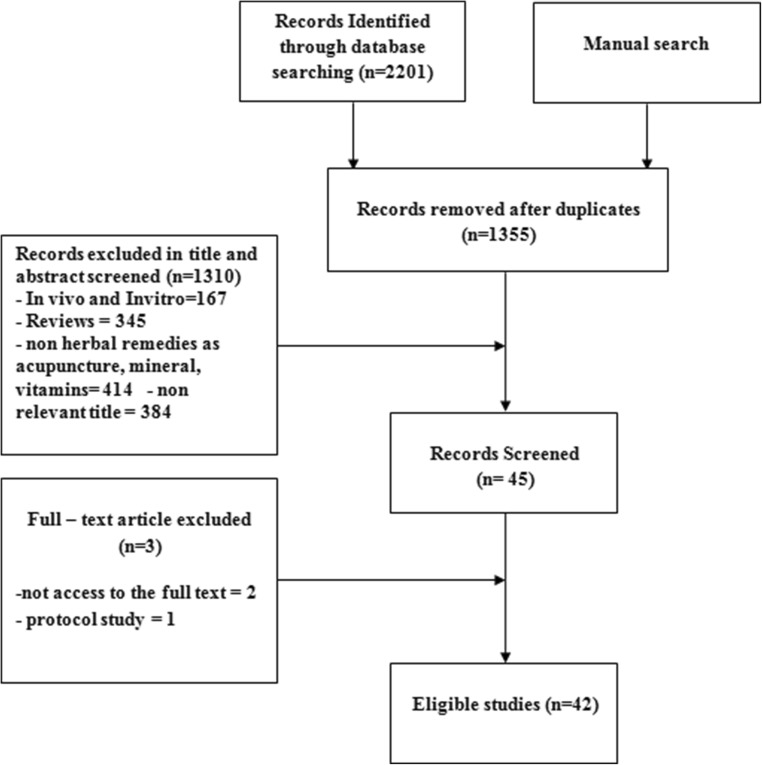
Methods: PubMed, Embase, Cochrane, and Scopus databases were searched for clinical trials and Randomized Controlled Trials based on related keywords. Data were collected from 1990 to 2019.
Results: According to a multitude of studies, a wide spectrum of herbs can be used to improve various aspects of PCOS. Herbs such as Cinnamomum verum, Trigonella foenum-graecum L., and Vitex agnus-castus can impact on menstrual and ovulatory dysfunctions, obesity, insulin resistance, lipid-metabolism dysfunction, and androgen excess-related conditions.
Conclusion: Some plants as natural remedies may have beneficial effects on improving different aspects of PCOS; but further studies are needed to investigate their mechanisms and safety.
Keywords: Complementary medicine; Herbal medicine; PCOS; Polycystic ovary syndrome.
Conflict of interest statement
The authors declare no conflict of interest or financial relationships.
Figures
References
-
- Eshre TR, Asrm-Sponsored PCOS Consensus Workshop Group. Revised 2003 consensus on diagnostic criteria and long-term health risks related to polycystic ovary syndrome. Fertil Steril. 2004;81(1):19–25. - PubMed
-
- Ozcan Dag Z, Alpua M, Isik Y, Buturak SV, Tulmac OB, Turkel Y. The evaluation of temperament and quality of life in patients with polycystic ovary syndrome. Gynecological endocrinology : the official journal of the International Society of Gynecological Endocrinology. 2017;33(3):250–253. - PubMed
-
- Bozdag G, Mumusoglu S, Zengin D, Karabulut E, Yildiz BO. The prevalence and phenotypic features of polycystic ovary syndrome: a systematic review and meta-analysis. Hum Reprod. 2016;31(12):2841–2855. - PubMed
-
- Celik O, Acbay O. Effects of metformin plus rosuvastatin on hyperandrogenism in polycystic ovary syndrome patients with hyperlipidemia and impaired glucose tolerance. J Endocrinol Investig. 2012;35(10):905–910. - PubMed
-
- Norman RJ, Dewailly D, Legro RS, Hickey TE. Polycystic ovary syndrome. Lancet. 2007;370(9588):685–697. - PubMed
Publication types
MeSH terms
LinkOut - more resources
Full Text Sources
Medical
