


Social status and modern-type depression: A review
- PMID: 31743626
- PMCID: PMC6908884
- DOI: 10.1002/brb3.1464
Social status and modern-type depression: A review
Abstract
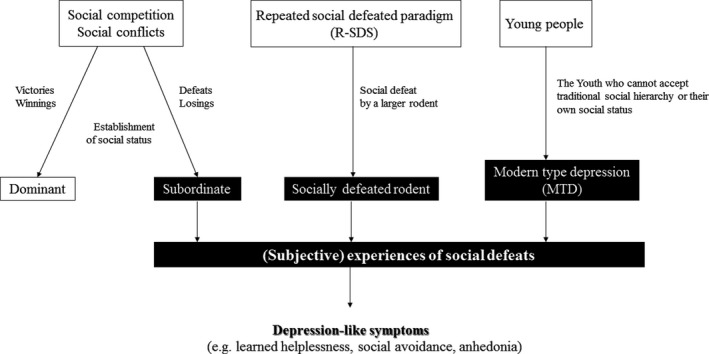
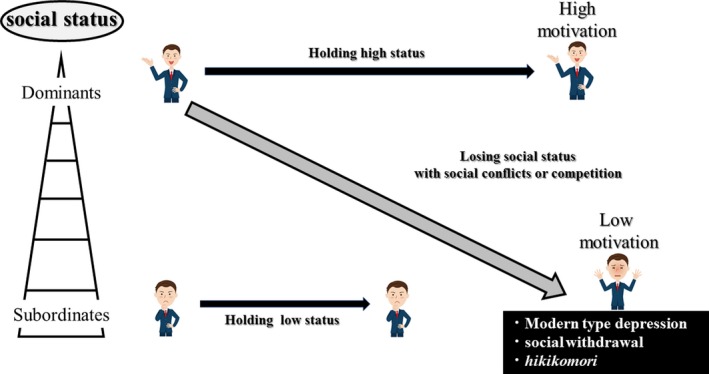
Backgrounds: Social hierarchy is one of the most influential social structures employed by social species. While dominants in such hierarchies can preferentially access rich resources, subordinates are forced into lower social statuses and lifestyles with inferior resources. Previous studies have indicated that the social rank regulates social behaviors and emotion in a variety of species, whereby individual organisms live within the framework of their ranks. However, in human societies, people, particularly young men, who cannot accept their own social status may show social withdrawal behaviors such as hikikomori to avoid confronting their circumstances.
Methods: This article reviews the neural mechanisms underlying social status identified in animal studies with rodents and primates, and assesses how social rank affects animal's social behaviors and emotion which may be relevant to modern type depression.
Results: Several brain regions such as medial prefrontal cortex are implicated in the formation of animal's social status, which leads to the differences in vulnerability and resilience to social stress.
Conclusion: On the basis of these findings, we propose that physical interventions such as voluntary exercise, diet, transcranial direct current stimulation, and psychotherapy, rather than psychotropic drugs, may be useful therapeutic approaches for modern type depression, which is a typical example of social status conflict and a phenotype of adjustment disorder to the traditional hierarchical social order.
Keywords: hikikomori; modern-type depression; motivation; social dominance; social status.
© 2019 The Authors. Brain and Behavior published by Wiley Periodicals, Inc.
Conflict of interest statement
There are no conflicts of interest.
Figures
References
Publication types
MeSH terms
LinkOut - more resources
Full Text Sources
Medical
