


The Relationship between S. aureus and Branched-Chain Amino Acids Content in Composite Cow Milk
- PMID: 31744129
- PMCID: PMC6912583
- DOI: 10.3390/ani9110981
The Relationship between S. aureus and Branched-Chain Amino Acids Content in Composite Cow Milk
Abstract
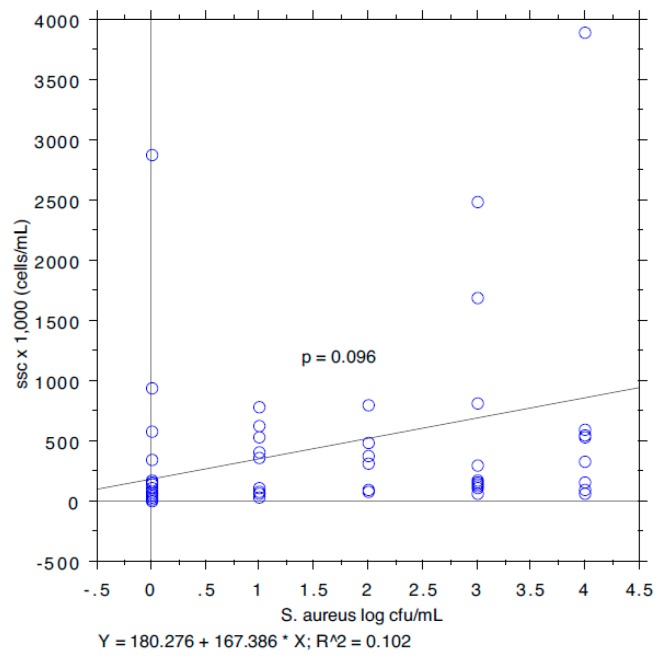
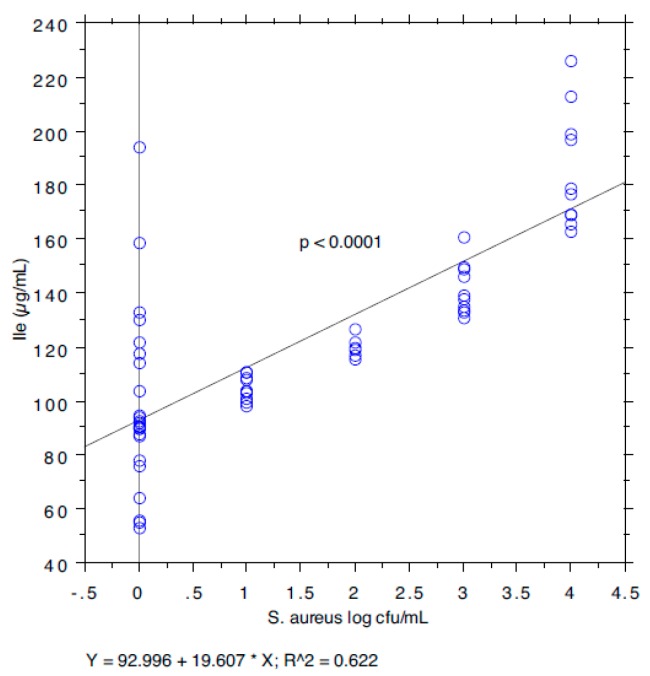
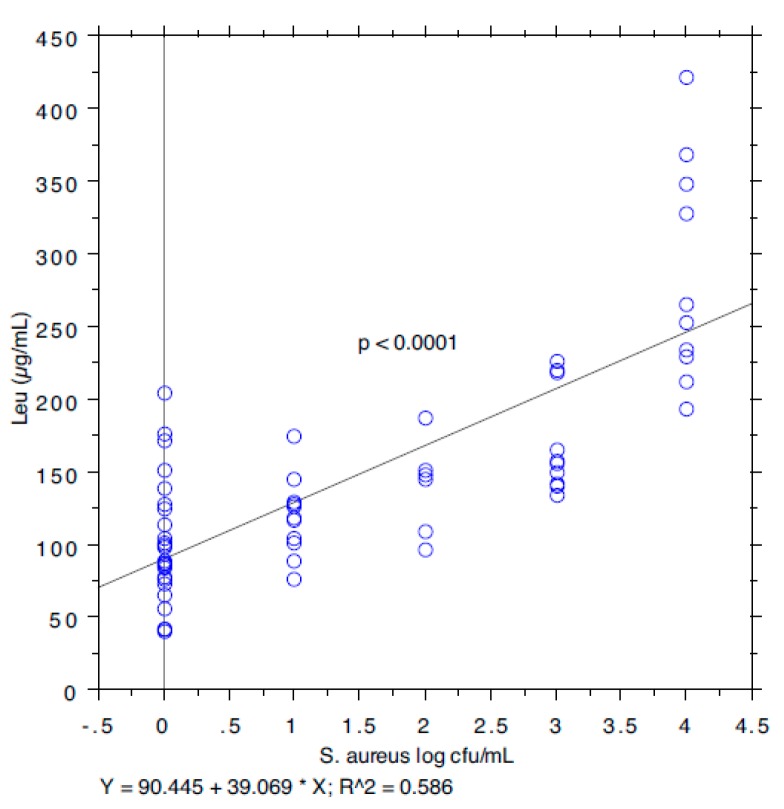
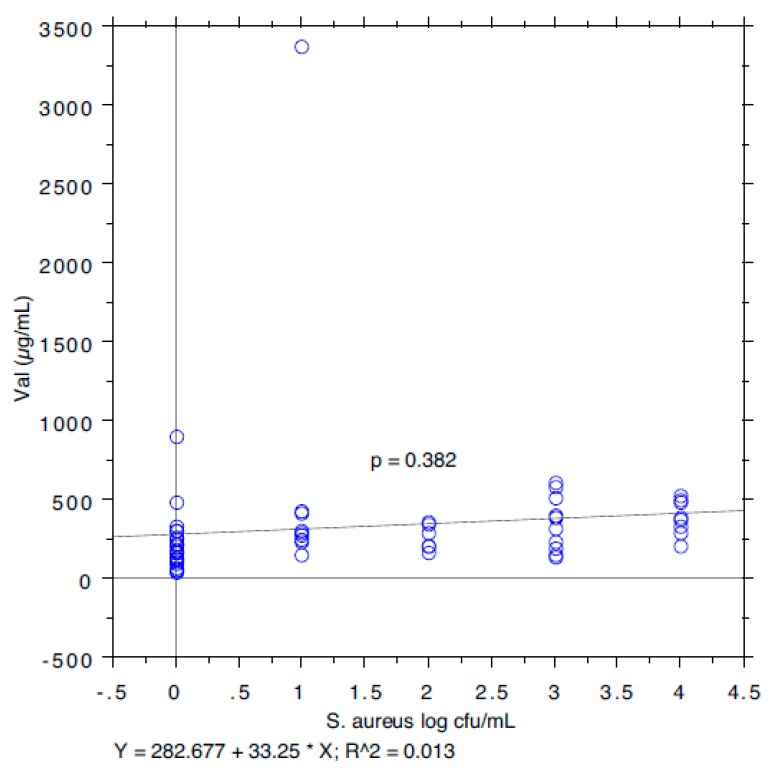
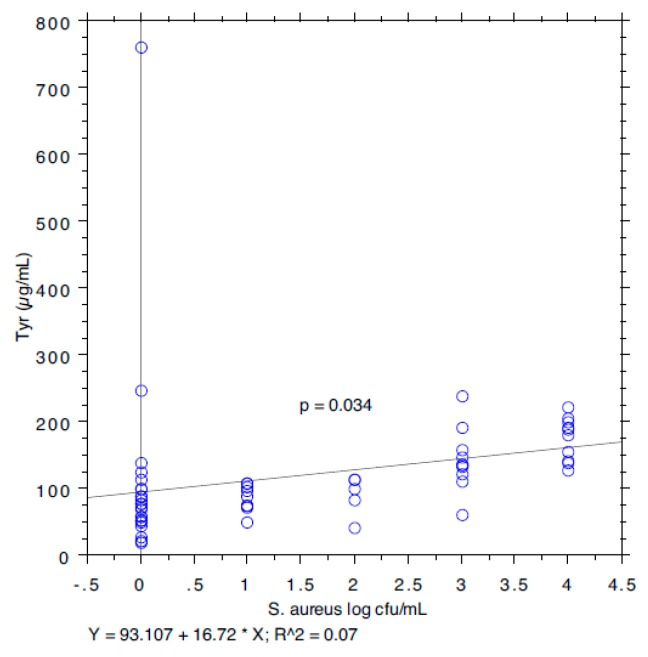
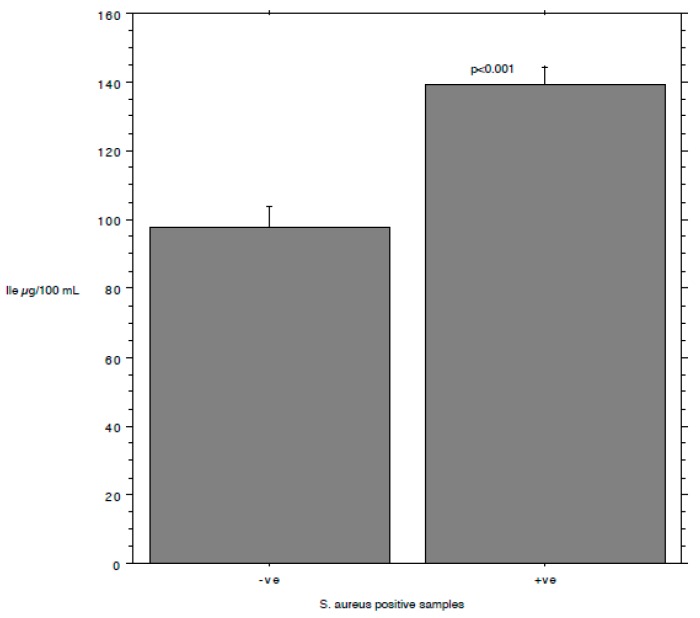
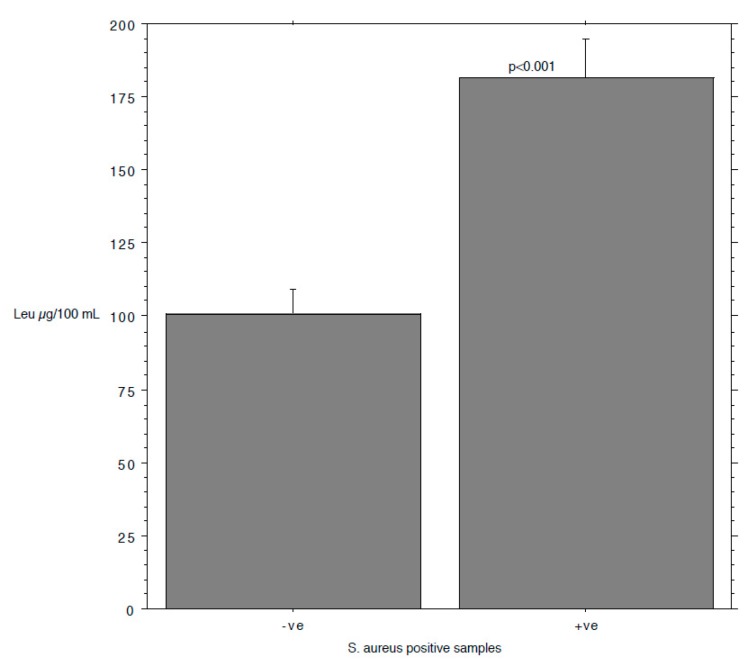
The early diagnosis of mastitis is an essential factor for the prompt detection of the animal for further actions. In fact, if not culled, infected cows must be segregated from the milking herd and milked last, or milked with separate milking units. Besides microbiological analysis, the somatic cell count (SCC) commonly used as predictor of intramammary infection, frequently lead to a misclassification of milk samples. To overcome these limitations, more specific biomarkers are continuously evaluated. The total amino acid content increases significantly in mastitic milk compared to normal milk. S. aureus requires branched-chain amino acids (BCAAs-isoleucine, leucine, and valine) for protein synthesis, branched-chain fatty acids synthesis, and environmental adaptation by responding to their availability via transcriptional regulators. The increase of BCAAs in composite milk has been postulated to be linked to mammary infection by S. aureus. The aim of this work is to demonstrate, by a direct ion-pairing reversed-phase method, based on the use of the evaporative light-scattering detector (IP-RP-HPLC-ELSD), applied to 65 composite cow milk samples, a correlation between the concentration of isoleucine and leucine, and S. aureus load. The correlation coefficient, r, was found to be 0.102 for SCC (p = 0.096), 0.622 for isoleucine (p < 0.0001), 0.586 for leucine (p < 0.0001), 0.013 for valine (p = 0.381), and 0.07 for tyrosine (p = 0.034), standing for a positive correlation between S. aureus and isoleucine and leucine concentration. The link between the content of BCAAs, isoleucine and leucine, and udder infection by S. aureus demonstrated with our study has an important clinical value for the rapid diagnosis of S. aureus mastitis in cows.
Keywords: Staphylococcus aureus; branched-chain amino acid; dairy cow; ion-pair reversed-phase liquid chromatography; mastitis.
Conflict of interest statement
The authors declare no conflict of interest.
Figures
References
-
- Grispoldi L., Massetti L., Sechi P., Iulietto M.F., Ceccarelli M., Karama M., Popescu P.A., Pandolfi F., Cenci-Goga B.T. Short communication: Characterization of enterotoxin-producing Staphylococcus aureus isolated from mastitic cows. J. Dairy Sci. 2019;102:1059–1065. doi: 10.3168/jds.2018-15373. - DOI - PubMed
-
- Fursova K.K., Shchannikova M.P., Loskutova I.V., Shepelyakovskaya A.O., Laman A.G., Boutanaev A.M., Sokolov S.L., Artem’eva O.A., Nikanova D.A., Zinovieva N.A., et al. Exotoxin diversity of Staphylococcus aureus isolated from milk of cows with subclinical mastitis in Central Russia. J. Dairy Sci. 2018;101:4325–4331. doi: 10.3168/jds.2017-14074. - DOI - PubMed
LinkOut - more resources
Full Text Sources
Research Materials
