


Cystic Fibrosis Liver Disease: Know More
- PMID: 31745411
- PMCID: PMC6851073
- DOI: 10.5001/omj.2019.90
Cystic Fibrosis Liver Disease: Know More
Abstract
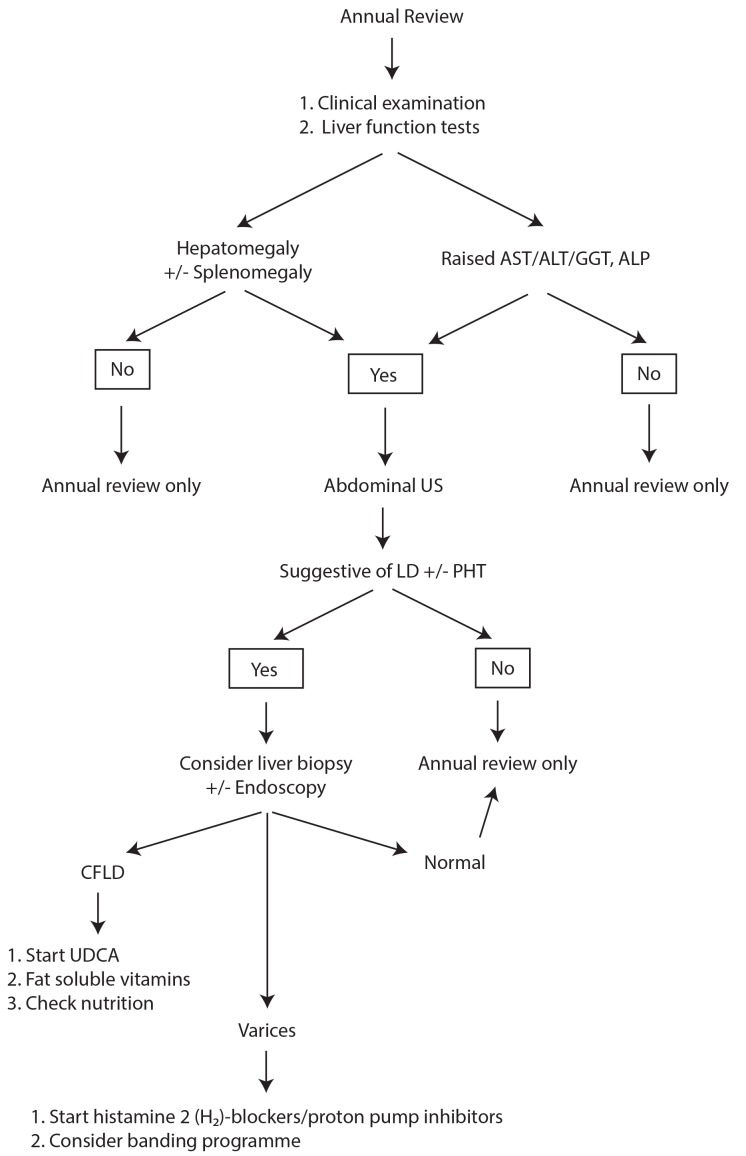
Cystic fibrosis (CF) is a multisystem disease caused by mutations in the CF transmembrane conductance regulator (CFTR) gene. CFTR is expressed in the apical surface of cholangiocytes. Homozygous CFTR gene mutation results in viscous and acidic bile secretions secondary to deficient surface fluid and bicarbonate efflux. Viscous, inspissated bile causes ductular obstruction and hepatotoxicity from retained bile components, leading to fibrosis and ultimately cirrhosis, known as CF liver disease (CFLD). CFLD is the third leading cause of death in CF patients. CFLD manifestations can take many forms. They range from asymptomatic elevation of transaminases to cirrhosis and end-stage liver disease. CFLD is diagnosed after excluding other causes of chronic liver disease. To date, there is no effective therapy to prevent or treat CFLD. Management of CFLD emphasizes on optimizing nutritional status. Ursodeoxycholic acid is the only available treatment that may prevent progression of CFLD at present. All CF patients with CFLD need annual investigations and follow-up for early detection of the disease. Liver transplantation should be considered in patients with decompensated cirrhosis and portal hypertension, with acceptable long-term outcomes. Novel therapies of CFLD are promising. This review article aims to summarize the published literature on CFLD, its pathophysiology, clinical features and complications, and management including new therapeutic options.
Keywords: Cholestasis; Cystic Fibrosis; Liver Diseases.
The OMJ is Published Bimonthly and Copyrighted 2019 by the OMSB.
Figures
References
Publication types
LinkOut - more resources
Full Text Sources