


Arrhythmic events in Brugada syndrome patients induced by fever
- PMID: 31746533
- PMCID: PMC7358877
- DOI: 10.1111/anec.12723
Arrhythmic events in Brugada syndrome patients induced by fever
Abstract
Introduction: The Brugada syndrome is associated with arrhythmic events, which may even lead to sudden cardiac death (SCD) as it causes arrhythmic events. A typical Brugada syndrome ECG type I can be triggered at fever situations. The aim of this pooled meta-analysis is to further explore the baseline characteristics and the association of fever to BrS-related arrhythmic events.
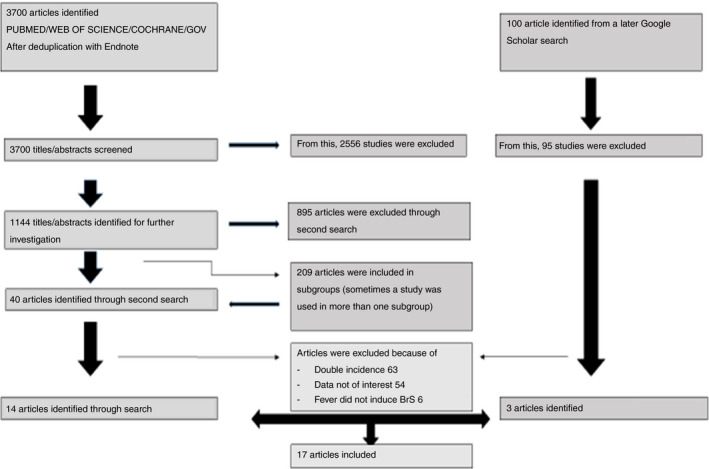
Methods: We compiled data from a search of databases (PubMed, Web of Science, Cochrane Library, and Google Scholar). We included 17 studies including 14 case reports and a total of 53 patients.
Results: Our population including 53 patients showed a male predominance of 92% with a mean age of 40.6 ± 17.7 years. 58% of patients had a family history of SCD or BrS. Genetic screening was performed in 14 patients (26%) and revealed a SCN5A mutation in 21% of the patients. ICD implantation was initiated in six patients. 75% (n = 39) of patients did not have symptoms before the fever event. Symptoms at fever included life-threatening arrhythmia such as ventricular fibrillation (VF) or ventricular tachycardia (VT; 17%), syncope (13%), and cardiac arrest or aborted SCD (13%). One patient developed electrical storm which led to not aborted SCD.
Conclusion: Fever is a great risk factor for arrhythmia events in BrS patients. Patients with known fever triggered Brugada syndrome should be surveilled closely during fever and be started on antipyretic therapy as soon as possible.
Keywords: Brugada; arrhythmic events; fever.
© 2019 The Authors. Annals of Noninvasive Electrocardiology published by Wiley Periodicals, LLC.
Conflict of interest statement
None.
References
Publication types
MeSH terms
LinkOut - more resources
Full Text Sources
Medical
Miscellaneous
