. 2019 Nov 20;20(1):876.
doi: 10.1186/s12864-019-6261-5.

Identification of key genes and regulators associated with carotenoid metabolism in apricot (Prunus armeniaca) fruit using weighted gene coexpression network analysis

Affiliations

Identification of key genes and regulators associated with carotenoid metabolism in apricot (Prunus armeniaca) fruit using weighted gene coexpression network analysis

Lina Zhang et al. BMC Genomics. .

Abstract

Background: Carotenoids are a class of terpenoid pigments that contribute to the color and nutritional value of many fruits. Their biosynthetic pathways have been well established in a number of plant species; however, many details of the regulatory mechanism controlling carotenoid metabolism remain to be elucidated. Apricot is one of the most carotenoid-rich fruits, making it a valuable system for investigating carotenoid metabolism. The purpose of this study was to identify key genes and regulators associated with carotenoid metabolism in apricot fruit based on transcriptome sequencing.

Results: During fruit ripening in the apricot cultivar 'Luntaixiaobaixing' (LT), the total carotenoid content of the fruit decreased significantly, as did the levels of the carotenoids β-carotene, lutein and violaxanthin (p < 0.01). RNA sequencing (RNA-Seq) analysis of the fruit resulted in the identification of 44,754 unigenes and 6916 differentially expressed genes (DEGs) during ripening. Among these genes, 33,498 unigenes were annotated using public protein databases. Weighted gene coexpression network analysis (WGCNA) showed that two of the 13 identified modules ('blue' and 'turquoise') were highly correlated with carotenoid metabolism, and 33 structural genes from the carotenoid biosynthetic pathway were identified. Network visualization revealed 35 intramodular hub genes that putatively control carotenoid metabolism. The expression levels of these candidate genes were determined by quantitative real-time PCR analysis, which showed ripening-associated carotenoid accumulation. This analysis revealed that a range of genes (NCED1, CCD1/4, PIF3/4, HY5, ERF003/5/12, RAP2-12, AP2, AP2-like, BZR1, MADS14, NAC2/25, MYB1R1/44, GLK1/2 and WRKY6/31/69) potentially affect apricot carotenoid metabolism during ripening. Based on deciphering the molecular mechanism involved in ripening, a network model of carotenoid metabolism in apricot fruit was proposed.

Conclusions: Overall, our work provides new insights into the carotenoid metabolism of apricot and other species, which will facilitate future apricot functional studies and quality breeding through molecular design.

Keywords: Apricot; Carotenoids; Color; Prunus armeniaca L; WGCNA.


Conflict of interest statement

The authors declare that they have no competing interests.

Figures
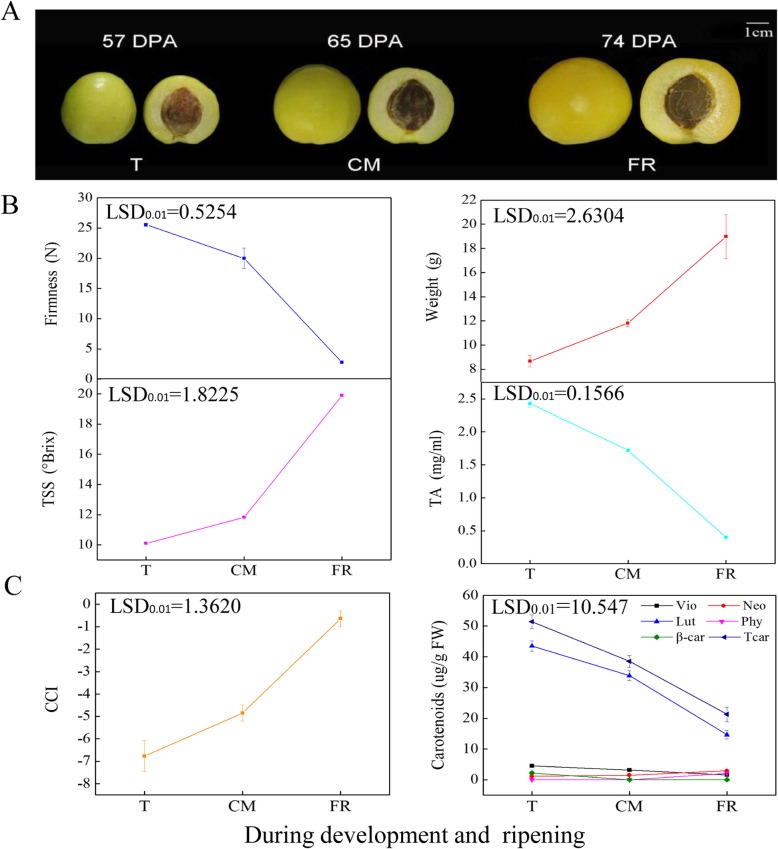
Fig. 1
Fig. 1
Characterization of fruit quality traits during ripening. a Color changes of apricot fruit. b Fruit firmness, fruit weight, total soluble solid (TSS) and titratable acid (TA) contents. c Changes in the citrus color index (CCI) and carotenoid content in apricot fruit. LSD, least significant difference (p < 0.01). Error bars represent ± SD of the means of three biological replicates
Fig. 2
Fig. 2
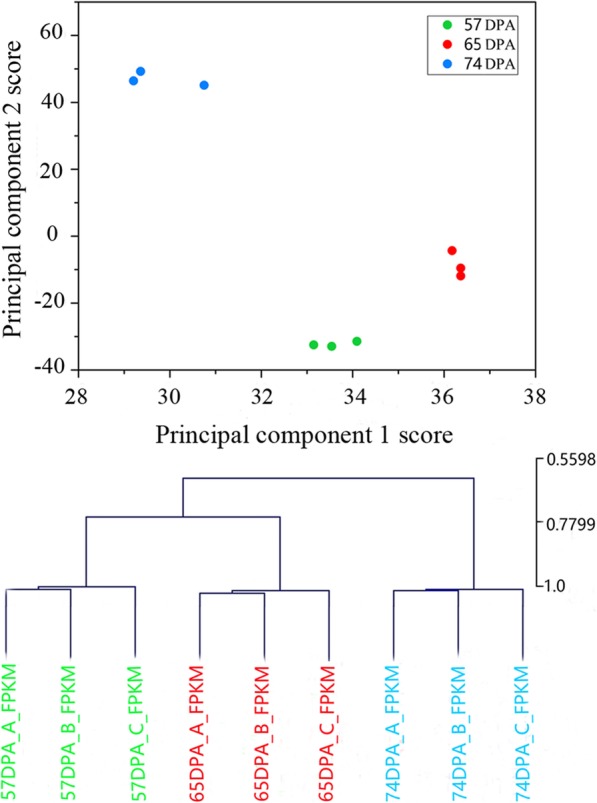
Principal component analysis (PCA) of transcriptome data. Three biological replicates per sample were analyzed for each ripening stage. The percentages on the axes indicate the values explained by each PCA. The green, red, and sky blue dots represent the transcriptomes of the samples obtained at 57 DPA (days post anthesis), 65 DPA and 74 DPA, respectively
Fig. 3
Fig. 3
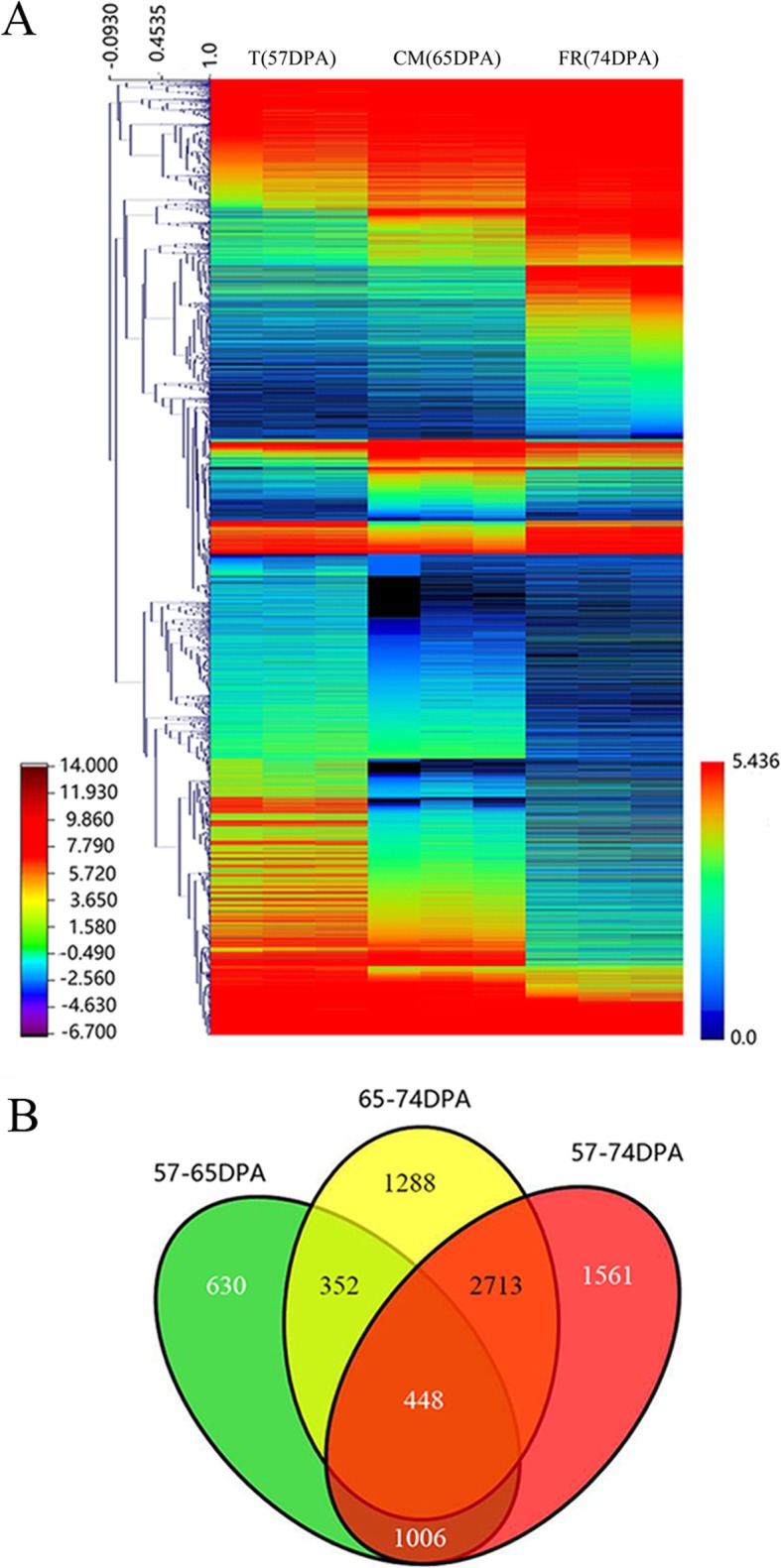
Expression profiles of differentially expressed genes (DEGs) during apricot fruit ripening. a DEG expression dynamics during fruit ripening. b Venn diagram indicates the number of DEGs in each of the three ripening stages
Fig. 4
Fig. 4
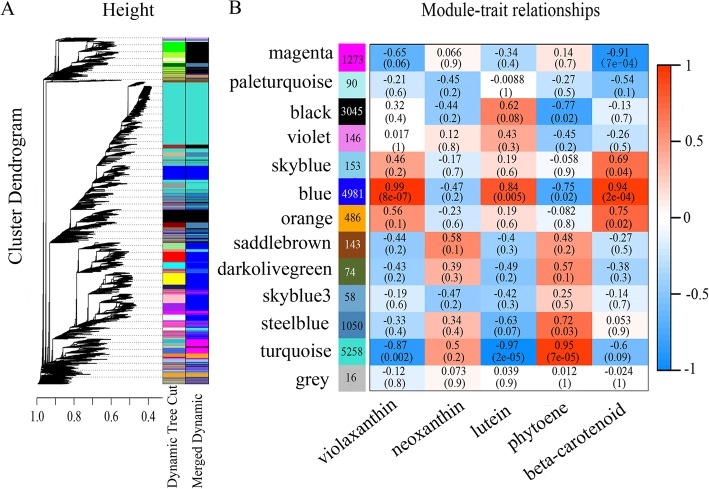
Weighted gene coexpression network analysis (WGCNA) of apricot fruit during ripening. a Hierarchical clustering showing 13 modules of coexpressed genes. Each leaf in the tree represents one gene. b Module-carotenoid correlations and corresponding p-values. The left panel shows the 13 modules and the number of genes in each module. The right panel shows a color scale for module/trait correlations from − 1 to 1
Fig. 5
Fig. 5
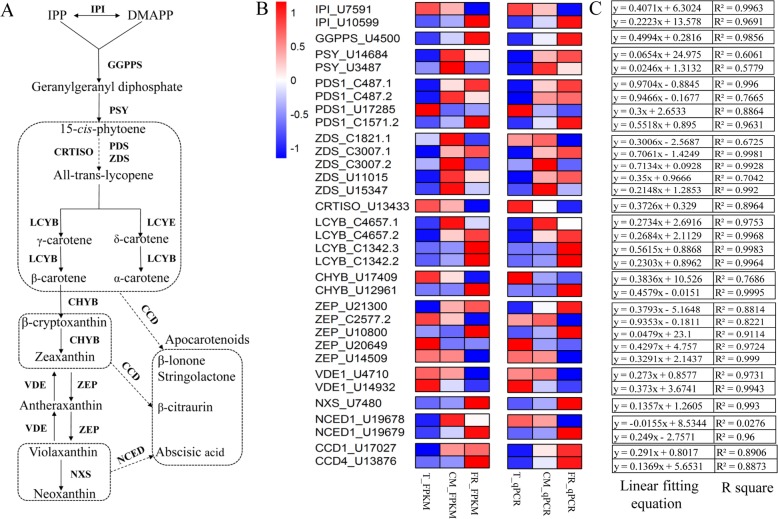
Expression of genes related to carotenoid biosynthesis in apricot fruit. a Carotenoid biosynthesis pathway in apricot fruit. IPI, isopentenyl diphosphate isomerase; GGPPS, geranylgeranyl diphosphate synthase; PSY, phytoene synthase; PDS, phytoene desaturase; ZDS, ζ-carotene desaturase; CRTISO, carotenoid isomerase; LCYE, lycopene ε-cyclase; LCYB, lycopene β-cyclase; CHYB, β-carotene hydroxylase; ZEP, zeaxanthin epoxidase; VDE, violaxanthin de-epoxidase; NXS, neoxanthin synthase; CCD, carotenoid cleavage dioxygenase; NCED, 9-cis-epoxycarotenoid dioxygenase. b Heatmap of the expression of genes related to carotenoid biosynthesis during fruit ripening. Columns and rows represent samples and gene names in the heatmap, respectively. Red, blue and white indicate high expression, low expression and the absence (or undetectable levels) of detectable transcripts at the corresponding stage, respectively. c The linear fitting equation and R squared values between the FPKM and qRT-PCR values
Fig. 6
Fig. 6
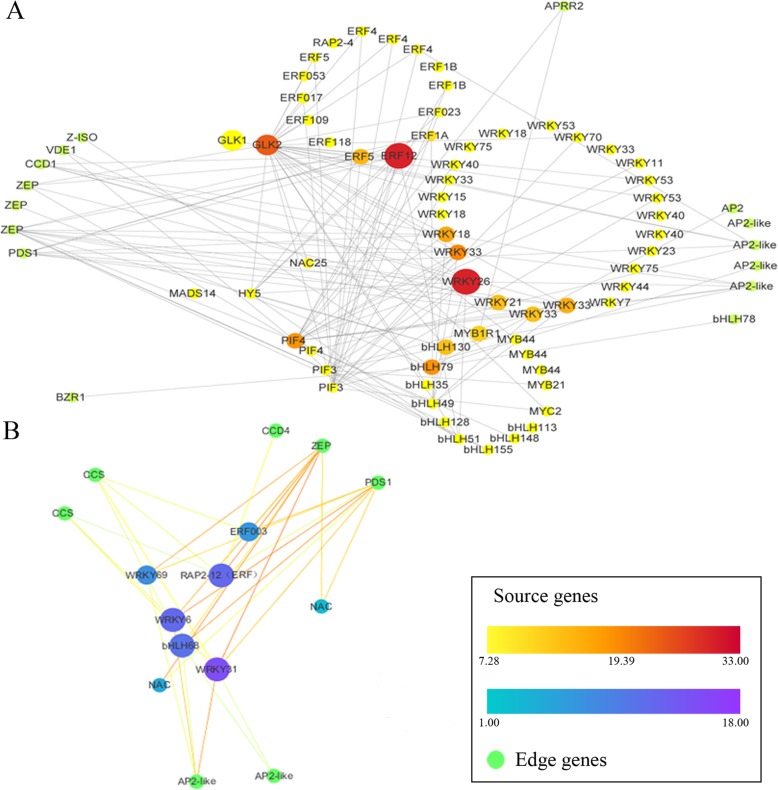
Coexpression networks of transcription factors and structural genes involved in carotenoid metabolism. The network includes transcription factors and structural genes from the ‘blue’ (a) and ‘turquoise’ (b) modules. Dot sizes and colors represent the numbers of connections between genes
Fig. 7
Fig. 7
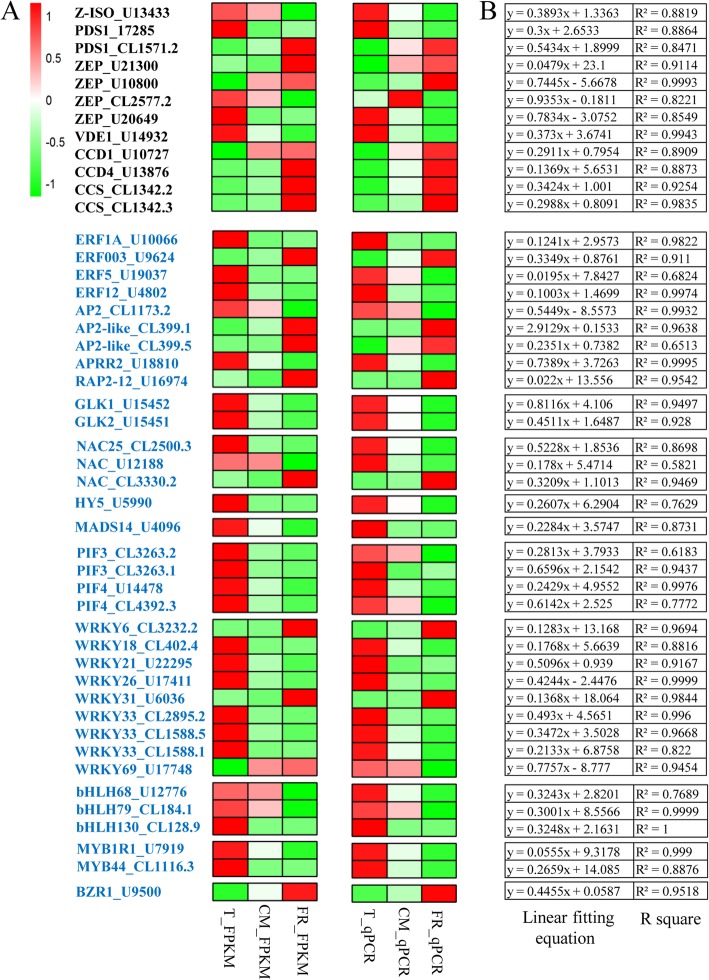
The expression of genes and regulators related to carotenoid metabolism in the visualized networks for the ‘blue’ and ‘turquoise’ modules. a Heatmap of the expression of structural genes related to carotenoid biosynthesis during fruit ripening. Columns and rows in the heat map represent the developmental stage and gene name, respectively. The black and blue genes represent structural genes and transcription factors, respectively. Red, green and white indicate high expression, low expression and the absence (or undetectable levels) of detectable transcripts at the corresponding stage, respectively. b The linear fitting equation and R squared values between the FPKM and qRT-PCR values
Fig. 8
Fig. 8
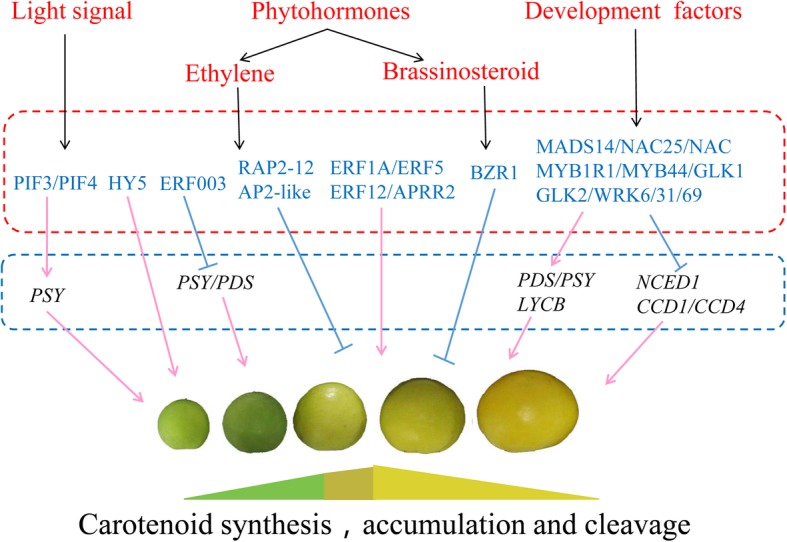
The proposed model of carotenoid metabolism in apricot during fruit ripening. Pink arrows represent positive regulation; blue lines represent negative regulation; black and skyblue genes represent structural genes and transcription factors, respectively. PIF, phytochrome interacting factor; HY5, LONG HYPOCOTYL5; RAP2–12, Ethylene-responsive transcription factor RAP2–12; ERF, Ethylene response factor; BZR1, BRASSINAZOLE RESISTANT1; MADS14, MADS-box transcription factor 14; NAC, NAC transcription factor; MYB, MYB transcription factor; GLK, GOLDEN 2-LIKE transcription factor

References

    1. Yuan H, Zhang J, Nageswaran D, Li L. Carotenoid metabolism and regulation in horticultural crops. Hortic Res. 2015;2:15036. doi: 10.1038/hortres.2015.36. - DOI - PMC - PubMed
    1. Nakabayashi R, Saito K. Integrated metabolomics for abiotic stress responses in plants. Curr Opin Plant Biol. 2015;24:10–16. doi: 10.1016/j.pbi.2015.01.003. - DOI - PubMed
    1. Rao AV, Rao LG. Carotenoids and human health. Pharmacol Res. 2007;55(3):207–216. doi: 10.1016/j.phrs.2007.01.012. - DOI - PubMed
    1. Nisar N, Li L, Lu S, Khin NC, Pogson BJ. Carotenoid metabolism in plants. Mol Plant. 2015;8(1):68–82. doi: 10.1016/j.molp.2014.12.007. - DOI - PubMed
    1. Sun T, Yuan H, Cao H, Yazdani M, Tadmor Y, Li L. Carotenoid metabolism in plants: the role of plastids. Mol Plant. 2018;11(1):58–74. - PubMed

MeSH terms