Stuck in the middle: a systematic review of authorship in collaborative health research in Africa, 2014-2016
- PMID: 31750000
- PMCID: PMC6830050
- DOI: 10.1136/bmjgh-2019-001853
Stuck in the middle: a systematic review of authorship in collaborative health research in Africa, 2014-2016
Abstract
Background: Collaborations are often a cornerstone of global health research. Power dynamics can shape if and how local researchers are included in manuscripts. This article investigates how international collaborations affect the representation of local authors, overall and in first and last author positions, in African health research.
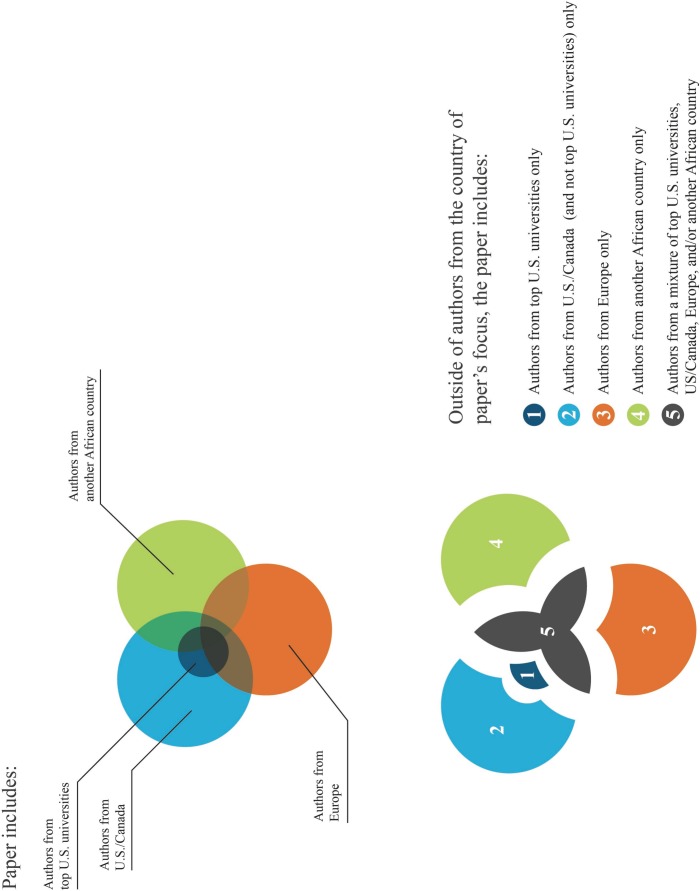
Methods: We extracted papers on 'health' in sub-Saharan Africa indexed in PubMed and published between 2014 and 2016. The author's affiliation was used to classify the individual as from the country of the paper's focus, from another African country, from Europe, from the USA/Canada or from another locale. Authors classified as from the USA/Canada were further subclassified if the author was from a top US university. In primary analyses, individuals with multiple affiliations were presumed to be from a high-income country if they contained any affiliation from a high-income country. In sensitivity analyses, these individuals were presumed to be from an African country if they contained any affiliation an African country. Differences in paper characteristics and representation of local coauthors are compared by collaborative type using χ² tests.
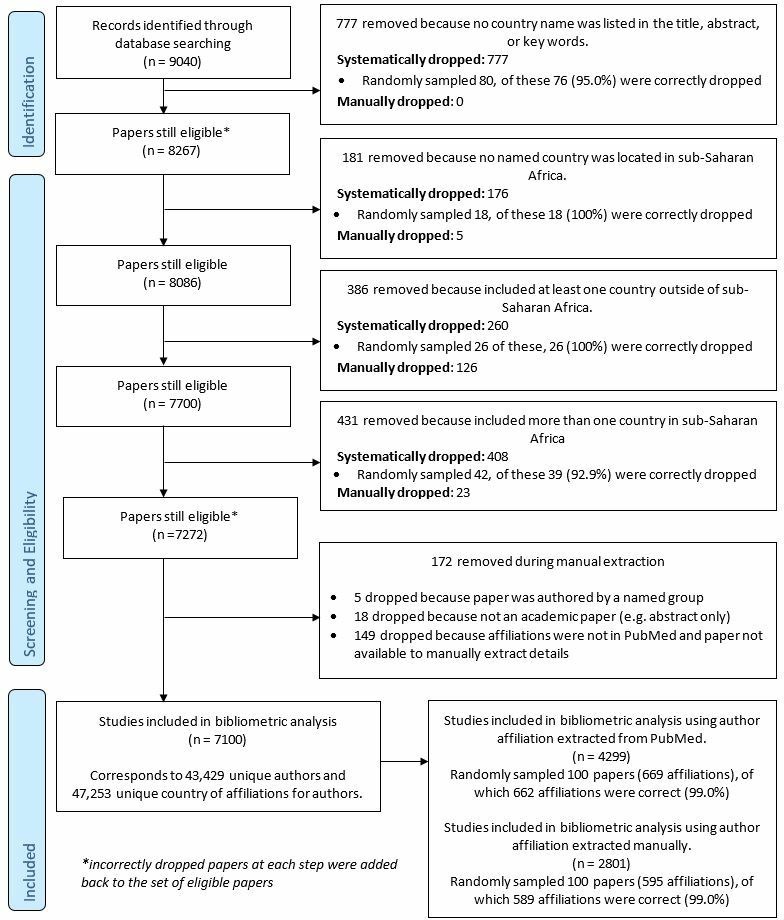
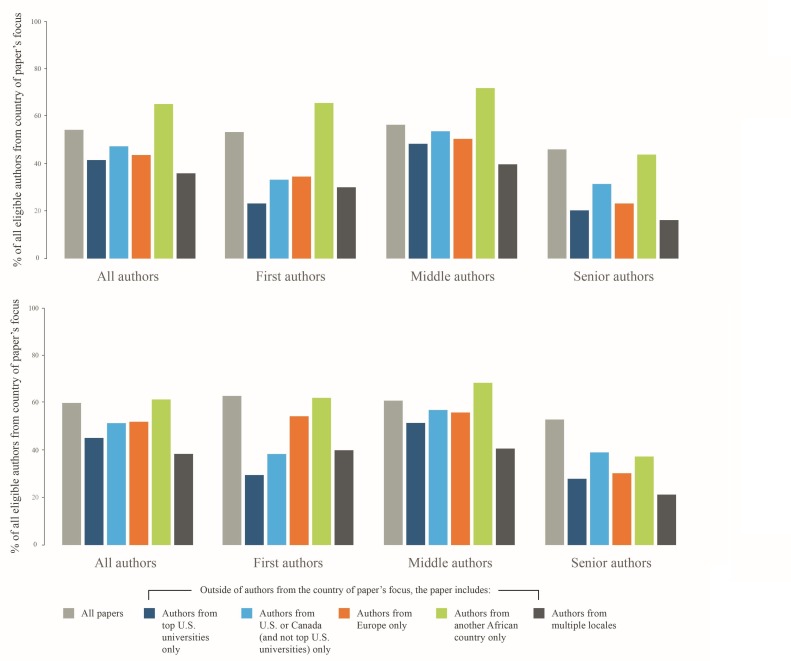
Results: Of the 7100 articles identified, 68.3% included collaborators from the USA, Canada, Europe and/or another African country. 54.0% of all 43 429 authors and 52.9% of 7100 first authors were from the country of the paper's focus. Representation dropped if any collaborators were from USA, Canada or Europe with the lowest representation for collaborators from top US universities-for these papers, 41.3% of all authors and 23.0% of first authors were from country of paper's focus. Local representation was highest with collaborators from another African country. 13.5% of all papers had no local coauthors.
Discussion: Individuals, institutions and funders from high-income countries should challenge persistent power differentials in global health research. South-South collaborations can help African researchers expand technical expertise while maintaining presence on the resulting research.
Keywords: academic collaboration; decolonizing global health; global health; research equity.
© Author(s) (or their employer(s)) 2019. Re-use permitted under CC BY-NC. No commercial re-use. See rights and permissions. Published by BMJ.
Conflict of interest statement
Competing interests: None declared.
Figures
References
-
- World Bank Group A decade of development in sub-Saharan African science, technology, engineering & mathematics research. Elsevier, 2014.
-
- Konde V. Towards achieving the African Union's recommendation of expenditure of 1% of GDP on research and development. ECA policy brief, No. ECA/18/004. United Nations Economic Commission for Africa, 2018.
Publication types
Grants and funding
LinkOut - more resources
Full Text Sources