. 2019 Nov 21;15(1):416.
doi: 10.1186/s12917-019-2167-3.

Effects of prostaglandin F (PGF) on cell-death pathways in the bovine corpus luteum (CL)

Affiliations

Effects of prostaglandin F (PGF) on cell-death pathways in the bovine corpus luteum (CL)

Agnieszka Walentyna Jonczyk et al. BMC Vet Res. .

Abstract

Background: Prostaglandin F (PGF) may differentially affect viability of luteal cells by inducing either proliferation or cell death (via apoptosis or necroptosis). The diverse effects of PGF may depend on its local vs. systemic actions. In our study, we determined changes in expression of genes related to: (i) apoptosis: caspase (CASP) 3, CASP8, BCL2 associated X (BAX), B-cell lymphoma 2 (BCL2) and (ii) necroptosis: receptor-interacting protein kinase (RIPK) 1, RIPK3, cylindromatosis (CYLD), and mixed lineage kinase domain-like (MLKL) in the early and mid-stage corpus luteum (CL) that accompany local (intra-CL) vs. systemic (i.m.) analogue of PGF (aPGF) actions. Cows at day 4 (n = 24) or day 10 (n = 24) of the estrous cycle were treated by injections as follows: (1) systemic saline, (2) systemic aPGF (25 mg; Dinoprost), (3) local saline, (4) local aPGF (2.5 mg; Dinoprost). After 4 h, CLs were collected by ovariectomy. Expression levels of mRNA and protein were investigated by RT-q PCR, Western blotting and immunohistochemistry, respectively.

Results: We found that local and systemic administration of aPGF in the early-stage CL resulted in decreased expression of CASP3 (P < 0.01), but CASP8 mRNA expression was up-regulated (P < 0.05). However, the expression of CASP3 was up-regulated after local aPGF treatment in the middle-stage CL, whereas systemic aPGF administration increased both CASP3 and CASP8 expression (P < 0.01). Moreover, we observed that both local and systemic aPGF injections increased RIPK1, RIPK3 and MLKL expression in the middle-stage CL (P < 0.05) while CYLD expression was markedly higher after i.m. aPGF injections (P < 0.001). Moreover, we investigated the localization of necroptotic factors (RIPK1, RIPK3, CYLD and MLKL) in bovine CL tissue after local and systemic aPGF injections in the bovine CL.

Conclusion: Our results demonstrated for the first time that genes related to cell death pathways exhibit stage-specific responses to PGF administration depending on its local or systemic actions. Locally-acting PGF plays a luteoprotective role by inhibiting apoptosis and necroptosis in the early CL. Necroptosis is a potent mechanism responsible for structural CL regression during PGF-induced luteolysis in cattle.

Keywords: Apoptosis; Bovine CL; Necroptosis; Prostaglandin F2α; RIPKs.


Conflict of interest statement

The authors declare that they have no competing interest.

Figures
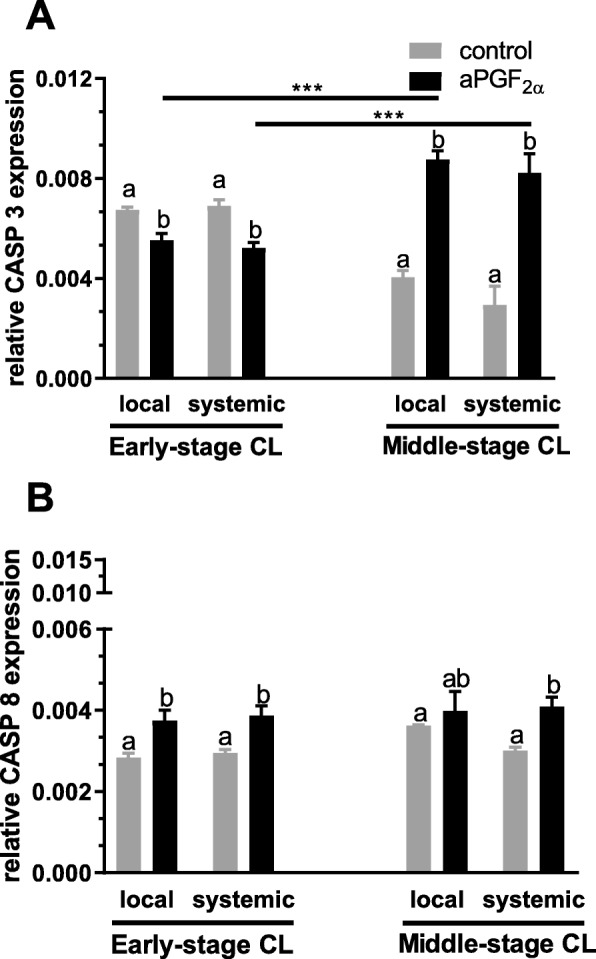
Fig. 1
Fig. 1
Effect of local or systemic PGF analogue (aPGF) administration on the mRNA expression of (a) caspase 3 (CASP3), (b) caspase 8 (CASP8) in the early- and middle- stage corpora lutea (CL), respectively. The gray bars represent the control group, and the black bars represent local or systemic aPGF administered groups. Letters a,b indicate statistical differences between all experimental groups in the early and middle- stage CL. Asteriks * indicate statistical differences between local/systemic aPGF injected early CL vs local/systemic aPGF injected middle-stage CL
Fig. 2
Fig. 2
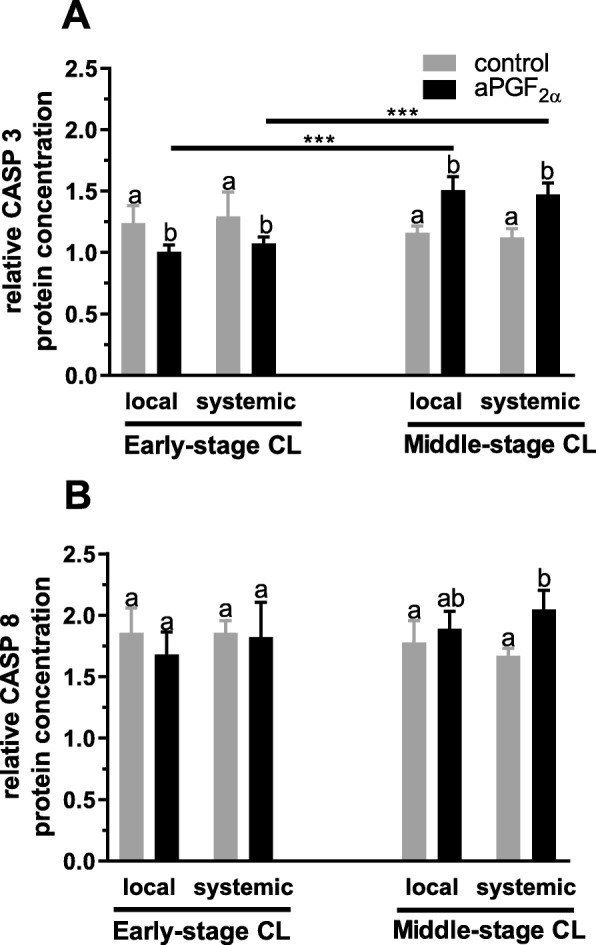
Effect of local or systemic PGF analogue (aPGF) administration on the protein concentration of (a) caspase 3 (CASP3), (b) caspase 8 (CASP8) in the early- and middle- stage corpora lutea (CL), respectively. The gray bars represent the control group, and the black bars represent local or systemic aPGF administered groups. Letters a,b indicate statistical differences between all experimental groups in the early and middle- stage CL. Asteriks * indicate statistical differences between local/systemic aPGF injected early CL vs local/systemic aPGF injected middle-stage CL
Fig. 3
Fig. 3
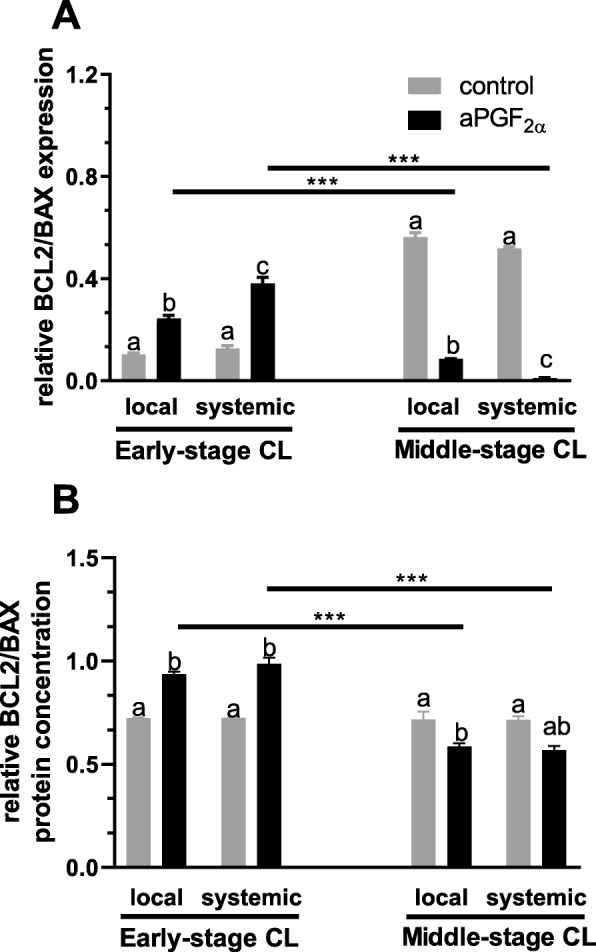
Effect of local or systemic PGF analogue (aPGF) administration on the (a) the ratio of BCL2 to BAX mRNA expression and (b) the ratio of BCL2 to BAX protein concentration levels in the early- and middle- stage corpora lutea (CL), respectively. The gray bars represent the control group, and the black bars represent local or systemic aPGF administered groups. Letters a,b indicate statistical differences between all experimental groups in the early and middle- stage CL. Asteriks * indicate statistical differences between local/systemic aPGF injected early CL vs local/systemic aPGF injected middle-stage CL
Fig. 4
Fig. 4
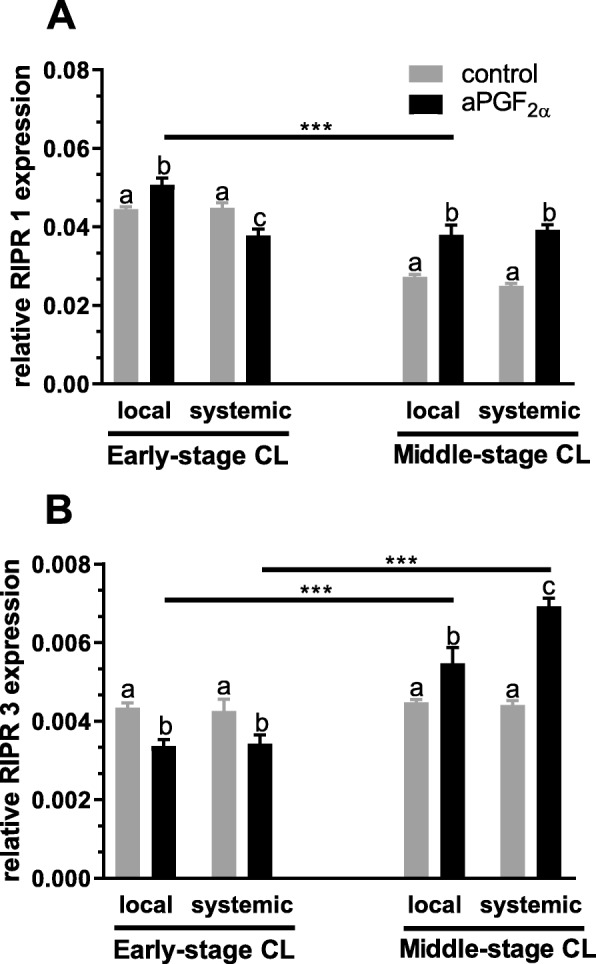
Effect of local or systemic PGF analogue (aPGF) administration on the mRNA expression of: (a) RIPK1, (b) RIPK3 in the early and middle- stage corpora lutea (CL), respectively. The gray bars represent the control group, and the black bars represent local or systemic aPGF administered groups. Letters a,b,c indicate statistical differences between all experimental groups in the early and middle- stage CL. Asteriks * indicate statistical differences between local/systemic aPGF injected early CL vs local/systemic aPGF injected middle-stage CL
Fig. 5
Fig. 5
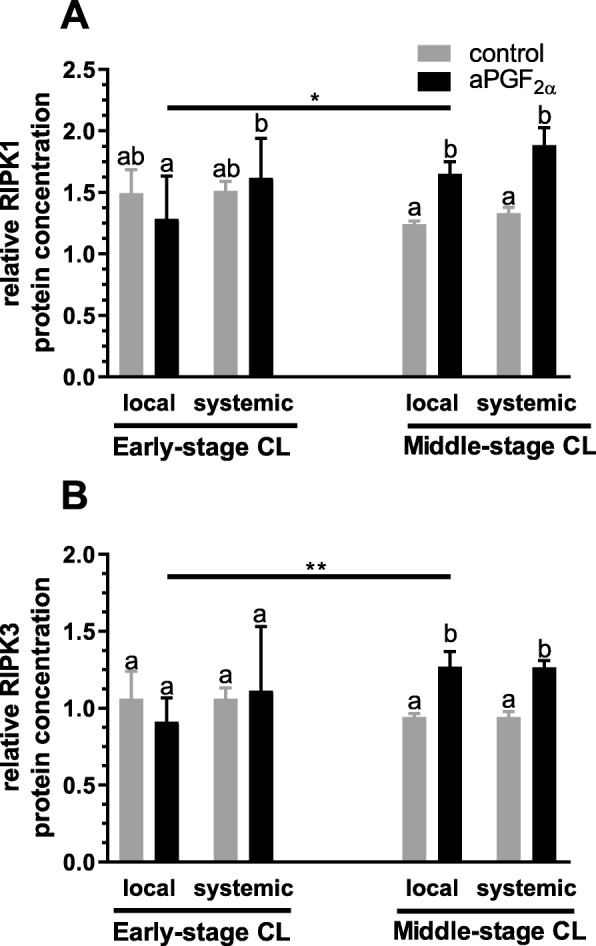
Effect of local or systemic PGF analogue (aPGF) administration on the protein concentration of: (a) RIPK1, (b) RIPK3 in the early- and middle- stage corpora lutea (CL), respectively. The gray bars represent the control group, and the black bars represent local or systemic aPGF administered groups. Letters a,b indicate statistical differences between all experimental groups in the early and middle- stage CL. Asteriks * indicate statistical differences between local/systemic aPGF injected early CL vs local/systemic aPGF injected middle-stage CL
Fig. 6
Fig. 6
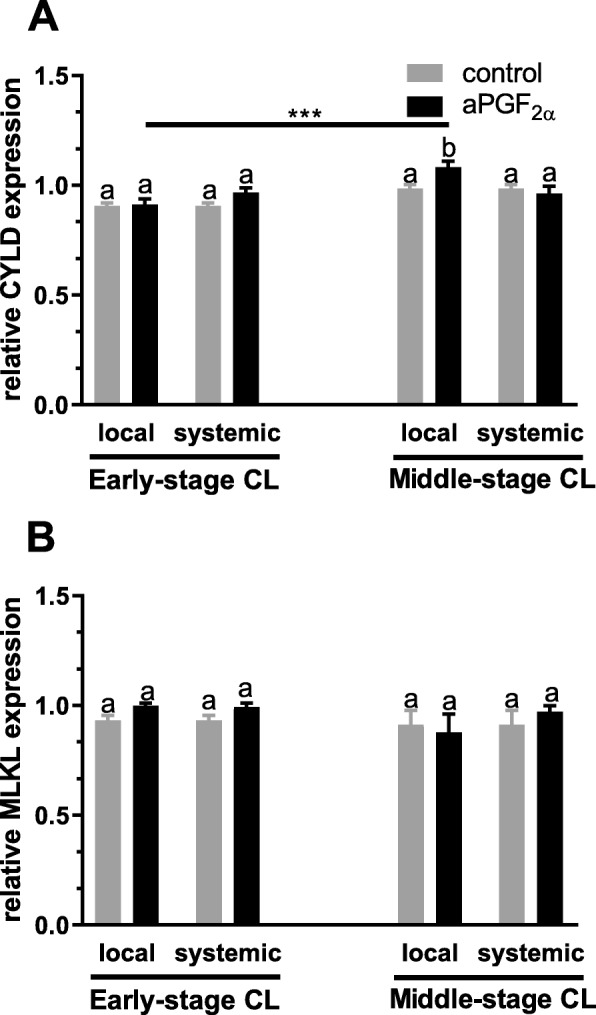
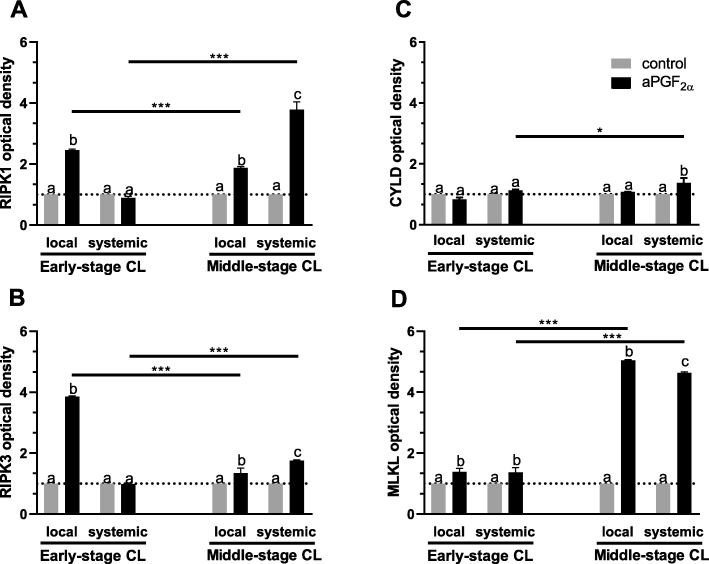
Effect of local or systemic PGF analogue (aPGF) administration on the mRNA expression of: (a) CYLD, (b) MLKL in the early - and middle-stage corpora lutea (CL), respectively. The gray bars represent the control group, and the black bars represent local or systemic aPGF administered groups. Letters a,b indicate statistical differences between all experimental groups in the early and middle- stage CL. Asteriks * indicate statistical differences between local/systemic aPGF injected early CL vs local/systemic aPGF injected middle-stage CL
Fig. 7
Fig. 7
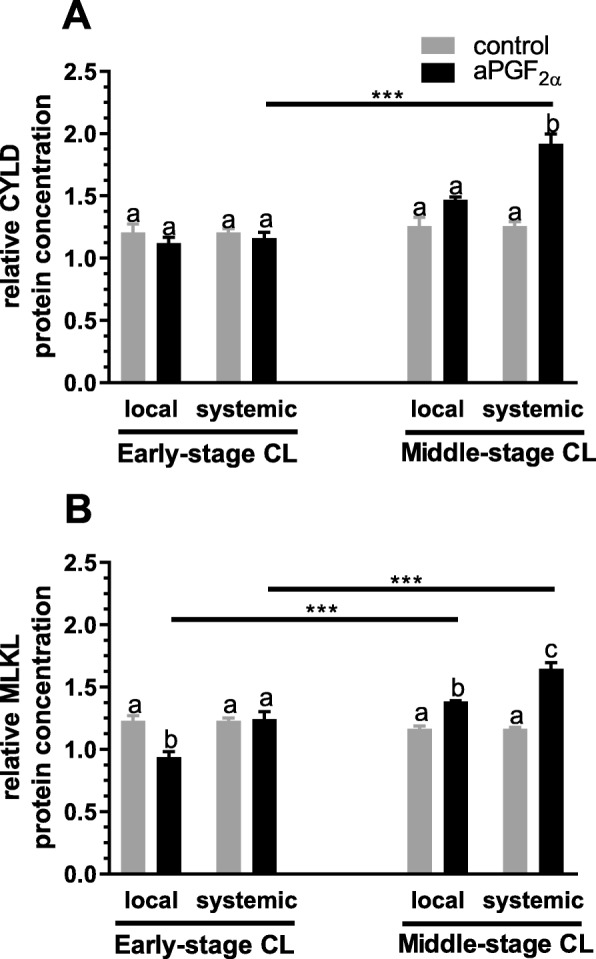
Effect of local or systemic PGF analogue (aPGF) administration on the protein concentration of: (a) CYLD, (b) MLKL in the early- and middle-stage corpora lutea (CL), respectively. The gray bars represent the control group, and the black bars represent local or systemic aPGF administered groups. Letters a,b,c indicate statistical differences between all experimental groups in the early and middle- stage CL. Asteriks * indicate statistical differences between local/systemic aPGF injected early CL vs local/systemic aPGF injected middle-stage CL
Fig. 8
Fig. 8
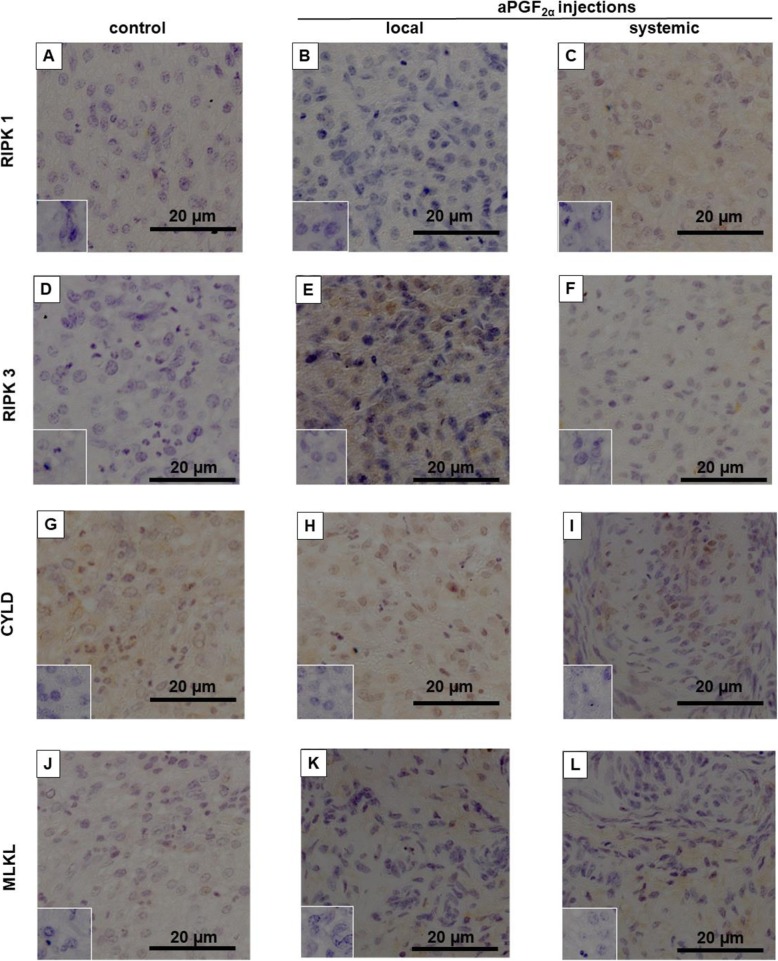
Representative section of images of localization of: (a, b, c) RIPK1, (d, e, f) RIPK3, (g, h, i) CYLD and (j, k, l) MLKL protein in the bovine early-stage corpora lutea (CL) at 4 h after local or systemic PGF analogue (aPGF) administration. Each small window shows a negative control stained with normal rabbit IgG instead of primary antibody. Positive immunohistochemistry staining was assessed as brown staining. Bar = 20 μm
Fig. 9
Fig. 9
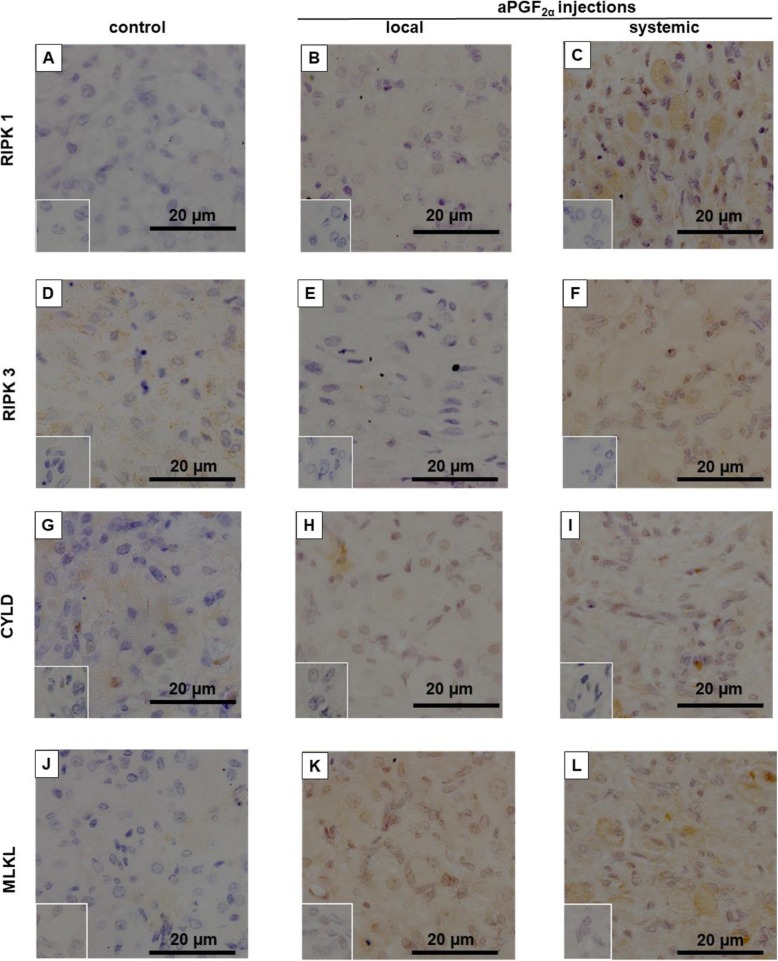
Representative section of images of localization of: (a, b, c) RIPK1, (d, e, f) RIPK3, (g, h, i) CYLD and (j, k, l) MLKL protein in the bovine middle-stage corpora lutea (CL) at 4 h after local or systemic PGF analogue (aPGF) administration. Each small window shows a negative control stained with normal rabbit IgG instead of primary antibody. Positive immunohistochemistry staining was assessed as brown staining. Bar = 20 μm
Fig. 10
Fig. 10
The arithmetic means of intensities of: (a) RIPK1, (b) RIPK3, (c) CYLD and (d) MLKL in the bovine early- and middle-stage corpora lutea (CL) after local or systemic PGF analogue (aPGF) administration. The gray bars represent the control group, and the black bars represent local or systemic aPGF administered groups. Letters a,b,c indicate statistical differences between all experimental groups in the early and middle- stage CL. Asteriks * indicate statistical differences between local/systemic aPGF injected early-stage CL vs local/systemic aPGF injected middle-stage CL
Fig. 11
Fig. 11
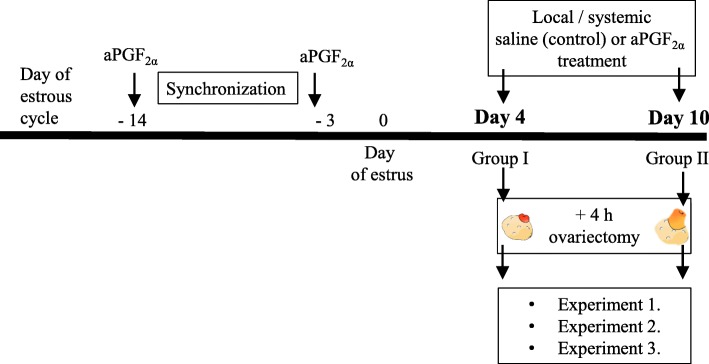
Schematic diagram of the study design. Cows were synchronized via two injections of aPGF administered with an 11-days interval, starting on protocol day − 14. The onset of estrus was considered as day 0 of the estrous cycle. On day 4 or 10 respectively, the cows received an local injection of saline/ aPGF (2.5 mg Dinoprost/0.5 ml) or systemic injection of saline/ aPGF (25 mg Dinoprost/5 ml). At 4 h after treatment the cows were ovariectomized. CLs were collected for gene and protein expression

References

    1. Niswender GD, Juengel JL, Silva PJ, Rollyson MK, McIntush EW. Mechanisms controlling the function and life span of the corpus luteum. Physiol Rev. 2000. 10.1152/physrev.2000.80.1.1. - PubMed
    1. McCracken JA, Custer EE, Lamsa JC. Luteolysis: a neeuroendocrine-mediated event. Physiol Rev. 1999. 10.1152/physrev.1999.79.2.263. - PubMed
    1. Miyamoto A, Shirasuna K, Shimizu T, Bollwein H, Schams D. Regulation of corpus luteum development and maintenance: specific roles of angiogenesis and action of prostaglandin F2alpha. Soc Reprod Fertil Suppl. 2010;67:289–304. - PubMed
    1. Juengel JL, Garverick HA, Johnson AL, Youngquist RS, Smith MF. Apoptosis during luteal regression in cattle. Endocrinology. 1993. 10.1210/endo.132.1.8419126. - PubMed
    1. Yadav VK, Lakshmi G , Medhamurthy R. Prostaglandin F2α-mediated activation of apoptotic signaling cascades in the corpus luteum during apoptosis: involvement of caspase-activated DNase. J Biol Chem. 2005;doi: 10.1074/jbc. M409596200. - PubMed

Publication types

MeSH terms