. 2019 Nov 22;366(6468):1008-1012.
doi: 10.1126/science.aay1186.

A cortical-brainstem circuit predicts and governs compulsive alcohol drinking

Affiliations

A cortical-brainstem circuit predicts and governs compulsive alcohol drinking

Cody A Siciliano et al. Science. .

Abstract

What individual differences in neural activity predict the future escalation of alcohol drinking from casual to compulsive? The neurobiological mechanisms that gate the transition from moderate to compulsive drinking remain poorly understood. We longitudinally tracked the development of compulsive drinking across a binge-drinking experience in male mice. Binge drinking unmasked individual differences, revealing latent traits in alcohol consumption and compulsive drinking despite equal prior exposure to alcohol. Distinct neural activity signatures of cortical neurons projecting to the brainstem before binge drinking predicted the ultimate emergence of compulsivity. Mimicry of activity patterns that predicted drinking phenotypes was sufficient to bidirectionally modulate drinking. Our results provide a mechanistic explanation for individual variance in vulnerability to compulsive alcohol drinking.


Conflict of interest statement

Competing interests: The authors declare no competing interests.

Figures

Fig. 1.
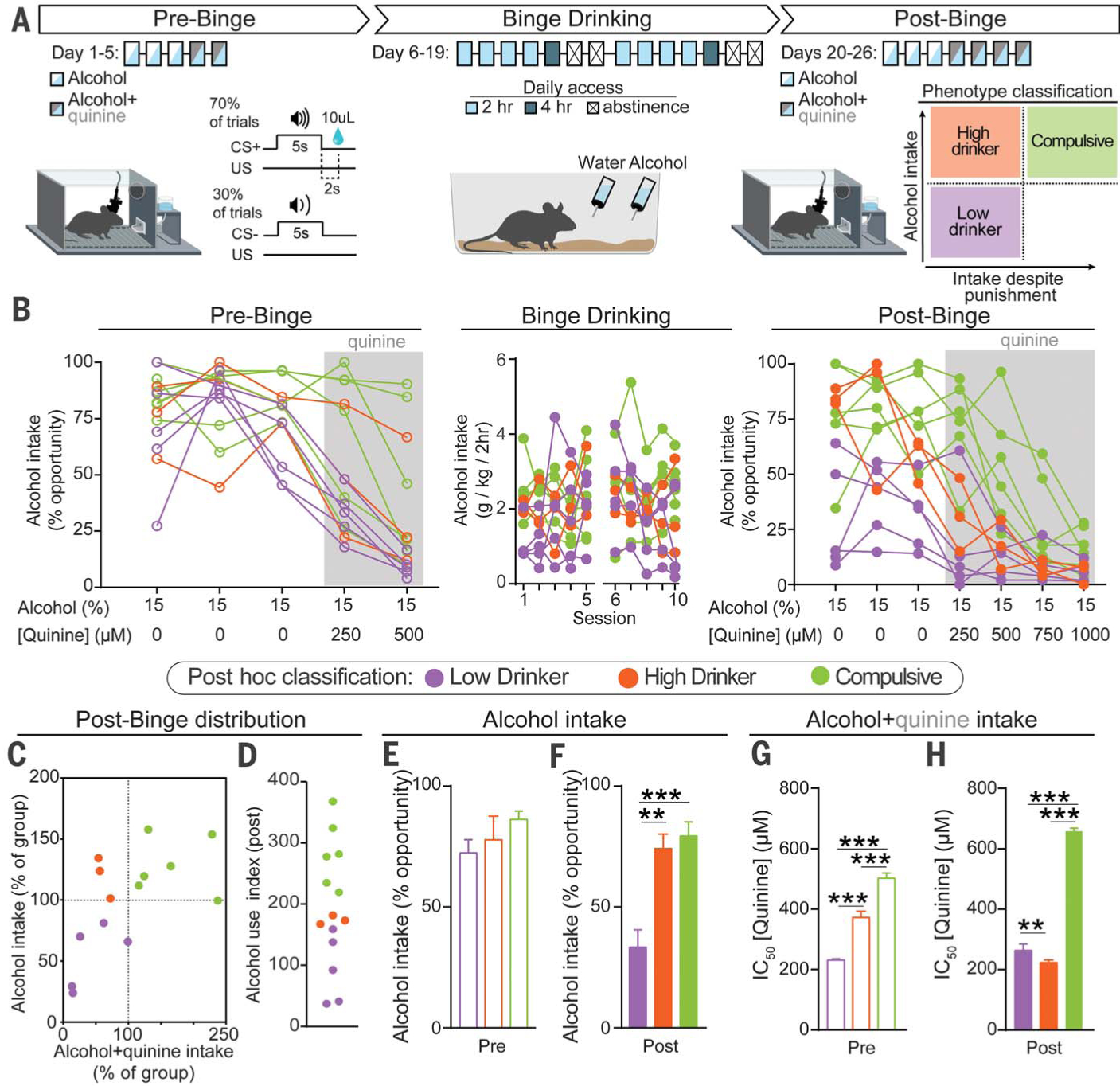
Fig. 1.. Binge-induced compulsion task (BICT) for tracking the emergence of individual differences in compulsive alcohol drinking.
(A) Schematic of the BICT. (B) Individual animals’ alcohol consumption. (C) Normalized distributions of alcohol and alcohol+quinine consumption during the post-binge conditioning phase plotted to classify each animal’s alcohol-drinking phenotype, which was applied post hoc to the dataset. (D) Alcohol use index. (E) Average performance across the pre-binge alcohol-only sessions (days 1 to 3) did not differ between groups [one-way analysis of variance (ANOVA), F(2,11) = 1.922, p = 0.19]. (F) During post-binge conditioning sessions, high drinkers and compulsive animals consumed more alcohol (one-way ANOVA, F(2,11) = 15.41, p = 0.0006). (G) Concentration required to produce an IC50 calculated from pre-binge conditioning data (one-way ANOVA, F(2,11) = 430.3, p < 0.0001). (H) After binge drinking, compulsive animals exhibited robust punishment-resistant alcohol intake compared with both low and high drinkers (one-way ANOVA, F(2,11) = 1298.0, p < 0.0001). All post hoc comparisons used Tukey’s test: **p < 0.01; ***p < 0.001. Error bars indicate ± SEM.
Fig. 2.
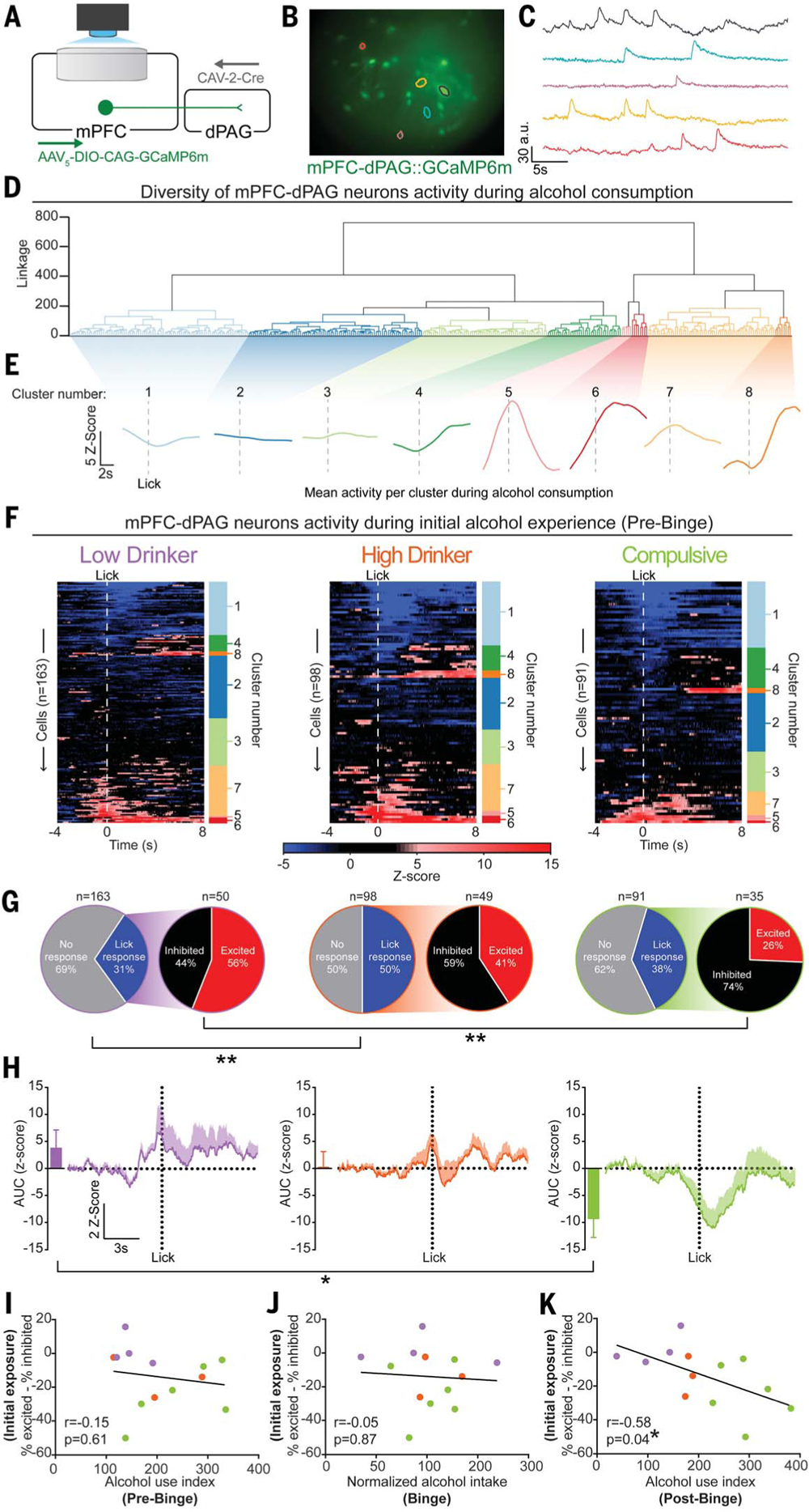
Fig. 2.. Activity in mPFC-dPAG neurons during initial experience with alcohol is a vulnerability marker for future alcohol abuse-like behaviors.
(A) Monitoring mPFC-dPAG activity using in vivo calcium imaging. (B and C) Field of view (B) and activity traces (C) from example cells. (D) Agglomerative hierarchical clustering of calcium activity traces during the first session of pre-binge (n = 13 animals, 352 cells). (E) Smoothed and averaged peristimulus time histograms per cluster. (F) Cluster designations are to the right of each neuron’s heatmap of z-scored trial-averaged activity. (G) Differences in distributions of activity during alcohol consumption (Fisher’s exact test: **p < 0.01). (H) Population activity from lick-responsive neurons. Inset: Area under the curve (AUC) for each trace (one-way ANOVA, F(2,10) = 4.531, *p = 0.039; Tukey’s post hoc test, *p < 0.05). (I to K) Balance of excitatory-inhibitory activity during alcohol consumption in the first pre-binge session plotted against each animal’s alcohol use index. No correlation between the excitation-inhibition balance during initial exposure and alcohol use index from pre-binge data (I) or from binge drinking (J). (K) Increased inhibitory activity during alcohol consumption during initial exposure predicted heightened pathological-like drinking behaviors during post-binge. Error bars indicate ± SEM.
Fig. 3.
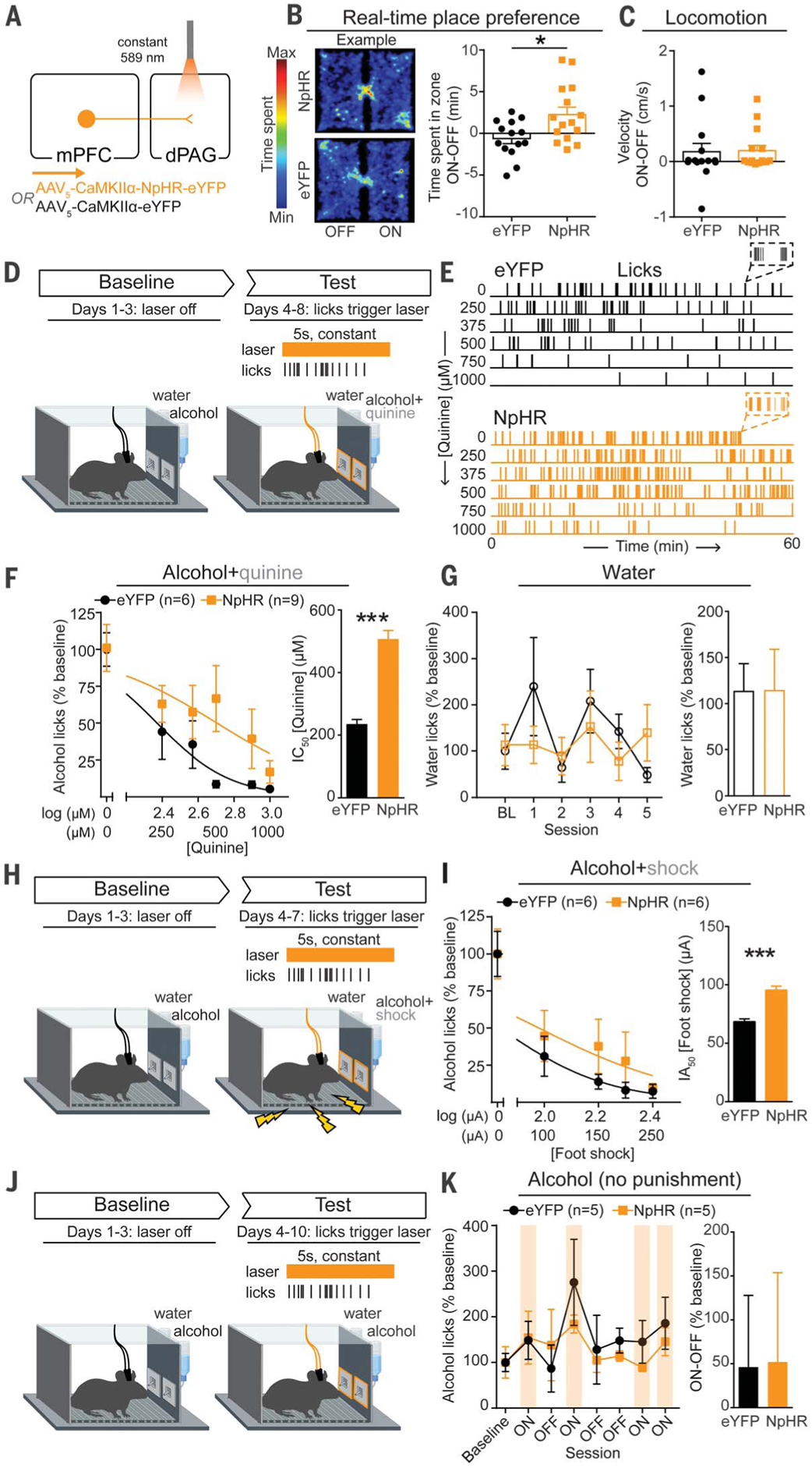
Fig. 3.. Inhibition of mPFC-dPAG neurons drives compulsive drinking but does not alter drinking in the absence of punishment.
(A) Strategy to inhibit mPFC terminals in the dPAG. (B) Inhibition of mPFC terminals in the dPAG was preferred in a real-time place preference task (unpaired t test, t(27) = 2.647, *p = 0.013). (C) Photoinhibition did not alter locomotion (unpaired t test, t(27) = 0.1191, p = 0.91). (D) On test days, water or alcohol spout contacts triggered a photoinhibition period. During the test, the quinine concentration was increased across days (alcohol bottle only). (E) Example alcohol lick event records. (F) The concentration of quinine required to decrease alcohol spout licking to 50% of baseline (IC50) was greater in NpHR animals (unpaired t test, t(13) =22.05, ***p < 0.0001). (G) No difference in licking for water between groups (unpaired t test, t(13) = 0.016, p = 0.99). (H) Alcohol drinking punished with foot shock. (I) Foot-shock amplitude required to attenuate alcohol spout licks by 50% of baseline [half-maximal inhibitory amplitude (IA50)] was increased in NpHR animals (unpaired t test, t(10) = 6.498, ***p < 0.0001). (J) Alcohol drinking in the absence of punishment. (K) Photoinhibition did not alter licking for alcohol in the absence of punishment (unpaired t test, t(8) = 0.045, p = 0.97). Error bars indicate ± SEM.
Fig. 4.
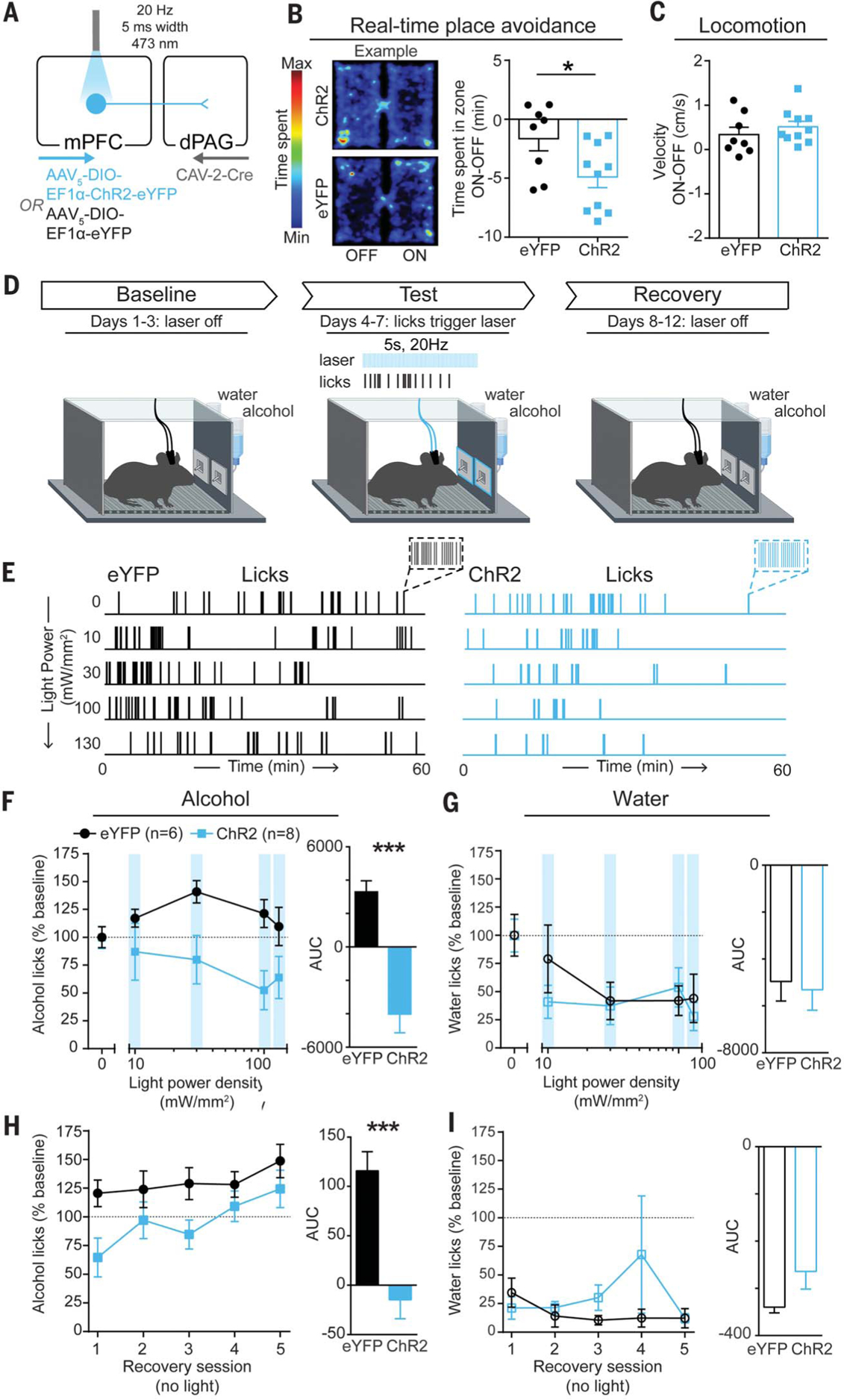
Fig. 4.. Activation of mPFC-dPAG neurons mimics the effects of punishment on alcohol consumption.
(A) Strategy to activate mPFC-dPAG neurons. (B) A 20-Hz photostimulation of mPFC-dPAG neurons was avoided in a real-time place avoidance task (unpaired t test, t(16) = 2.356, *p = 0.032). (C) Photostimulation did not alter locomotion (unpaired t test, t(16) = 0.884, p = 0.39). (D) During test days, water or alcohol spout contacts triggered photostimulation delivered at increasing intensities over days (10 to 130 mW/mm2). During recovery sessions, no light was delivered. (E) Example alcohol lick event records. (F) Area under the light power density curve was lower in ChR2 animals than in eYFP controls (unpaired t test, t(12) = 5.811, ***p = 0.0002). (G) Area under the light power density curve did not differ between ChR2 animals and eYFP controls (unpaired t test, t(12) = 0.2834, p = 0.78). (H) AUC for alcohol licks during recovery sessions was decreased in ChR2 animals compared with eYFP controls (unpaired t test, t(12) = 4.677, ***p = 0.0005). (I) AUC for licks on the water spout during recovery sessions did not differ between ChR2 animals and eYFP controls (unpaired t test, t(12) = 1.682, p = 0.1184). Error bars indicate ± SEM.

Comment in

  • Compelled to drink: Why some cannot stop.
    Nixon K, Mangieri RA. Nixon K, et al. Science. 2019 Nov 22;366(6468):947-948. doi: 10.1126/science.aaz7357. Science. 2019. PMID: 31753982 No abstract available.
  • Foreseeing compulsion.
    Bray N. Bray N. Nat Rev Neurosci. 2020 Feb;21(2):58-59. doi: 10.1038/s41583-019-0256-8. Nat Rev Neurosci. 2020. PMID: 31822865 No abstract available.

References

    1. Substance Abuse and Mental Health Services Administration, Center for Behavioral Health Statistics and Quality, Results from the 2017 National Survey on Drug Use and Health: Detailed Tables (2017); www.samhsa.gov/data/sites/default/files/cbhsq-reports/NSDUHDetailedTabs2....
    1. Grant BF, Goldstein RB, Saha TD, Chou SP, Jung J, Zhang H, Pickering RP, Ruan WJ, Smith SM, Huang B, Hasin DS, JAMA Psychiatry 72, 757–766 (2015). - PMC - PubMed
    1. Hopf FW, Lesscher HMB, Alcohol 48, 253–264 (2014). - PMC - PubMed
    1. Vanderschuren LJMJ, Everitt BJ, Science 305,1017–1019 (2004). - PubMed
    1. American Psychiatric Association, Diagnostic and Statistical Manual of Mental Disorders (DSM-5®) (American Psychiatric Association, 2013).

Publication types