


The genome of a subterrestrial nematode reveals adaptations to heat
- PMID: 31754114
- PMCID: PMC6872716
- DOI: 10.1038/s41467-019-13245-8
The genome of a subterrestrial nematode reveals adaptations to heat
Abstract
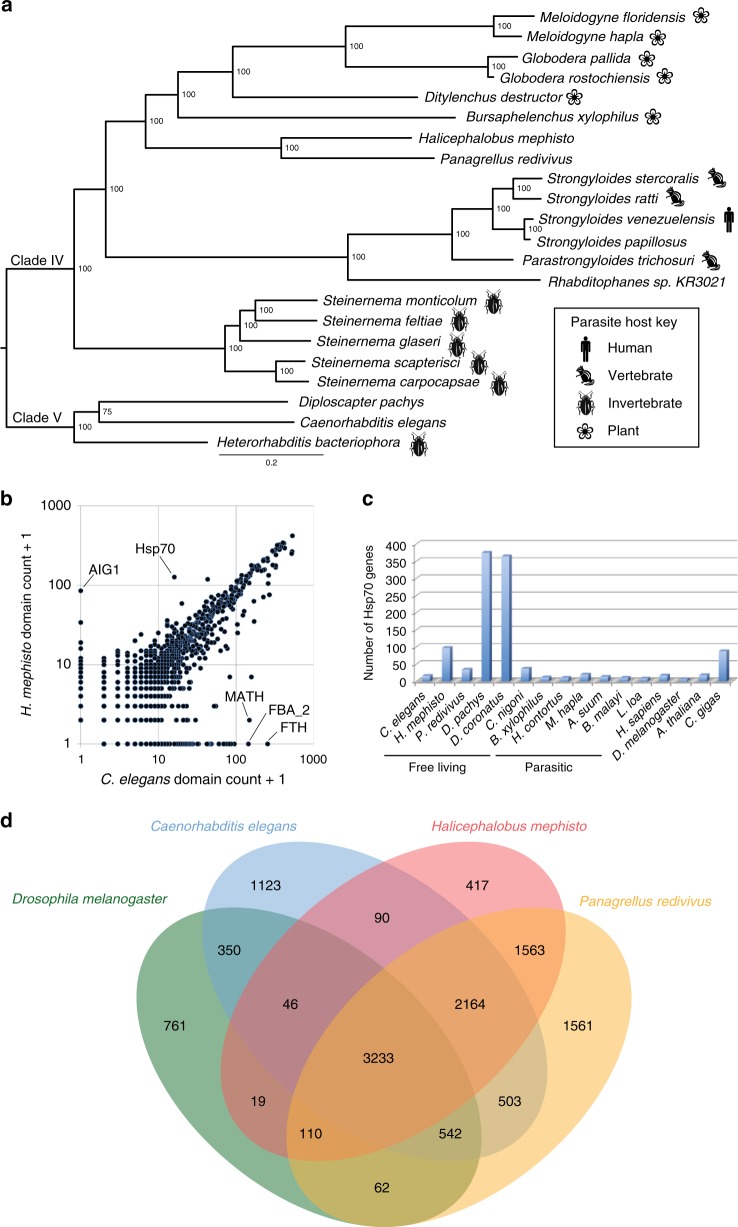
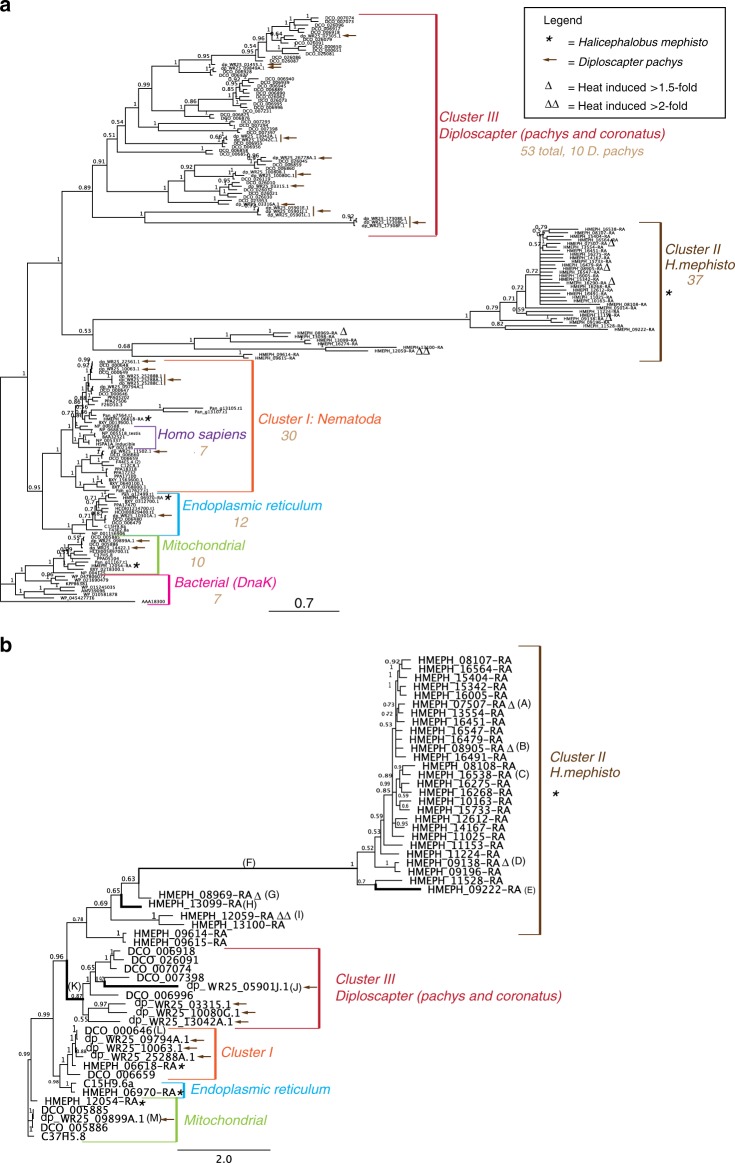
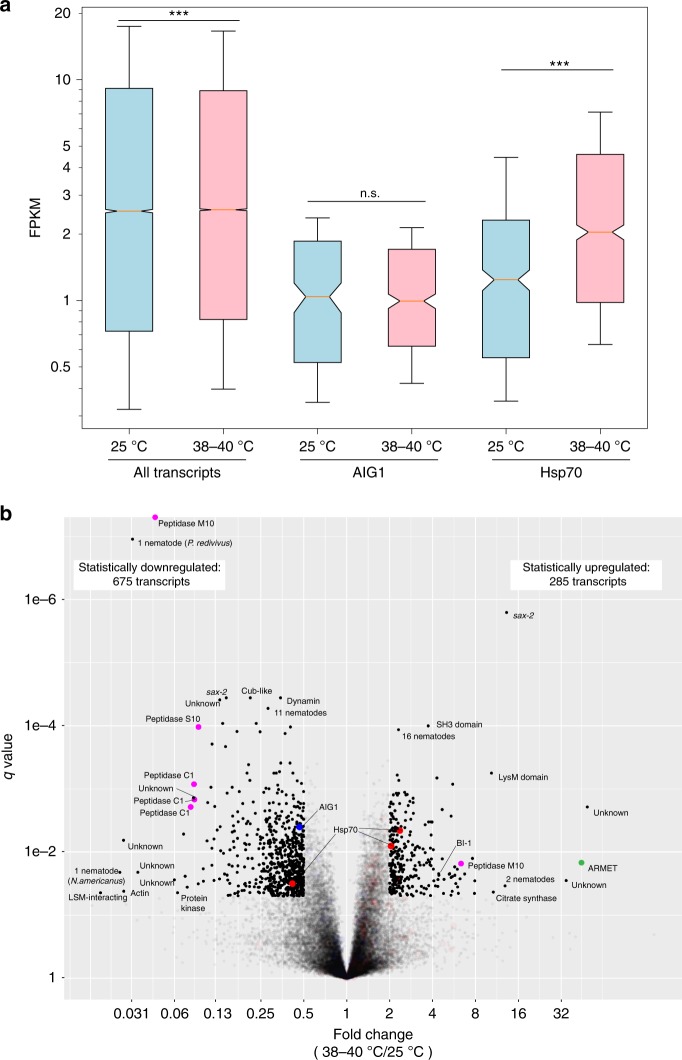
The nematode Halicephalobus mephisto was originally discovered inhabiting a deep terrestrial aquifer 1.3 km underground. H. mephisto can thrive under conditions of abiotic stress including heat and minimal oxygen, where it feeds on a community of both chemolithotrophic and heterotrophic prokaryotes in an unusual ecosystem isolated from the surface biosphere. Here we report the comprehensive genome and transcriptome of this organism, identifying a signature of adaptation: an expanded repertoire of 70 kilodalton heat-shock proteins (Hsp70) and avrRpt2 induced gene 1 (AIG1) proteins. The expanded Hsp70 genes are transcriptionally induced upon growth under heat stress, and we find that positive selection is detectable in several members of this family. We further show that AIG1 may have been acquired by horizontal gene transfer (HGT) from a rhizobial fungus. Over one-third of the genes of H. mephisto are novel, highlighting the divergence of this nematode from other sequenced organisms. This work sheds light on the genomic basis of heat tolerance in a complete subterrestrial eukaryotic genome.
Conflict of interest statement
The authors declare no competing interests.
Figures

References
-
- Magnabosco, C. et al. Fluctuations in populations of subsurface methane oxidizers in coordination with changes in electron acceptor availability. FEMS Microbiol. Ecol. 94, 10.1093/femsec/fiy089 (2018). - PubMed
Publication types
MeSH terms
Substances
Grants and funding
LinkOut - more resources
Full Text Sources
Molecular Biology Databases
