Review
. 2019 Nov 13:5:145.
doi: 10.1038/s41420-019-0225-z. eCollection 2019.

Natural and non-natural antioxidative compounds: potential candidates for treatment of vascular calcification

Affiliations
Review

Natural and non-natural antioxidative compounds: potential candidates for treatment of vascular calcification

Chia-Ter Chao et al. Cell Death Discov. .

Abstract

Vascular calcification (VC) is highly prevalent in patients with advanced age, or those with chronic kidney disease and diabetes, accounting for substantial global cardiovascular burden. The pathophysiology of VC involves active mineral deposition by transdifferentiated vascular smooth muscle cells exhibiting osteoblast-like behavior, building upon cores with or without apoptotic bodies. Oxidative stress drives the progression of the cellular phenotypic switch and calcium deposition in the vascular wall. In this review, we discuss potential compounds that shield these cells from the detrimental influences of reactive oxygen species as promising treatment options for VC. A comprehensive summary of the current literature regarding antioxidants for VC is important, as no effective therapy is currently available for this disease. We systematically searched through the existing literature to identify original articles investigating traditional antioxidants and novel compounds with antioxidant properties with regard to their effectiveness against VC in experimental or clinical settings. We uncovered 36 compounds with antioxidant properties against VC pathology, involving mechanisms such as suppression of NADPH oxidase, BMP-2, and Wnt/β-catenin; anti-inflammation; and activation of Nrf2 pathways. Only two compounds have been tested clinically. These findings suggest that a considerable opportunity exists to harness these antioxidants for therapeutic use for VC. In order to achieve this goal, more translational studies are needed.

Keywords: Calcification; Cell biology.


Conflict of interest statement

Conflict of interestThe authors declare that they have no conflict of interest.

Figures
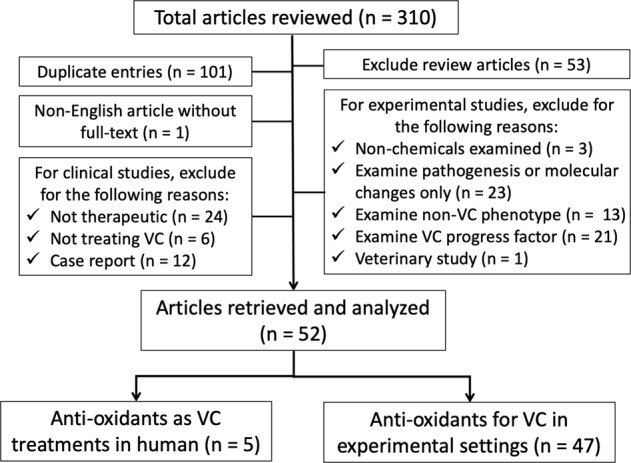
Fig. 1
Fig. 1. The algorithm of study retrieval from the literature and the application of selection criteria.
VC vascular calcification
Fig. 2
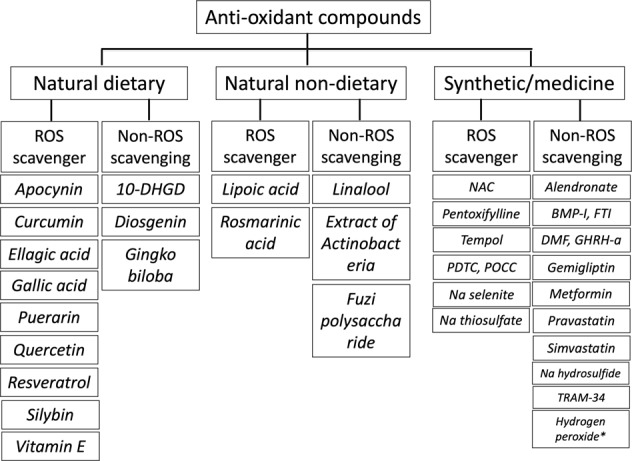
Fig. 2. The proportion of identified antioxidant compounds within each category, stratified based on the presence or absence of ROS scavenging ability.
10-DHGD 10-dehydrogingerdione, BMP-I bone morphogenetic protein inhibitor, DMF dimethylfumarate, FTI farnesyl transferase inhibitor, GHRH-a growth hormone-releasing hormone receptor agonist, NAC N-acetylcysteine, PDTC pyrrolidine dithiocarbamate, POCC poly(1,8-octamethylene-citrate-co-cysteine), ROS reactive oxygen species. * Very low dose (0.01 mM)
Fig. 3
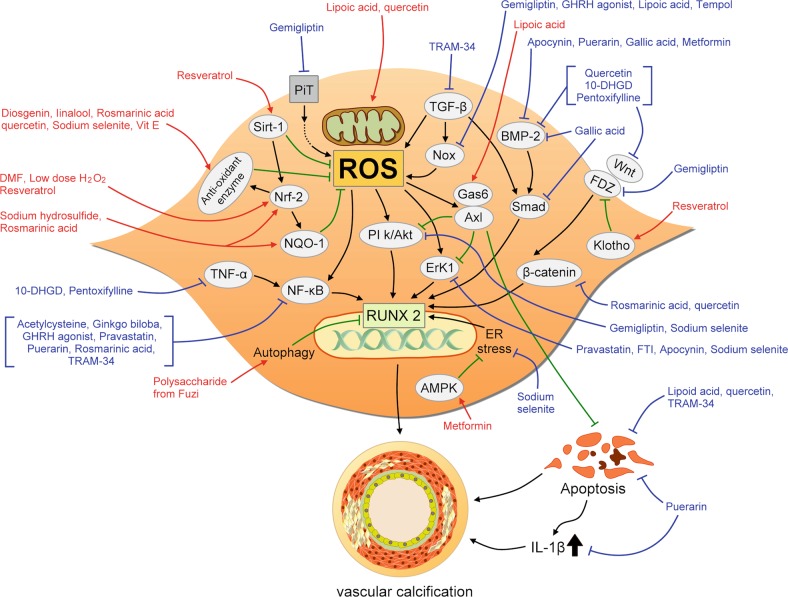
Fig. 3. An illustrative diagram showing the plausible molecular mechanisms through which each antioxidant counteracts vascular calcification.
Red arrows indicate positive influences by antioxidants, while blue connecting lines indicate their inhibitory action. 10-DHGD 10-dehydrogingerdione, ER endoplasmic reticulum, FTI farnesyl transferase inhibitor, IL interleukin, Nox NADPH oxidase, ROS reactive oxygen species, GHRH growth hormone-releasing hormone, TGF transforming growth factor, TNF tumor necrosis factor

References

    1. Cherepanov D, et al. Real-world cardiovascular disease burden in patients with atherosclerotic cardiovascular disease: a comprehensive systematic literature review. Curr. Med. Res. Opin. 2018;34:459–473. doi: 10.1080/03007995.2017.1401529. - DOI - PubMed
    1. Roth GA, et al. Demographic and epidemiologic drivers of global cardiovascular mortality. N. Engl. J. Med. 2015;372:1333–1341. doi: 10.1056/NEJMoa1406656. - DOI - PMC - PubMed
    1. Covic A, et al. Bone and mineral disorders in chronic kidney disease: implications for cardiovascular health and ageing in the general population. Lancet Diabetes Endocrinol. 2018;6:319–331. doi: 10.1016/S2213-8587(17)30310-8. - DOI - PubMed
    1. Greif M, et al. Lipoprotein (a) is independently correlated with coronary artery calcification. Eur. J. Intern. Med. 2013;24:75–79. doi: 10.1016/j.ejim.2012.08.014. - DOI - PubMed
    1. Malik S, et al. Coronary artery calcium score for long-term risk classification in individuals with type 2 diabetes and metabolic syndrome from the multi-ethnic study of atherosclerosis. JAMA Cardiol. 2017;2:1332–1340. doi: 10.1001/jamacardio.2017.4191. - DOI - PMC - PubMed