


The current and future impact of genome-wide sequencing on fetal precision medicine
- PMID: 31754893
- PMCID: PMC7239720
- DOI: 10.1007/s00439-019-02088-4
The current and future impact of genome-wide sequencing on fetal precision medicine
Abstract
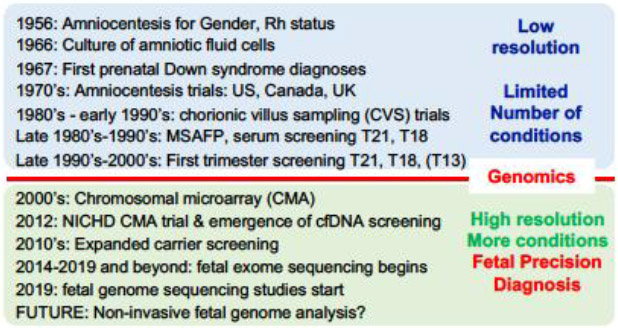
Next-generation sequencing and other genomic technologies are transforming prenatal and reproductive screening and testing for fetal genetic disorders at an unprecedented pace. Original approaches of screening and testing for fetal genetic and genomic disorders were focused on a few more prevalent conditions that were easily diagnosable with pre-genomic era diagnostic tools. First, chromosomal microarray analysis and then next-generation sequencing brought technology capable of more detailed genomic evaluation to prenatal genetic screening and diagnosis. This has facilitated parallel introduction of a variety of new tests on maternal blood samples, including expanded carrier screening and cell-free DNA-based non-invasive screening for fetal aneuploidy, selected copy number variants, and single-gene disorders. Genomic tests on fetal DNA samples, obtained primarily through amniocentesis or chorionic villus sampling, include chromosomal microarray analysis and gene panel and exome sequencing. All these form the diagnostic pillar of the emerging field of fetal precision medicine, but their implementation is associated with ethical, counseling and healthcare resource utilization challenges. We discuss where in the reproductive and prenatal care continuum these exciting new technologies are integrated, along with associated challenges. We propose areas of priority for research to gain the data in support of their responsible implementation into clinical reproductive and prenatal care.
Conflict of interest statement
Figures
References
-
- American College of Obstetrics and Gynecology (ACOG) (2019). Practice Advisory_ Cell-free DNA to Screen for Single-Gene Disorders (https://www.acog.org/Clinical-Guidance-and-Publications/Practice-Advisor...; February 21, 2019)
Publication types
MeSH terms
Grants and funding
LinkOut - more resources
Full Text Sources
Medical
