


Influence of Ripening Stage and Cultivar on Physicochemical Properties and Antioxidant Compositions of Aronia Grown in South Korea
- PMID: 31756943
- PMCID: PMC6963724
- DOI: 10.3390/foods8120598
Influence of Ripening Stage and Cultivar on Physicochemical Properties and Antioxidant Compositions of Aronia Grown in South Korea
Abstract
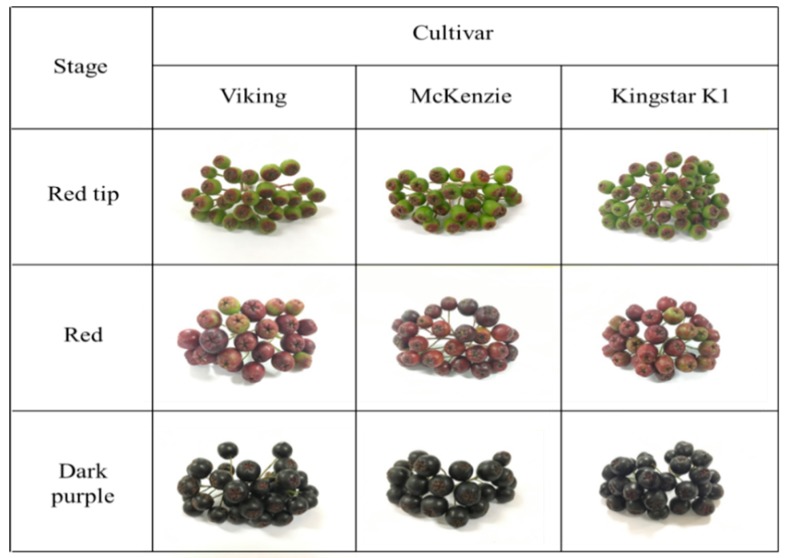
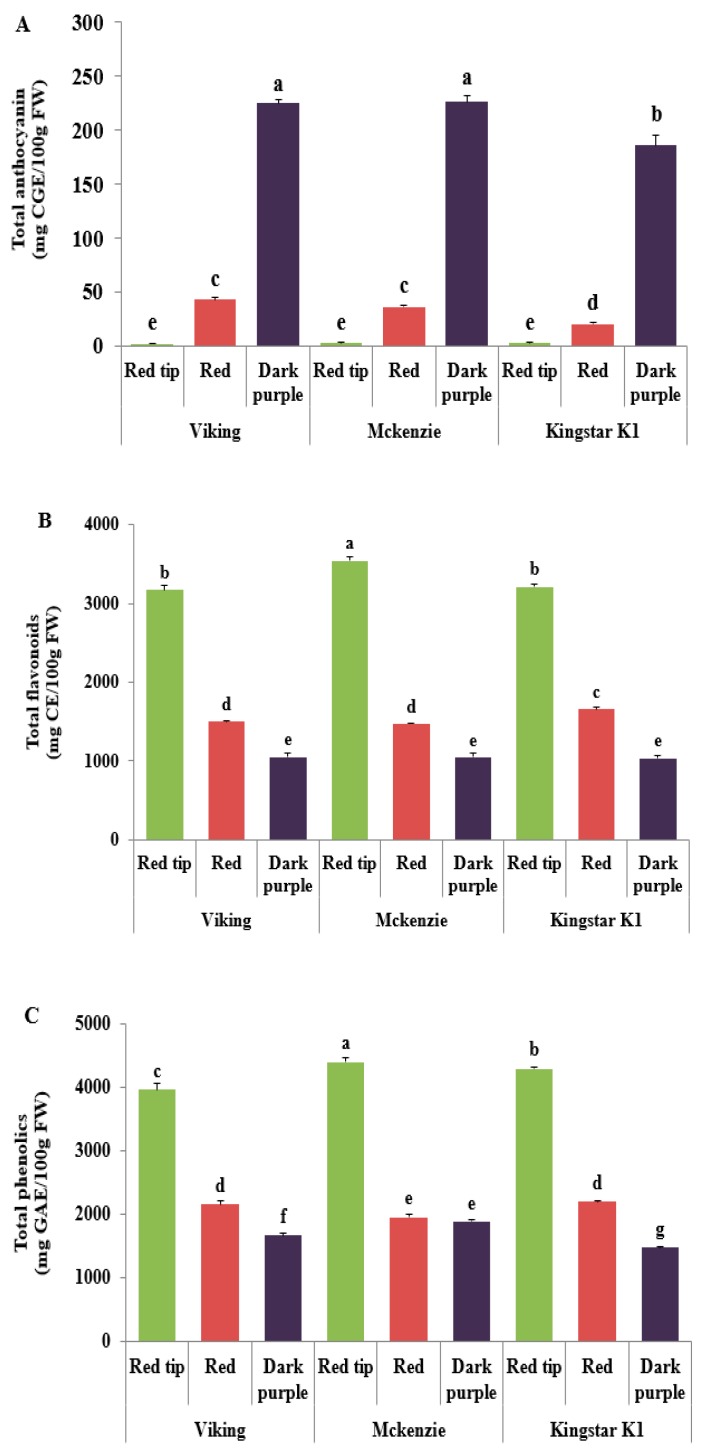
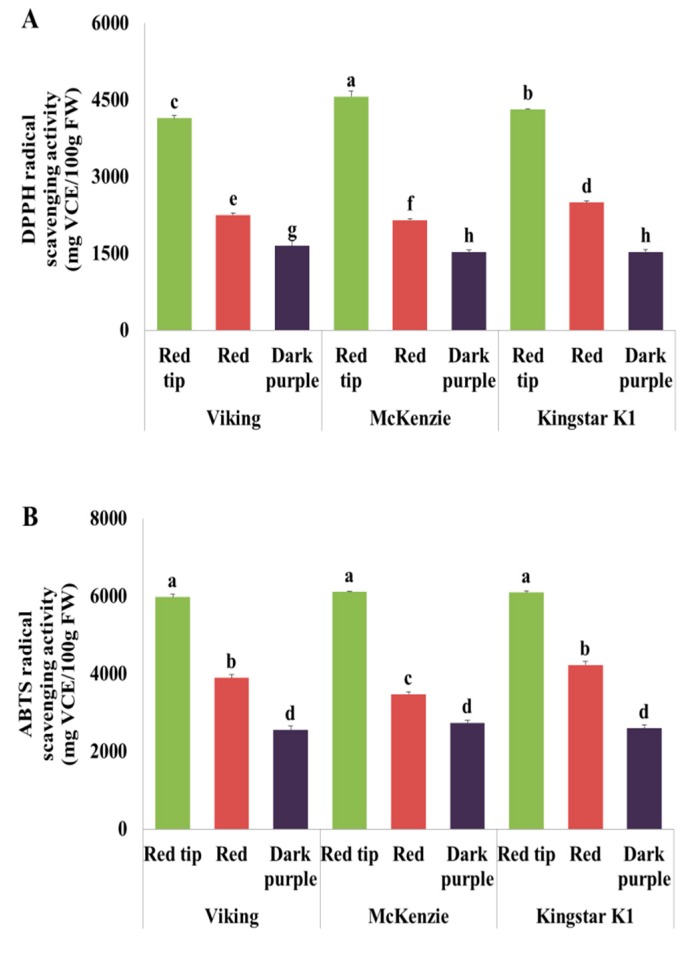
The present study investigated the fruits of aronia (Aronia melanocarpa) across different stages of maturity and analyzed their physicochemical properties, antioxidant compositions, and activities. The selected aronia cultivars ('Viking', 'McKenzie', and 'Kingstar K1' were categorized based on maturity into the immature stage (red tip), intermediary stage (red), and mature stage (dark purple). The key sugar components of aronia fruits were fructose, glucose, and sorbitol, while the main organic acid was found to be malic acid. The antioxidant content and activity of all three aronia cultivars showed significantly higher values for the red tip stage than the red or dark purple stages. However, the total anthocyanin content of aronia was the highest at the dark purple stage in three cultivars. The main polyphenols in aronia fruits were found to be catechol and chlorogenic acid, with a decreasing tendency as maturation progressed. As a result, the red tip stage of aronia fruits contains comparatively more abundant flavonoids, phenolic compounds and polyphenols than the dark purple stage, with higher antioxidant activity.
Keywords: anthocyanin; antioxidant activity; antioxidant compounds; aronia grown in Korea; catechol; chlorogenic acid.
Conflict of interest statement
The authors declare no conflict of interest.
Figures
References
-
- Rissanen T.H., Voutilainen S., Virtanen J.K., Venho B., Vanharanta M., Mursu J., Salonen J.T. Low intake of fruits, and vegetables is associated with excess mortality in men: The Kuopio Ischaemic Heart Disease Risk Factor (KIHD) Study. J. Nutr. 2003;133:199–204. doi: 10.1093/jn/133.1.199. - DOI - PubMed
-
- Wangensteen H., Bräunlich M., Nikolic V., Malterud K.E., Slimestad R., Barsett H. Anthocyanins, proanthocyanidins and total phenolics in four cultivars of aronia: Antioxidant and enzyme inhibitory effects. J. Funct. Foods. 2014;7:746–752. doi: 10.1016/j.jff.2014.02.006. - DOI
-
- Snebergrova J., Cizkova H., Neradova E., Kapci B., Rajchl A., Voldrich M. Variability of Characteristic Components of Aronia. Czech J. Food Sci. 2014;32:25–30. doi: 10.17221/540/2012-CJFS. - DOI
LinkOut - more resources
Full Text Sources
Research Materials
