


Renal Benefits of SGLT 2 Inhibitors and GLP-1 Receptor Agonists: Evidence Supporting a Paradigm Shift in the Medical Management of Type 2 Diabetes
- PMID: 31757028
- PMCID: PMC6928920
- DOI: 10.3390/ijms20235831
Renal Benefits of SGLT 2 Inhibitors and GLP-1 Receptor Agonists: Evidence Supporting a Paradigm Shift in the Medical Management of Type 2 Diabetes
Abstract
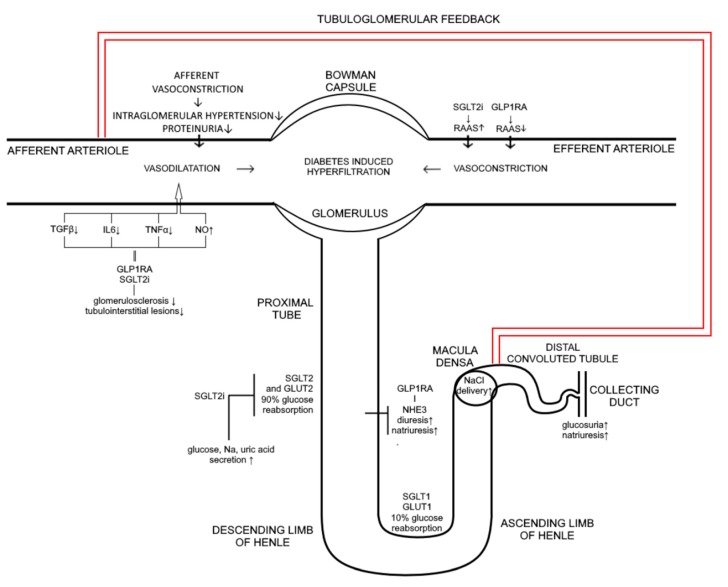
Diabetic nephropathy (DN) is one of the most perilous side effects of diabetes mellitus type 1 and type 2 (T1DM and T2DM).). It is known that sodium/glucose cotransporter 2 inhibitors (SGLT 2i) and glucagone like peptide-1 receptor agonists (GLP-1 RAs) have renoprotective effects, but the molecular mechanisms are still unknown. In clinical trials GLP-1 analogs exerted important impact on renal composite outcomes, primarily on macroalbuminuria, possibly through suppression of inflammation-related pathways, however enhancement of natriuresis and diuresis is also one of possible mechanisms of nephroprotection. Dapagliflozin, canagliflozin, and empagliflozin are SGLT2i drugs, useful in reducing hyperglycemia and in their potential renoprotective mechanisms, which include blood pressure control, body weight loss, intraglomerular pressure reduction, and a decrease in urinary proximal tubular injury biomarkers. In this review we have discussed the potential synergistic and/or additive effects of GLP 1 RA and SGLT2 inhibitors on the primary onset and progression of kidney disease, and the potential implications on current guidelines of diabetes type 2 management.
Keywords: GLP-1 receptor agonists; SGLT2 inhibitors; diabetes mellitus; diabetic nephropathy; molecular mechanisms.
Conflict of interest statement
The authors declare no conflict of interest.
Figures
References
Publication types
MeSH terms
Substances
LinkOut - more resources
Full Text Sources
Medical
