


Benefits of Aerobic Exercise for Breast Cancer Survivors: A Systematic Review of Randomized Controlled Trials
- PMID: 31759342
- PMCID: PMC7063018
- DOI: 10.31557/APJCP.2019.20.11.3197
Benefits of Aerobic Exercise for Breast Cancer Survivors: A Systematic Review of Randomized Controlled Trials
Abstract
Background: Physical exercise may be beneficial to breast cancer (BC) survivors. Here, we systematically summarized the effects of aerobic exercise in BC survivors. We conducted a systematic review of randomized controlled trials (RCTs).
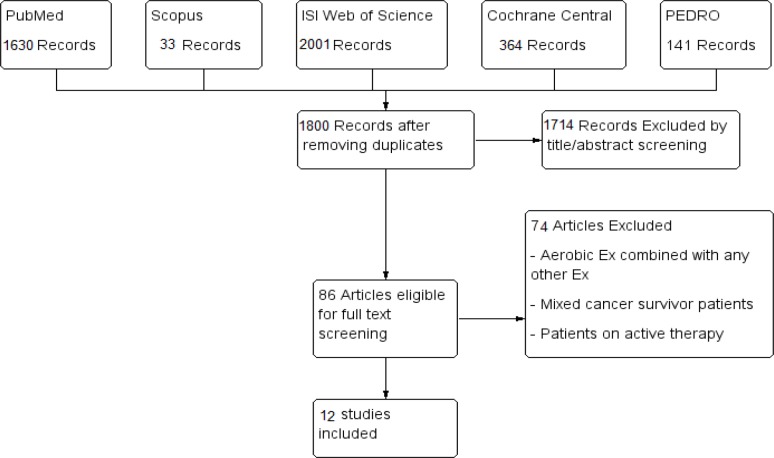
Methods: We searched PubMed, Web of knowledge, Scopus, Cochrane Central, Virtual Health Library and PEDRO databases for relevant RCTs, comparing aerobic exercise with usual care among BC survivors. Data were extracted and evidence was synthesized narratively.
Results: Twelve studies were included in this systematic review. Studies reported that aerobic exercise can significantly improve the quality of life in BC survivors. Moreover, aerobic exercise alleviated the symptoms of depression and anxiety. However, current evidence from the included studies showed that there was no significant benefit for aerobic exercise in terms of weight loss.
Conclusion: Our study suggests that aerobic exercise is beneficial to BC survivors.
Clinical relevance: Aerobic exercise should be recommended in the therapeutic and rehabilitative regimens of BC survivors.<br />.
Keywords: Aerobic exercise; Quality of Life; breast cancer; physical activity.
Figures
References
-
- Burnham TR, Wilcox A. Effects of exercise on physiological and psychological variables in cancer survivors. Med Sci Sports Exerc. 2002;34:1863–7. - PubMed
-
- Campbell KL, Kam JWY, Neil-Sztramko SE, et al. Effect of aerobic exercise on cancer-associated cognitive impairment: A proof-of-concept RCT. Psychooncology. 2017 https://doi.org/10.1002/pon.4370. - PubMed
-
- Cantarero-Villanueva I, Fernandez-Lao C, Cuesta-Vargas AI, et al. The effectiveness of a deep water aquatic exercise program in cancer-related fatigue in breast cancer survivors: A randomized controlled trial. Arch Phys Med Rehab. 2013;94:221–30. - PubMed
-
- Cooper JM, Loeb SJ, Smith CA, et al. The primary care nurse practitioner and cancer survivorship care. J Am Acad Nurse Pract. 2010;22:394–402. - PubMed
