


Gal-3 is a potential biomarker for spinal cord injury and Gal-3 deficiency attenuates neuroinflammation through ROS/TXNIP/NLRP3 signaling pathway
- PMID: 31763668
- PMCID: PMC6923351
- DOI: 10.1042/BSR20192368
Gal-3 is a potential biomarker for spinal cord injury and Gal-3 deficiency attenuates neuroinflammation through ROS/TXNIP/NLRP3 signaling pathway
Abstract
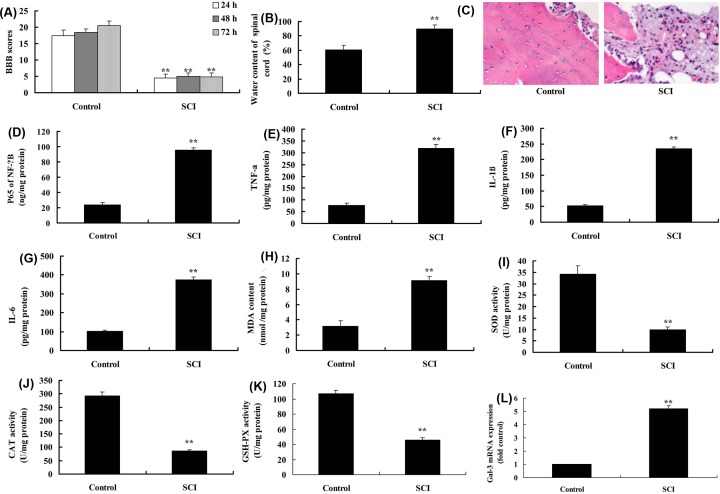
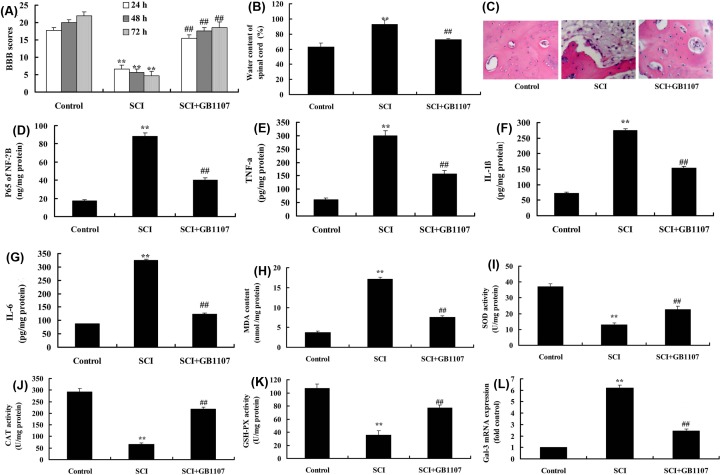
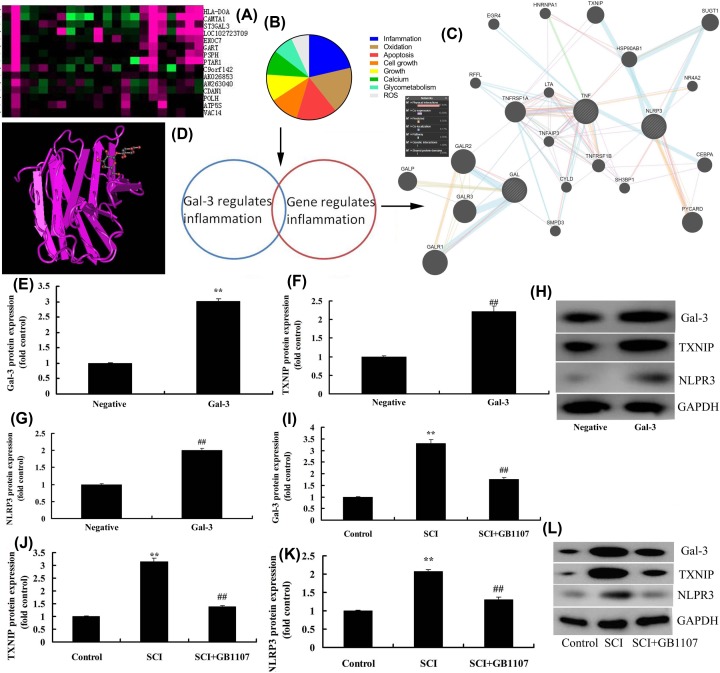
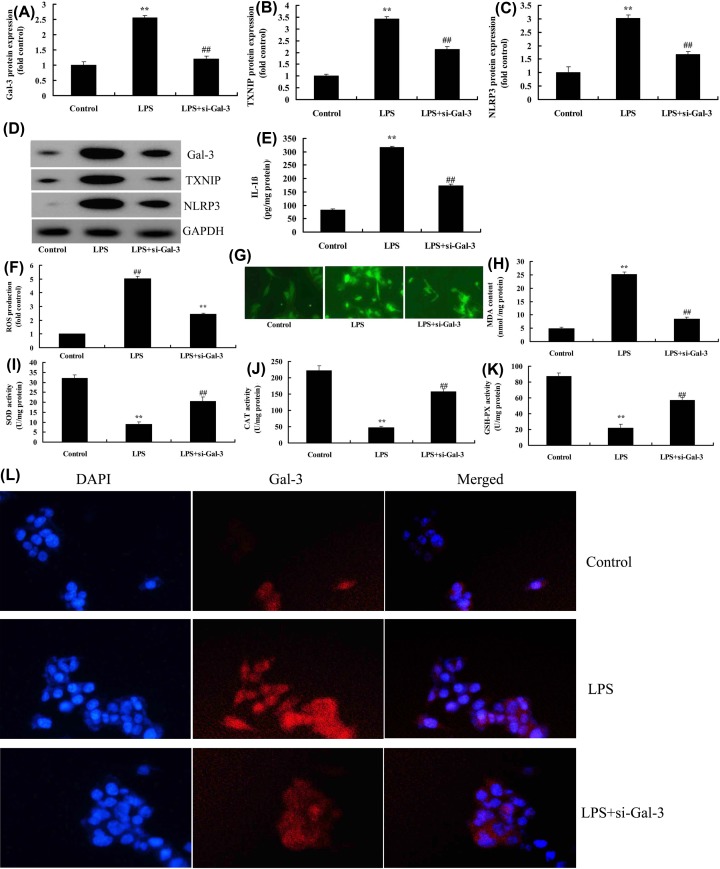
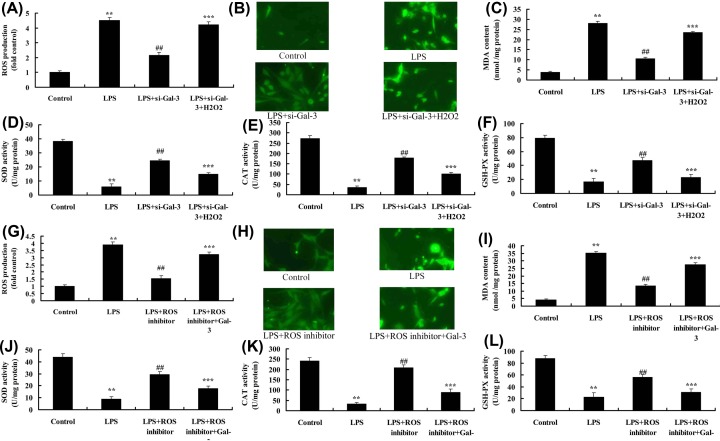
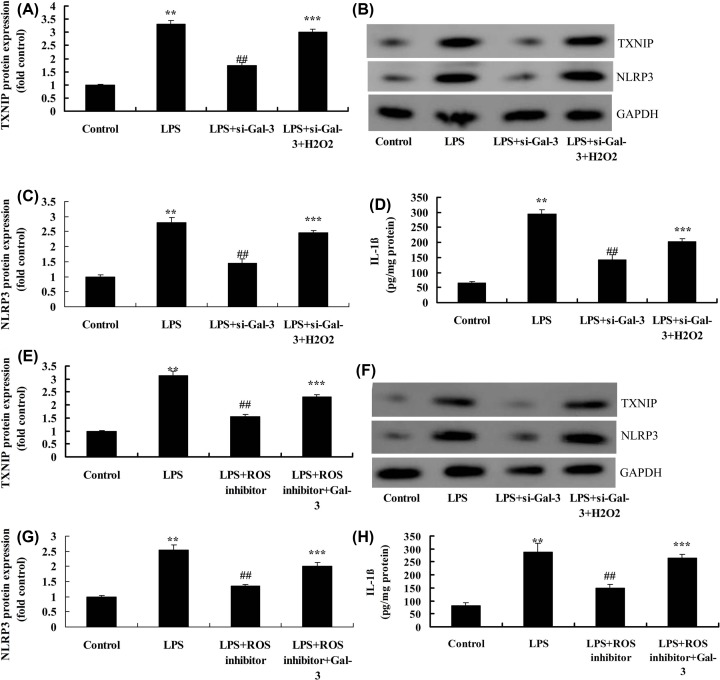
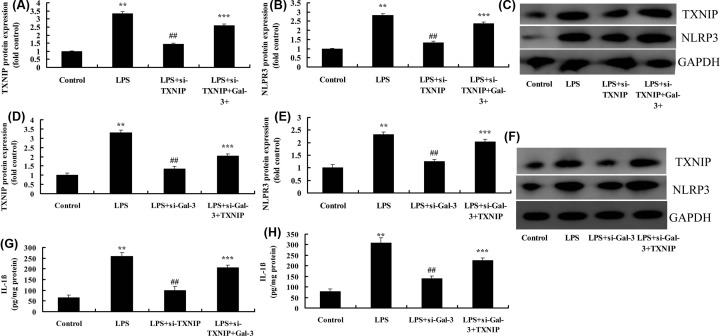
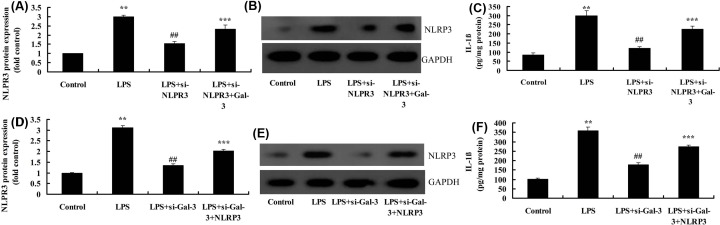
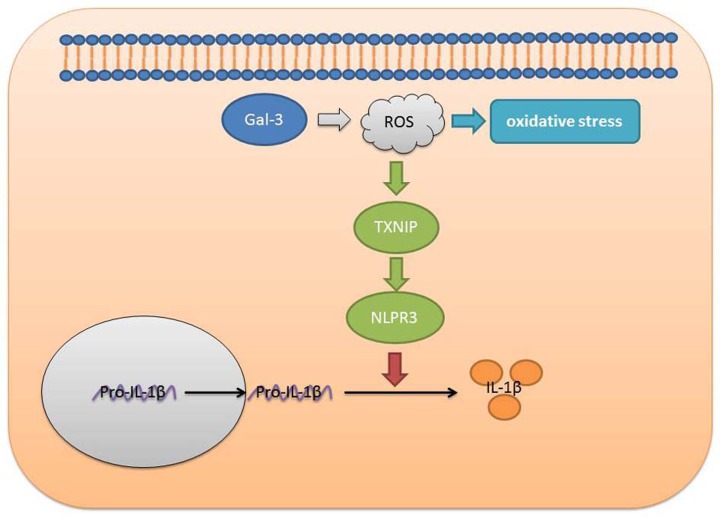
Spinal cord injury (SCI) often occurs in young and middle-aged population. The present study aimed to clarify the function of Galectin-3 (Gal-3) in neuroinflammation of SCI. Sprague-Dawley (SD) rat models with SCI were established in vivo. PC12 cell model in vitro was induced by lipopolysaccharide (LPS). Reverse transcription-quantitative polymerase chain reaction (RT-qPCR) and Gene chip were used to analyze the expression levels of genes in the signaling pathway. Histological assessment, ELISA and Western blotting were conducted to evaluate the effects of Gal-3 upon the SCI model. In the in vivo SD rat model, Gal-3 expression level was up-regulated. The inhibition of Gal-3 attenuated the neuroinflammation in SCI model. The inhibition of Gal-3 could also mitigate the neuroinflammation and reactive oxygen species (ROS) in in vitro model. ROS reduced the effect of Gal-3 on oxidative stress in in vitro model. Down-regulating the content of TXNIP decreased the effect of Gal-3 on neuroinflammation in in vitro model. Suppressing the level of NLRP3 could weaken the effect of Gal-3 on neuroinflammation in in vitro model. Our data highlight that the Gal-3 plays a vital role in regulating the severity of neuroinflammation of SCI by enhancing the activation of ROS/TXNIP/NLRP3 signaling pathway. In addition, inflammasome/IL-1β production probably acts as the therapeutic target in SCI.
Keywords: Gal-3; NLRP3; ROS; Spinal cord injury; TXNIP.
© 2019 The Author(s).
Conflict of interest statement
The present study was approved by the Scientific Review Committee and the Institutional Review Board of the First Affiliated Hospital of Xinjiang Medical University.
The authors declare that there are no competing interests associated with the manuscript.
Figures
References
-
- Su Y., Chen Z., Du H., Liu R., Wang W., Li H. et al. (2019) Silencing miR-21 induces polarization of astrocytes to the A2 phenotype and improves the formation of synapses by targeting glypican 6 via the signal transducer and activator of transcription-3 pathway after acute ischemic spinal cord injury. FASEB J. 33, fj201900743R - PubMed
-
- Zhou Y., Dong Q., Pan Z., Song Y., Su P., Niu Y. et al. (2019) Hyperbaric oxygen improves functional recovery of the injured spinal cord by inhibiting inflammation and glial scar formation. Am. J. Phys. Med. Rehab. 98, 914–920 - PubMed
-
- Wang B., Shen P.F., Qu Y.X., Zheng C., Xu J.D., Xie Z.K. et al. (2019) miR-940 promotes spinal cord injury recovery by inhibiting TLR4/NF-kappaB pathway-mediated inflammation. Eur. Rev. Med. Pharmacol. Sci. 23, 3190–3197 - PubMed
-
- Lv Z.C., Cao X.Y., Guo Y.X., Zhang X.D., Ding J., Geng J. et al. (2019) Effects of MiR-146a on repair and inflammation in rats with spinal cord injury through the TLR/NF-kappaB signaling pathway. Eur. Rev. Med. Pharmacol. Sci. 23, 4558–4563 - PubMed
Publication types
MeSH terms
Substances
LinkOut - more resources
Full Text Sources
Medical
