


National HIV testing and diagnosis coverage in sub-Saharan Africa: a new modeling tool for estimating the 'first 90' from program and survey data
- PMID: 31764066
- PMCID: PMC6919235
- DOI: 10.1097/QAD.0000000000002386
National HIV testing and diagnosis coverage in sub-Saharan Africa: a new modeling tool for estimating the 'first 90' from program and survey data
Abstract
Objective: HIV testing services (HTS) are a crucial component of national HIV responses. Learning one's HIV diagnosis is the entry point to accessing life-saving antiretroviral treatment and care. Recognizing the critical role of HTS, the Joint United Nations Programme on HIV/AIDS (UNAIDS) launched the 90-90-90 targets stipulating that by 2020, 90% of people living with HIV know their status, 90% of those who know their status receive antiretroviral therapy, and 90% of those on treatment have a suppressed viral load. Countries will need to regularly monitor progress on these three indicators. Estimating the proportion of people living with HIV who know their status (i.e. the 'first 90'), however, is difficult.
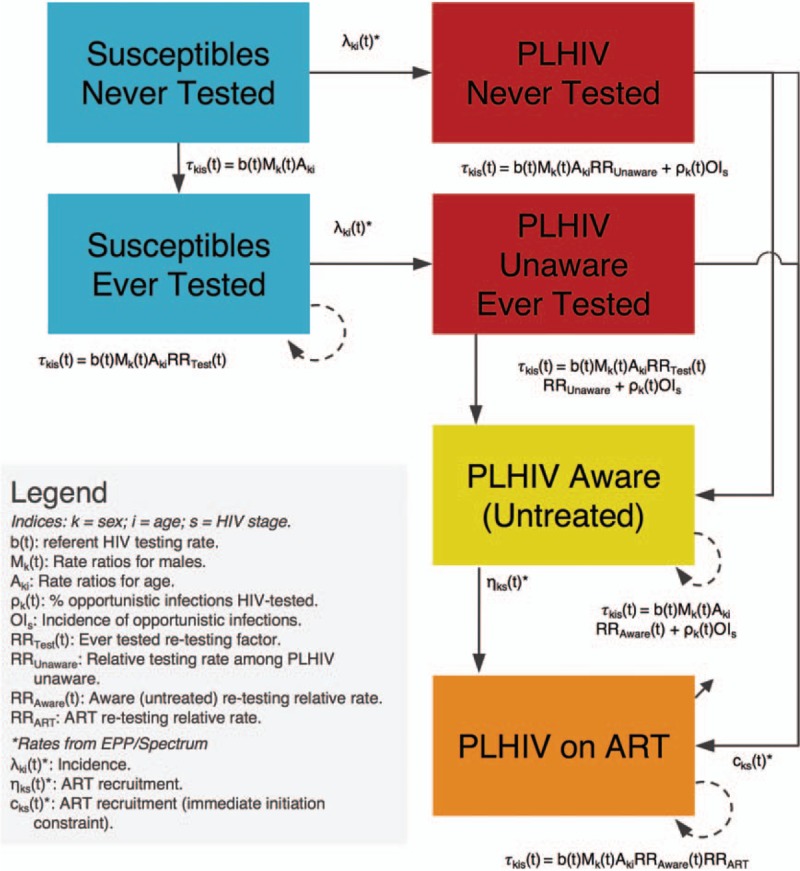
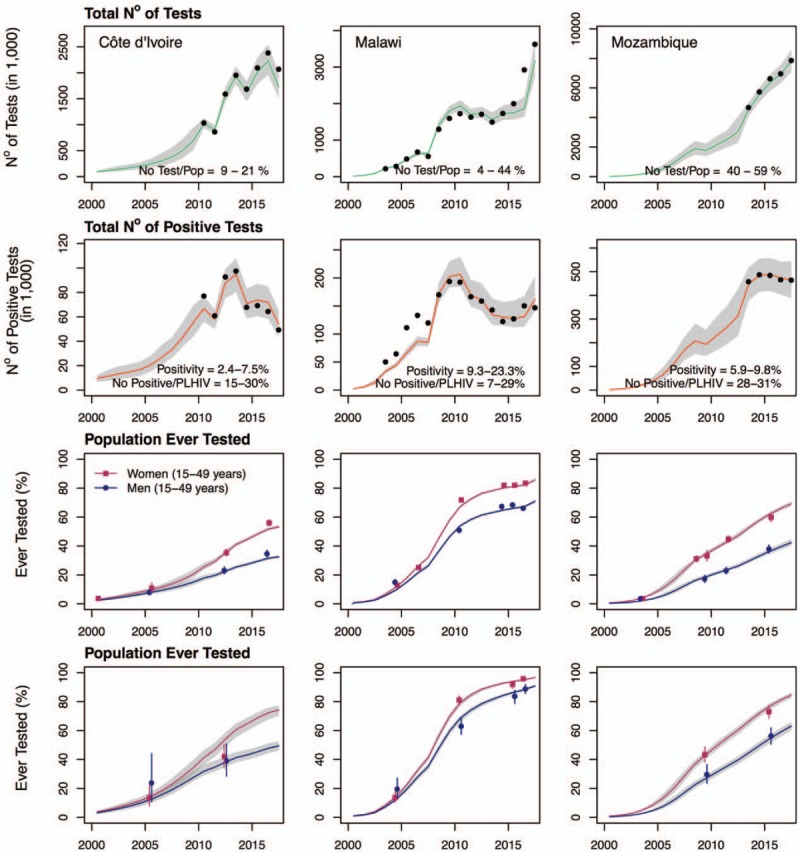
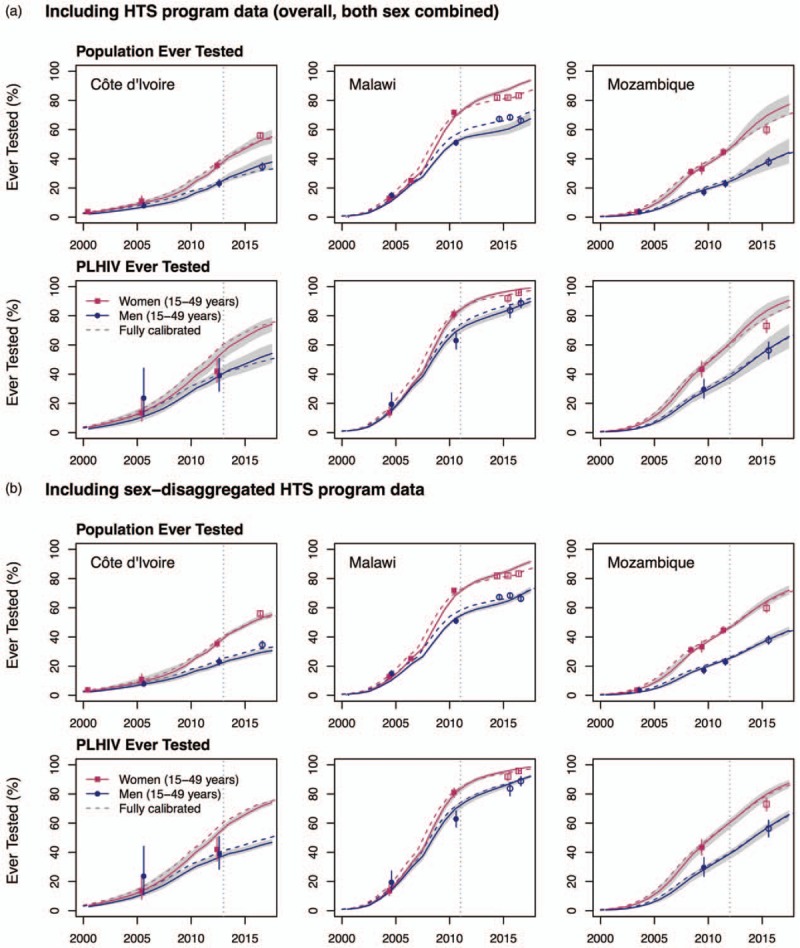
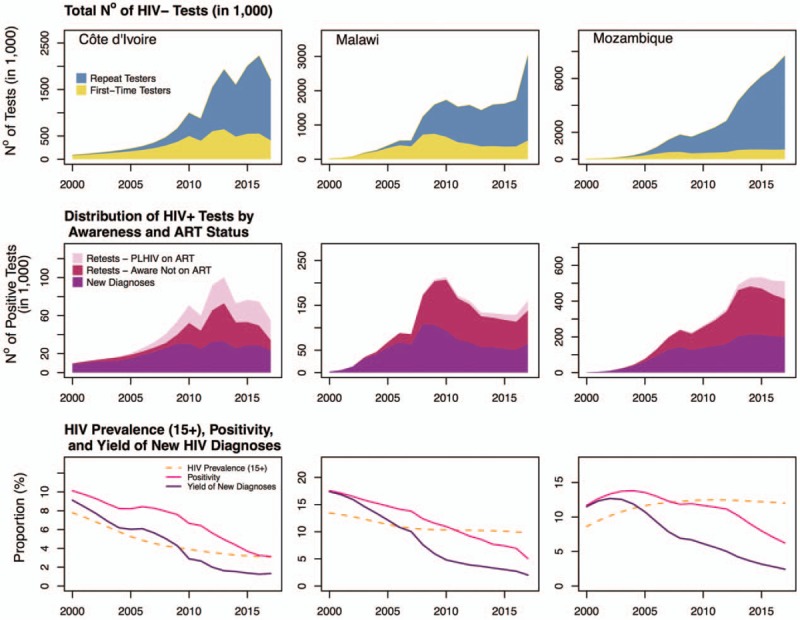
Methods: We developed a mathematical model (henceforth referred to as 'Shiny90') that formally synthesizes population-based survey and HTS program data to estimate HIV status awareness over time. The proposed model uses country-specific HIV epidemic parameters from the standard UNAIDS Spectrum model to produce outputs that are consistent with other national HIV estimates. Shiny90 provides estimates of HIV testing history, diagnosis rates, and knowledge of HIV status by age and sex. We validate Shiny90 using both in-sample comparisons and out-of-sample predictions using data from three countries: Côte d'Ivoire, Malawi, and Mozambique.
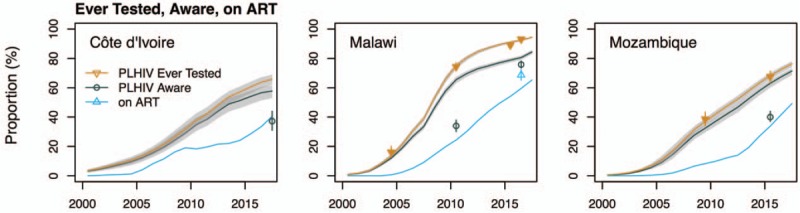
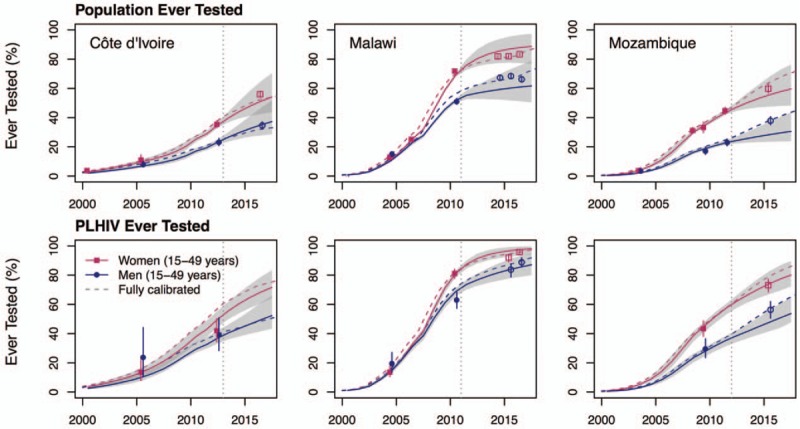
Results: In-sample comparisons suggest that Shiny90 can accurately reproduce longitudinal sex-specific trends in HIV testing. Out-of-sample predictions of the fraction of people living with HIV ever tested over a 4-to-6-year time horizon are also in good agreement with empirical survey estimates. Importantly, out-of-sample predictions of HIV knowledge of status are consistent (i.e. within 4% points) with those of the fully calibrated model in the three countries when HTS program data are included. The model's predictions of knowledge of status are higher than available self-reported HIV awareness estimates, however, suggesting - in line with previous studies - that these self-reports could be affected by nondisclosure of HIV status awareness.
Conclusion: Knowledge of HIV status is a key indicator to monitor progress, identify bottlenecks, and target HIV responses. Shiny90 can help countries track progress towards their 'first 90' by leveraging surveys of HIV testing behaviors and annual HTS program data.
Figures
References
-
- Piot P, Abdool Karim SS, Hecht R, Legido-Quigley H, Buse K, Stover J, et al. Defeating AIDS: advancing global health. Lancet 2015; 386:171–218. - PubMed
-
- UNAIDS. 90-90-90: an Ambitious Treatment Target to Help End the AIDS Epidemic. 2014; Geneva, Switzerland: Joint United Nations Programme on HIV/AIDS (UNAIDS), 33.
-
- UNAIDS. Fast-Track: Ending the AIDS Epidemic by 2030. 2014; Geneva, Switzerland: Joint United Nations Programme on HIV/AIDS (UNAIDS), 36.
MeSH terms
Substances
Grants and funding
LinkOut - more resources
Full Text Sources
Medical
