


Getting to Zero San Francisco: A Collective Impact Approach
- PMID: 31764252
- PMCID: PMC6880800
- DOI: 10.1097/QAI.0000000000002200
Getting to Zero San Francisco: A Collective Impact Approach
Abstract
Background: Building on several decades of innovative HIV prevention and treatment programming in San Francisco, in 2014, a small group of academic, civic, and community leaders launched Getting to Zero San Francisco, a city-wide consortium focused on getting to zero HIV infections, zero HIV-related deaths, and zero HIV stigma and discrimination.
Setting: San Francisco city and county.
Methods: The consortium operates under the principles of collective impact composed of 5 components: a common agenda, shared measurement, mutually reinforcing activities, continuous communication, and organization backbone. Two flagship initiatives are described: citywide scale-up of pre-exposure prophylaxis and rapid antiretroviral therapy upon diagnosis.
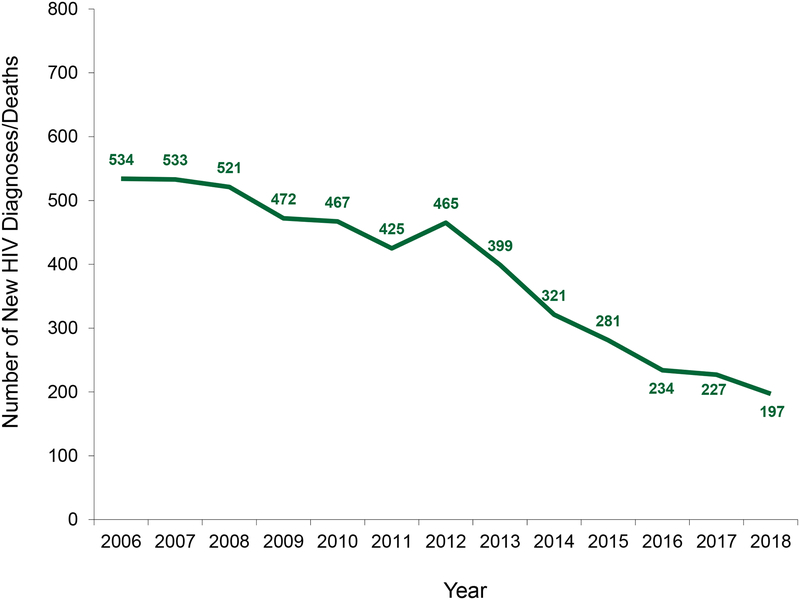
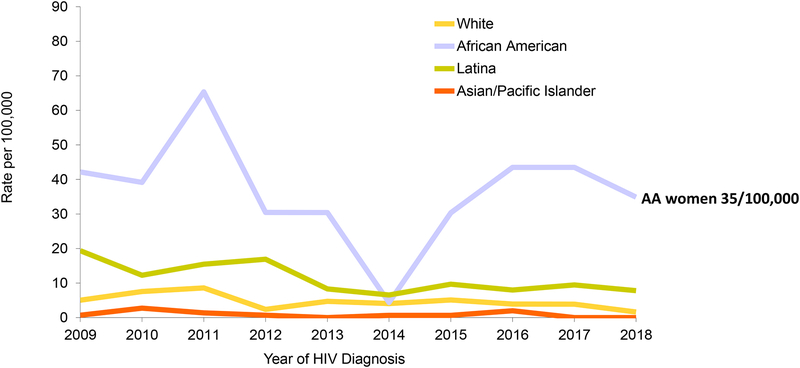
Results: The number of new HIV diagnoses declined by over 50% from 399 to 197 from 2013 to 2018; the time from diagnosis to viral suppression decreased from 134 to 62 days during that period. However, continued racial/ethnic disparities in new HIV diagnoses and viral suppression rates point to the need for the Getting to Zero San Francisco committees to focus on racial/ethnic equity as a primary focus. Cisgender and transgender women, people who inject drugs, and people who are homeless also have lower viral suppression rates; ongoing initiatives are attempting to address these disparities.
Conclusion: A collective impact implementation strategy that operates by unifying municipal organizations toward a common goal was associated with citywide gains in reducing new HIV diagnosis and time to viral suppression in San Francisco. Formal evaluation of this strategy will help elucidate under which conditions this approach is most likely to succeed.
Conflict of interest statement
Conflicts of interest: SB and DH have been investigators on studies for which Gilead Sciences has donated study drug.
Figures

References
-
- Kania JKM. Collective Impact. Stanford Social Innovation Review. (Winter 2011):38–41.
-
- SFDPH. HIV Epidemiology Annual Report. 2018.
