Case Reports
. 2019 Nov 24;12(11):e229970.
doi: 10.1136/bcr-2019-229970.

Sirenomelia (mermaid syndrome): a rare congenital disorder

Affiliations
Case Reports

Sirenomelia (mermaid syndrome): a rare congenital disorder

Muhammad Imran Riazat et al. BMJ Case Rep. .

Abstract

Sirenomelia, also known as mermaid syndrome, is an extremely rare congenital disorder involving the lower spine and lower limbs. We present a case of a grand multiparous with poorly controlled gestational diabetes who delivered a live baby weighing 2.43 kg at 38 weeks' gestation. The baby was noted to have significant respiratory distress, and resuscitation was promptly commenced. Severe congenital abnormalities indicative of sirenomelia were obvious and after availability of antenatal records which indicated an extremely poor prognosis, resuscitative efforts were aborted. The baby was handed over to the mother for comfort care and died 18 min postdelivery.

Keywords: congenital disorders; genetic screening / counselling; materno-fetal medicine; neonatal and paediatric intensive care; neonatal health.


Conflict of interest statement

Competing interests: None declared.

Figures
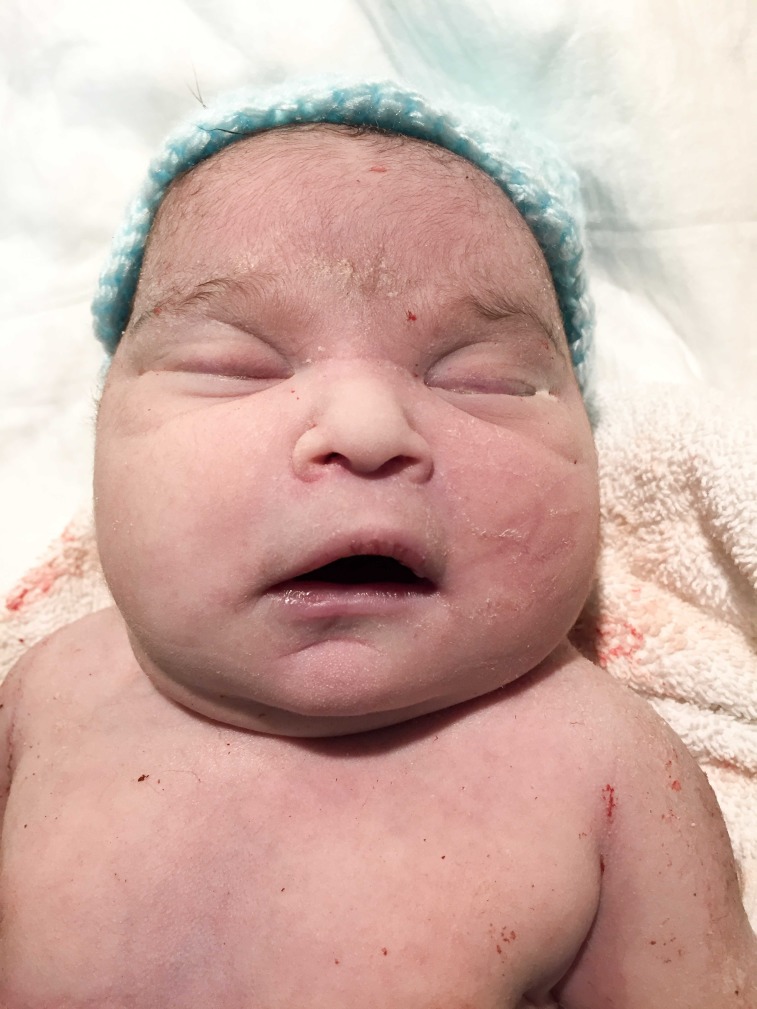
Figure 1
Figure 1
Anterior view of the patient with evident flattening of facial features.
Figure 2
Figure 2
Lateral view of the patient demonstrating upslanting palpebral fissure, low-set malformed ears, depressed nasal bridge and receding chin.
Figure 3
Figure 3
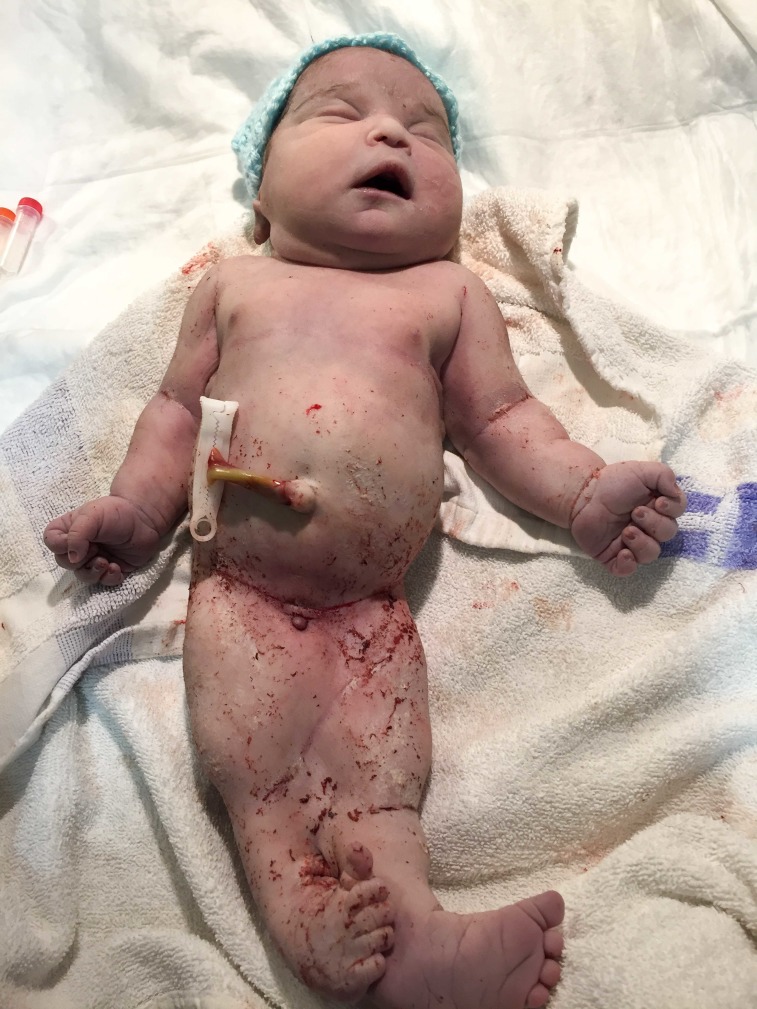
Anterior view of the patient showing fused lower limbs and ambiguous genitalia. Of note, the feet are separate (sirenomelia dipus).
Figure 4
Figure 4
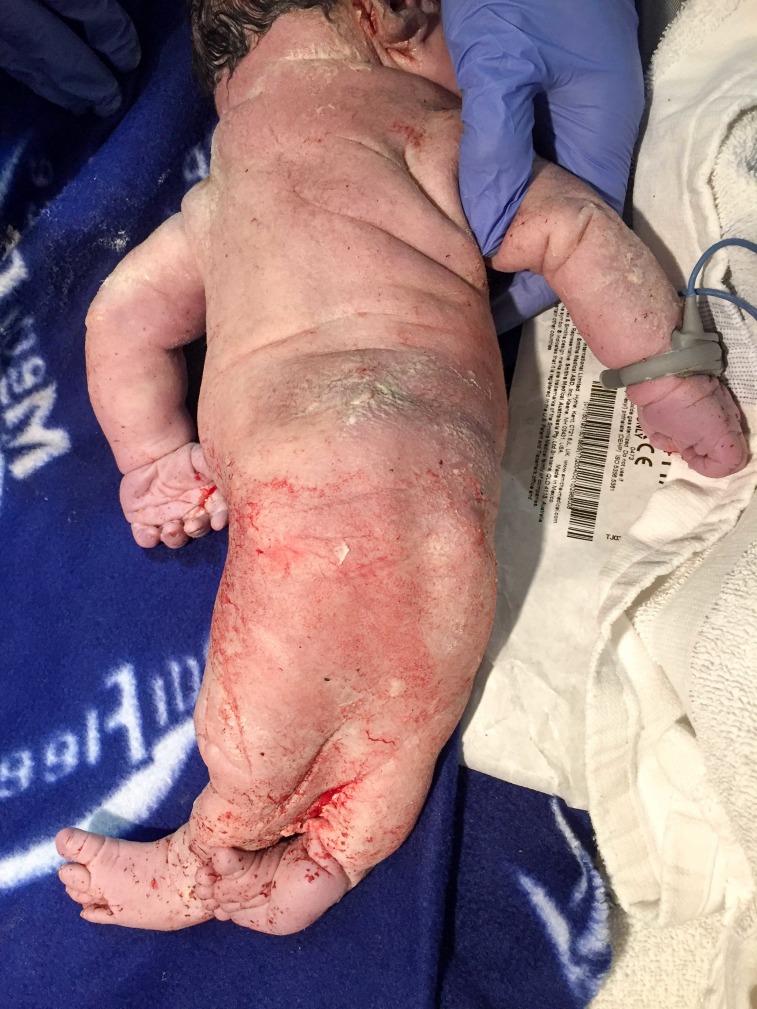
Posterior view of the patient showing absent anal opening and fusion of the lower limbs.
Figure 5
Figure 5
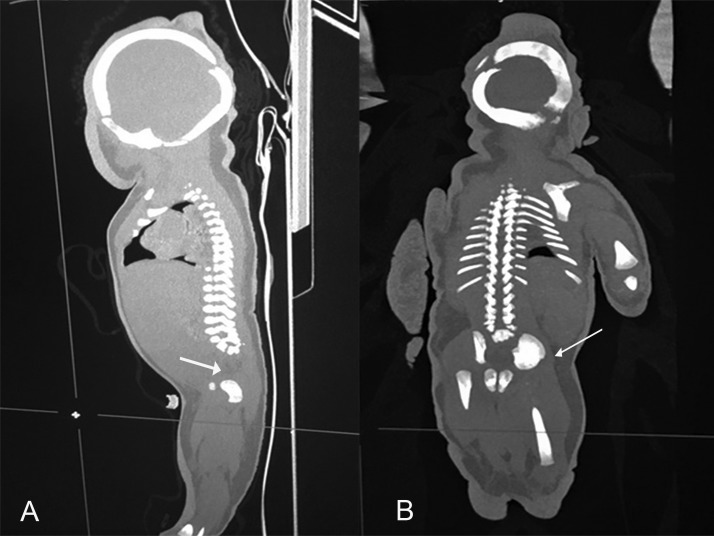
CT skeletal survey. (A) Sagittal section showing absent sacrum. (B) Coronal section showing small malformed pelvic bones.
Figure 6
Figure 6
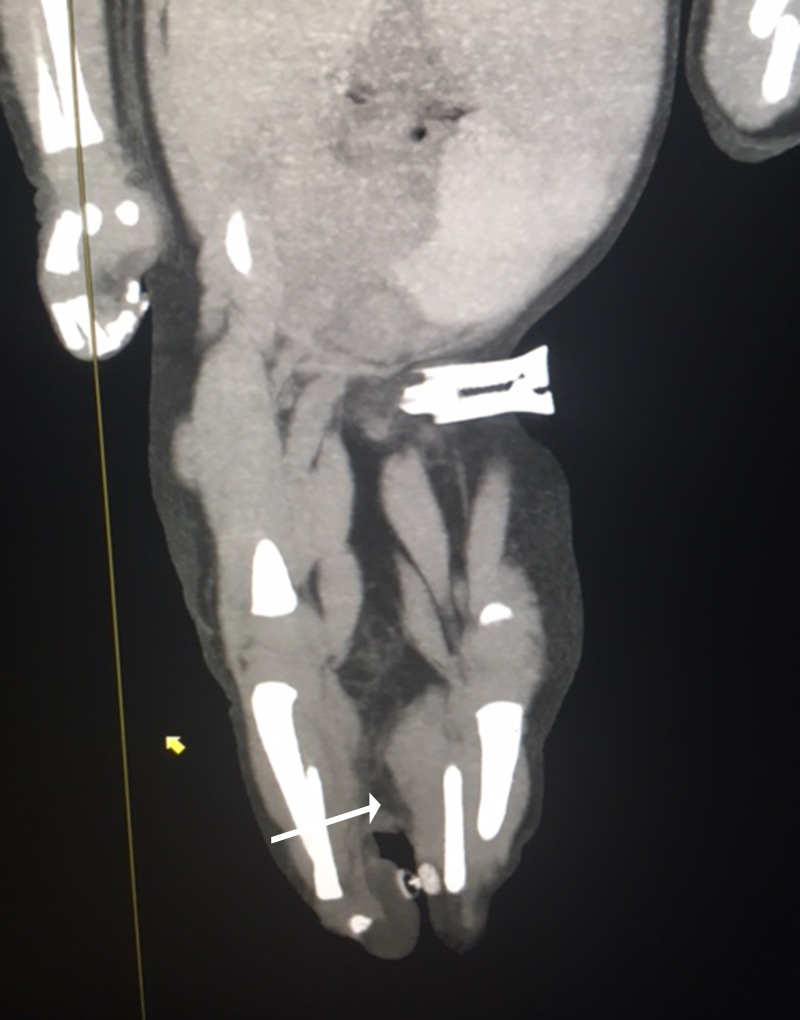
CT skeletal survey. Coronal section showing lower limbs soft tissue attachment extending down to the distal lower limbs with sparing of the feet. Of note, bony fusion of the left and right femur and tibia is not seen.

References

    1. Reddy KR, Srinivas S, Kumar S, et al. . Sirenomelia: a rare presentation. J Neonatal Surg 2012;1:7. - PMC - PubMed
    1. Al-Haggar M, Yahia S, Abdel-Hadi D, et al. . Sirenomelia (symelia apus) with Potter's syndrome in connection with gestational diabetes mellitus: a case report and literature review. Afr Health Sci 2010;10:395–9. - PMC - PubMed
    1. Chan BWH, Chan K-S, Koide T, et al. . Maternal diabetes increases the risk of caudal regression caused by retinoic acid. Diabetes 2002;51:2811–6. 10.2337/diabetes.51.9.2811 - DOI - PubMed
    1. Davari Tanha F, Googol N, Kaveh M. Sirenomelia (mermaid syndrome) in an infant of a diabetic mother. Acta Med Iran 2003;41:69–72.
    1. Saxena R, Puri A. Sirenomelia or mermaid syndrome. Indian J Med Res 2015;141:495 10.4103/0971-5916.159323 - DOI - PMC - PubMed

Publication types