


Factors Influencing Family Burden in Pediatric Hematology/Oncology Encounters
- PMID: 31768403
- PMCID: PMC6827845
- DOI: 10.17294/2330-0698.1710
Factors Influencing Family Burden in Pediatric Hematology/Oncology Encounters
Abstract
Purpose: Caring for a child with cancer or hematologic disease places unique stress on a family unit. Families' subjective experience of this care-related burden mediates the relationship between cost and health-related outcomes. While financial costs are well described for families of pediatric hematology/oncology patients, it is unclear how cost and other factors each contribute to families' overall experience of care-related burden. This study identifies and groups the challenges that families report and describes their association with overall reported burden.
Methods: This mixed-methods analysis of a cross-sectional single-center study was conducted via structured, self-administered questionnaire provided to inpatient and outpatient caregivers of pediatric hematology/oncology patients. Respondents rated their perception of burden associated with that day's medical encounter on a 5-point Likert scale. The questionnaire included an open-ended prompt for caregivers about areas they deemed most burdensome. Primary themes were extracted and categorized.
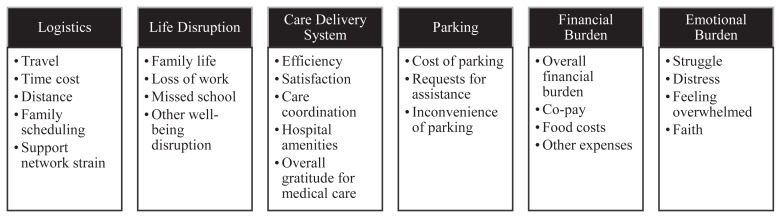
Results: A total of 278 outpatient and 42 inpatient caregivers participated. Six thematic categories emerged: logistics, life disruption, care delivery system, parking, financial burden, and emotional burden. Outpatient caregivers reported more burden than inpatient caregivers for the first three categories, while inpatient caregivers reported more burden for the last three. Salient subthemes associated with higher and lower overall burden were identified in each theme category.
Conclusions: These data establish theme categories for future study of caregiver-perceived burden in pediatric hematologic/oncologic encounters, demonstrate that certain components of cost contribute disproportionately to caregivers' overall sense of care-related burden, and identify areas within each of the 6 burden categories that can be best targeted to alleviate caregiver burden.
Keywords: burden of care; cancer; caregiver; cost of illness; oncology.
© 2019 Aurora Health Care, Inc.
Conflict of interest statement
Conflicts of Interest None.
Figures
References
-
- Feudtner C, Christakis DA, Connell FA. Pediatric deaths attributable to complex chronic conditions: a population-based study of Washington State,1980–1997. Pediatrics. 2000;106:205–9. - PubMed
LinkOut - more resources
Full Text Sources