


Consensus-based technical recommendations for clinical translation of renal BOLD MRI
- PMID: 31768797
- PMCID: PMC7021747
- DOI: 10.1007/s10334-019-00802-x
Consensus-based technical recommendations for clinical translation of renal BOLD MRI
Abstract
Harmonization of acquisition and analysis protocols is an important step in the validation of BOLD MRI as a renal biomarker. This harmonization initiative provides technical recommendations based on a consensus report with the aim to move towards standardized protocols that facilitate clinical translation and comparison of data across sites. We used a recently published systematic review paper, which included a detailed summary of renal BOLD MRI technical parameters and areas of investigation in its supplementary material, as the starting point in developing the survey questionnaires for seeking consensus. Survey data were collected via the Delphi consensus process from 24 researchers on renal BOLD MRI exam preparation, data acquisition, data analysis, and interpretation. Consensus was defined as ≥ 75% unanimity in response. Among 31 survey questions, 14 achieved consensus resolution, 12 showed clear respondent preference (65-74% agreement), and 5 showed equal (50/50%) split in opinion among respondents. Recommendations for subject preparation, data acquisition, processing and reporting are given based on the survey results and review of the literature. These technical recommendations are aimed towards increased inter-site harmonization, a first step towards standardization of renal BOLD MRI protocols across sites. We expect this to be an iterative process updated dynamically based on progress in the field.
Keywords: BOLD MRI; Biomarkers; Consensus; Imaging; Kidney; Standardization.
Conflict of interest statement
All authors declared that they have no conflict of interest.
Figures
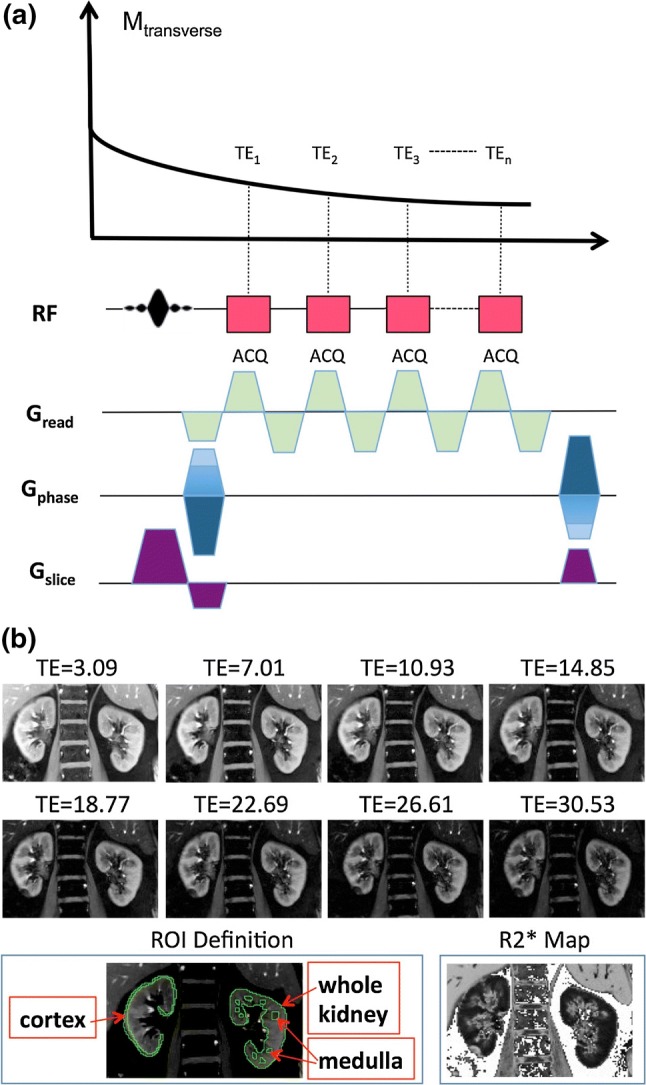
References
-
- Thulborn KR, Waterton JC, Matthews PM, Radda GK. Oxygenation dependence of the transverse relaxation time of water protons in whole blood at high field. Biochim Biophys Acta. 1982;714(2):265–270. - PubMed
-
- Thulborn KR. My starting point: the discovery of an NMR method for measuring blood oxygenation using the transverse relaxation time of blood water. Neuroimage. 2012;62(2):589–593. - PubMed
-
- Epstein FH, Agmon Y, Brezis M. Physiology of renal hypoxia. Ann N Y Acad Sci. 1994;718:72–81. - PubMed
-
- Brezis M, Agmon Y, Epstein FH. Determinants of intrarenal oxygenation. I. Effects of diuretics. Am J Physiol. 1994;267(6 Pt 2):F1059–F1062. - PubMed
-
- Prasad PV, Edelman RR, Epstein FH. Noninvasive evaluation of intrarenal oxygenation with BOLD MRI. Circulation. 1996;94(12):3271–3275. - PubMed
Publication types
MeSH terms
Substances
Grants and funding
- 1F32DK109591/DK/NIDDK NIH HHS/United States
- R01 DK106557/DK/NIDDK NIH HHS/United States
- R01 DK093793/DK/NIDDK NIH HHS/United States
- 115974/Innovative Medicines Initiative
- Action CA 16103/European Cooperation in Science and Technology
- MR/R02264X/1/MRC_/Medical Research Council/United Kingdom
- NIZCOZO_177140/1/Schweizerischer Nationalfonds zur Förderung der Wissenschaftlichen Forschung
- R01 DK109349/DK/NIDDK NIH HHS/United States
- K08 DK099415/DK/NIDDK NIH HHS/United States
- Collaborative Research Centre SFB 1365 Renoprotection/Deutsche Forschungsgemeinschaft
- 320030-169191/Schweizerischer Nationalfonds zur Förderung der Wissenschaftlichen Forschung
- U54 GM115428/GM/NIGMS NIH HHS/United States
- F32 DK109591/DK/NIDDK NIH HHS/United States
