


Innate immunity to adenovirus: lessons from mice
- PMID: 31769012
- PMCID: PMC6928416
- DOI: 10.1002/1873-3468.13696
Innate immunity to adenovirus: lessons from mice
Abstract
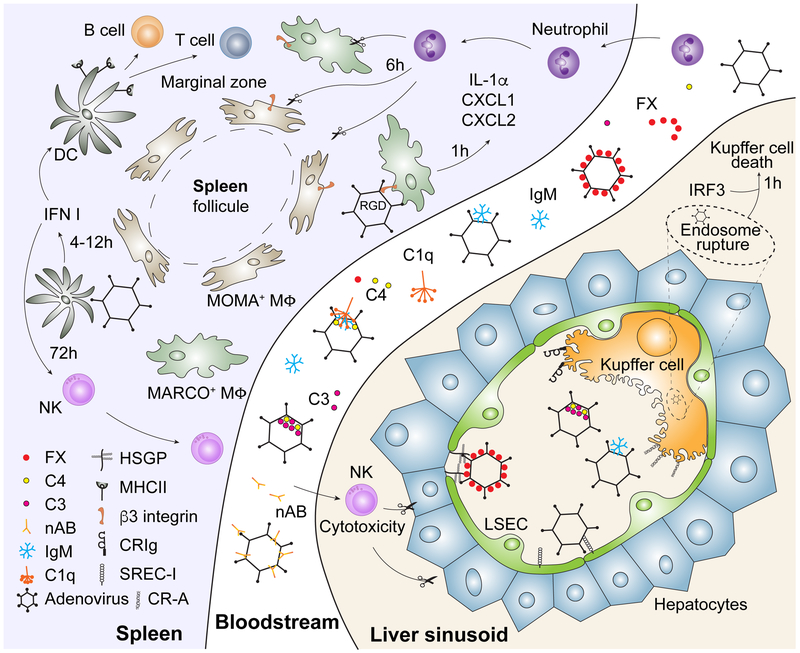
Adenovirus is a highly evolutionary successful pathogen, as it is widely prevalent across the animal kingdom, infecting hosts ranging from lizards and frogs to dolphins, birds, and humans. Although natural adenovirus infections in humans rarely cause severe pathology, intravenous injection of high doses of adenovirus-based vectors triggers rapid activation of the innate immune system, leading to cytokine storm syndrome, disseminated intravascular coagulation, thrombocytopenia, and hepatotoxicity, which individually or in combination may cause morbidity and mortality. Much of the information on exactly how adenovirus activates the innate immune system has been gathered from mouse experimental systems. Intravenous administration of adenovirus to mice revealed mechanistic insights into cellular and molecular components of the innate immunity that detect adenovirus particles, activate pro-inflammatory signaling pathways and cytokine production, sequester adenovirus particles from the bloodstream, and eliminate adenovirus-infected cells. Collectively, this information greatly improved our understanding of mechanisms of activation of innate immunity to adenovirus and may pave the way for designing safer adenovirus-based vectors for therapy of genetic and acquired human diseases.
Keywords: adenovirus; disseminated infection; inflammation; innate immunity; systemic delivery.
© 2019 Federation of European Biochemical Societies.
Conflict of interest statement
Conflict of interest
Dmitry Shayakhmetov is a founder, shareholder, and chief scientific officer of AdCure Bio, LLC, which develops adenovirus-based therapies for clinical use.
Figures
References
Publication types
MeSH terms
Substances
Grants and funding
LinkOut - more resources
Full Text Sources
