


Selective serotonin reuptake inhibitors (SSRIs) for stroke recovery
- PMID: 31769878
- PMCID: PMC6953348
- DOI: 10.1002/14651858.CD009286.pub3
Selective serotonin reuptake inhibitors (SSRIs) for stroke recovery
Update in
-
Selective serotonin reuptake inhibitors (SSRIs) for stroke recovery.Cochrane Database Syst Rev. 2021 Nov 15;11(11):CD009286. doi: 10.1002/14651858.CD009286.pub4. Cochrane Database Syst Rev. 2021. PMID: 34780067 Free PMC article.
Abstract
Background: Stroke is a major cause of adult disability. Selective serotonin reuptake inhibitors (SSRIs) have been used for many years to manage depression and other mood disorders after stroke. The 2012 Cochrane Review of SSRIs for stroke recovery demonstrated positive effects on recovery, even in people who were not depressed at randomisation. A large trial of fluoxetine for stroke recovery (fluoxetine versus placebo under supervision) has recently been published, and it is now appropriate to update the evidence.
Objectives: To determine if SSRIs are more effective than placebo or usual care at improving outcomes in people less than 12 months post-stroke, and to determine whether treatment with SSRIs is associated with adverse effects.
Search methods: For this update, we searched the Cochrane Stroke Group Trials Register (last searched 16 July 2018), the Cochrane Controlled Trials Register (CENTRAL, Issue 7 of 12, July 2018), MEDLINE (1946 to July 2018), Embase (1974 to July 2018), CINAHL (1982 July 2018), PsycINFO (1985 to July 2018), AMED (1985 to July 2018), and PsycBITE March 2012 to July 2018). We also searched grey literature and clinical trials registers.
Selection criteria: We included randomised controlled trials (RCTs) that recruited ischaemic or haemorrhagic stroke survivors at any time within the first year. The intervention was any SSRI, given at any dose, for any period, and for any indication. We excluded drugs with mixed pharmacological effects. The comparator was usual care or placebo. To be included, trials had to collect data on at least one of our primary (disability score or independence) or secondary outcomes (impairments, depression, anxiety, quality of life, fatigue, healthcare cost, death, adverse events and leaving the trial early).
Data collection and analysis: We extracted data on demographics, type of stroke, time since stroke, our primary and secondary outcomes, and sources of bias. Two review authors independently extracted data from each trial. We used standardised mean differences (SMDs) to estimate treatment effects for continuous variables, and risk ratios (RRs) for dichotomous effects, with their 95% confidence intervals (CIs). We assessed risks of bias and applied GRADE criteria.
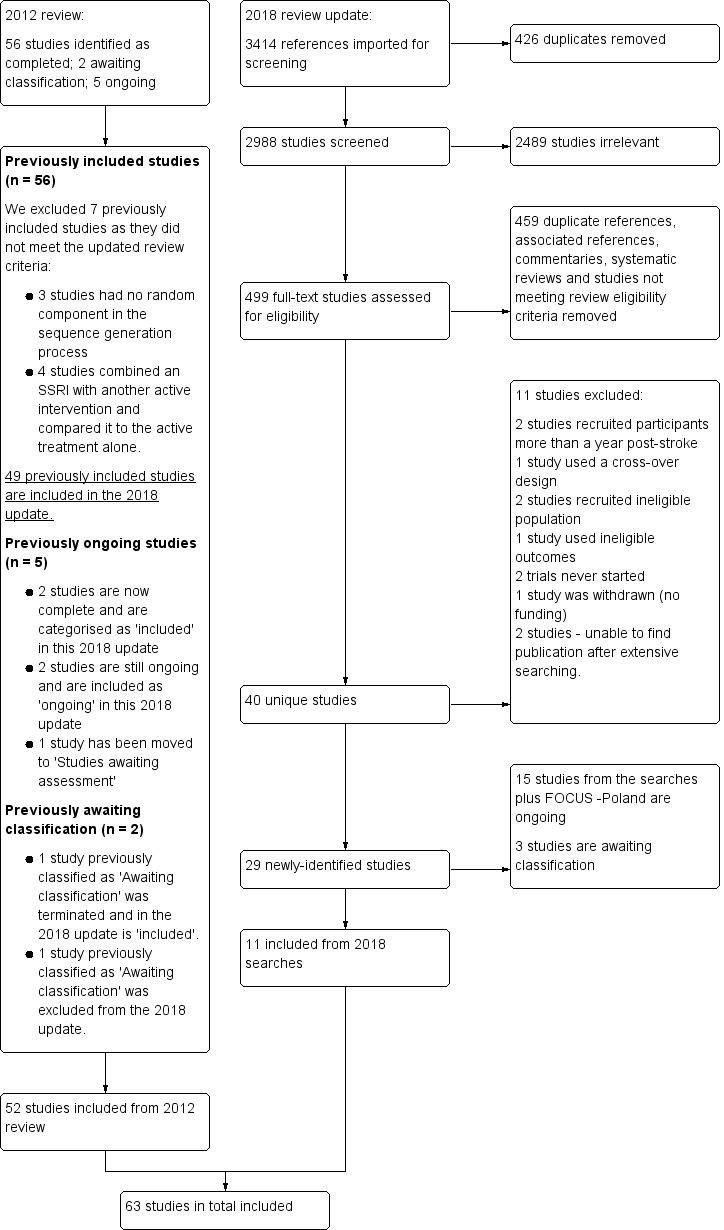
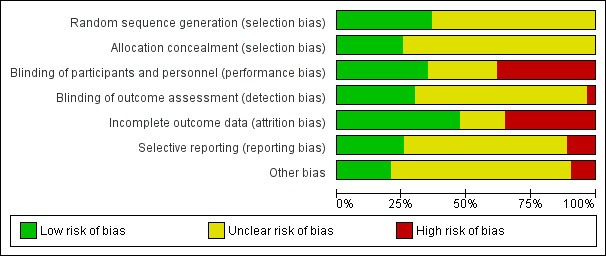
Main results: We identified a total of 63 eligible trials recruiting 9168 participants, most of which provided data only at end of treatment and not at follow-up. There was a wide age range. About half the trials required participants to have depression to enter the trial. The duration, drug, and dose varied between trials. Only three of the included trials were at low risk of bias across the key 'Risk of bias' domains. A meta-analysis of these three trials found little or no effect of SSRI on either disability score: SMD -0.01 (95% CI -0.09 to 0.06; P = 0.75; 2 studies, 2829 participants; moderate-quality evidence) or independence: RR 1.00 (95% CI 0.91 to 1.09; P = 0.99; 3 studies, 3249 participants; moderate-quality evidence). We downgraded both these outcomes for imprecision. SSRIs reduced the average depression score (SMD 0.11 lower, 0.19 lower to 0.04 lower; 2 trials, 2861 participants; moderate-quality evidence), but there was a higher observed number of gastrointestinal side effects among participants treated with SSRIs compared to placebo (RR 2.19, 95% CI 1.00 to 4.76; P = 0.05; 2 studies, 148 participants; moderate-quality evidence), with no evidence of heterogeneity (I2 = 0%). For seizures there was no evidence of a substantial difference. When we included all trials in a sensitivity analysis, irrespective of risk of bias, SSRIs appeared to reduce disability scores but not dependence. One large trial (FOCUS) dominated the results. We identified several ongoing trials, including two large trials that together will recruit more than 3000 participants.
Authors' conclusions: We found no reliable evidence that SSRIs should be used routinely to promote recovery after stroke. Meta-analysis of the trials at low risk of bias indicate that SSRIs do not improve recovery from stroke. We identified potential improvements in disability only in the analyses which included trials at high risk of bias. A further meta-analysis of large ongoing trials will be required to determine the generalisability of these findings.
Copyright © 2019 The Cochrane Collaboration. Published by John Wiley & Sons, Ltd.
Conflict of interest statement
Lynn A Legg: none known.
Russel Tilney: none known.
Cheng‐Fang Hsieh: none known.
Simiao Wu: none known.
Erik Lundström: none known.
Ann‐Sofie Rudberg: none known.
Mansur A Kutlubaev: none known.
Martin Dennis: none known.
Babak Soleimani: none known.
Amanda Barugh: none known.
Maree L Hackett: during the completion of this work Maree Hackett was supported by a National Health and Medical Research Council of Australia Career Development Fellowship, Population Health (Level 2), APP1141328 (1/1/18‐31/12/21)
Graeme J Hankey: in the past three years, GJH has a project grant from the National Health and Medical Research Council of Australia to lead a trial of fluoxetine for stroke recovery (AFFINITY trial). He has also received honoraria from the American Heart Assocaition for serving as an associated editor of the journal CIrculation, and from AC Immune for chairing the data safety monitoring committee of two clinical trials of vaccines for Alzheimer's disease.
Gillian E Mead: has developed a course on exercise after stroke which was licensed to Later Life Training, who pay royalties for the course. These royalties are used to support further research in this area. She has received expenses for speaking at conferences on exercise and fatigue after stroke.
Gillian Mead, Martin Dennis, Maree Hackett, Erik Lundstrom and Graeme Hankey are investigators on the FOCUS trial (Fluoxetine or control under supervision) in the UK, the AFFINITY (Assessment of fluoxetine in stroke recovery) trial in Australia (Hankey 2011), and the EFFECTs trial in Sweden designed to assess the impact of fluoxetine on disability and dependency after stroke (Lundström 2014). None of these review authors extracted data from FOCUS Trial Collaboration 2018.
Figures

Update of
-
Selective serotonin reuptake inhibitors (SSRIs) for stroke recovery.Cochrane Database Syst Rev. 2012 Nov 14;11(11):CD009286. doi: 10.1002/14651858.CD009286.pub2. Cochrane Database Syst Rev. 2012. Update in: Cochrane Database Syst Rev. 2019 Nov 26;2019(11). doi: 10.1002/14651858.CD009286.pub3. PMID: 23152272 Free PMC article. Updated.
Comment in
-
Do Selective Serotonin Reuptake Inhibitors (SSRIs) Promote Stroke Recovery within the First Year After Stroke? - A Cochrane Review Summary with Commentary.PM R. 2020 Jun;12(6):628-630. doi: 10.1002/pmrj.12394. Epub 2020 May 26. PM R. 2020. PMID: 32358846 No abstract available.
References
References to studies included in this review
Acler 2009 {published data only}
-
- Acler M, Avesani A, Fiaschi A, Manganotti P. Serotonergic modulation of brain excitability and motor recovery in patients affected by stroke. A double blind placebo RCT. International Journal of Stroke 2008;3:336.
-
- Acler M, Robol E, Fiaschi A, Manganotti P. A double blind placebo RCT to investigate the effects of serotonergic modulation on brain excitability and motor recovery in stroke patients. Journal of Neurology 2009;256(7):1152‐8. - PubMed
Almeida 2006 {published data only}
-
- Almeida OP, Waterreus A, Hankey GJ. Preventing depression after stroke: results from a randomized placebo‐controlled trial. Journal of Clinical Psychiatry 2006;67(7):1104‐9. - PubMed
Andersen 1994 {published data only}
-
- Andersen G, Vestergaard K, Lauritzen L. Effective treatment of post‐stroke depression with selective serotonin reuptake inhibitors. Journal of Neurology 1994;241:S42. - PubMed
-
- Andersen G, Vestergaard K, Lauritzen L. Effective treatment of post‐stroke depression with the selective serotonin reuptake inhibitor citalopram. Stroke 1994;25(6):1099‐104. - PubMed
-
- Andersen G, Vestergaard K, Lauritzen L. Post‐stroke depression treated with citalopram. Acta Neurologica Scandinavica 1994;89 Suppl 155:20.
-
- Andersen G, Vestergaard K, Lauritzen L. Post‐stroke depression treated with citalopram ‐ a selective serotonin reuptake inhibitor. Canadian Journal of Neurological Sciences 1993;20:S115.
-
- Andersen G, Vestergaard K, Lauritzen L. Post‐stroke depression treated with citalopram a selective serotonin reuptake inhibitor. 7th Scandinavian Meeting on Cerebrovascular Disease. 1993:54.
Andersen 2013 {published data only}
-
- *Kraglund KL, Mortensen JK, Damsbo AG, Modrau B, Simonsen SA, Iversen HK, et al. Neuroregeneration and vascular protection by citalopramin in acute ischemic stroke (TALOS). Stroke 2018;49(11):2568‐76. - PubMed
-
- Andersen 2013. The efficacy of citalopram treatment in acute stroke (TALOS). www.clinicaltrials.gov/ct2/show/NCT01937182 (first received 9 September 2013).
-
- Kraglund K, Mortensen JK, Grove EL, Johnsen SP, Andersen G. TALOS: a multicenter, randomised, double blind, placebo controlled trial to test the effects of citalopram in patients with acute stroke; Protocol. International Journal of Stroke 2015;10:985‐987. - PubMed
Birchenall 2019 {published and unpublished data}
-
- Birchenall J, Térémetz M, Roca P, Lamy JC, Oppenheim C, Maier MA, et al. Individual recovery profiles of manual dexterity, and relation to corticospinal lesion load and excitability after stroke ‐ a longitudinal pilot study. Neurophysiologie Clinique 2019;49(2):149‐64. - PubMed
-
- Centre Hospitalier St Anne. Evaluation by Transcranial Magnetic Stimulation of the Benefit of Fluoxetine on Motor Recovery After Stroke (EFLUSTIM). clinicaltrials.gov/ct2/show/NCT02063425 2014.
Black‐Schaffer 2012 {published data only}
-
- Black‐Schaffer R. Fluoxetine for motor, aphasia, and neglect recovery after ischemic stroke (FLAN). www.clinicaltrials.gov/ct2/show/NCT01674868 (first received 29 August 2012).
Brown 1998 {published data only}
-
- Brown KW, Sloan RL, Pentland B. Fluoxetine as a treatment for post‐stroke emotionalism. Acta Psychiatrica Scandinavica 1998;98(6):455‐8. - PubMed
Burns 1999 {published data only}
-
- Burns A, Russell E, Stratton‐Powell H, Tyrell P, O'Neill P, Baldwin R. Sertraline in stroke‐associated lability of mood. International Journal of Geriatric Psychiatry 1999;14(8):681‐5. - PubMed
Chen 2001 {published data only}
-
- Chen WY, Liu FY, Yang AP. Study of effect of integrative Chinese herbs with fluoxetine on rehabilitation of neurological impairment in patients with post‐stroke depression. Journal of Chengdu University of Traditional Chinese Medicine 2001;24(4):20‐3.
Chen 2002 {published data only}
-
- Chen W, Wang G‐F, Chen X‐H, Sheng Y‐L, Zhu H. Effects of paroxetine on function recovery in patients with post‐stroke depression. Chinese Journal of Clinical Rehabilitation 2002;6(13):2014‐5.
Chen 2005a {published data only}
-
- Chen KN. Changes of neurotransmitter in patients with post‐stroke depression observed with encephalofluctuography technology. Chinese Journal of Clinical Rehabilitation 2005;9(16):118‐9.
Chen 2005b {published data only}
-
- Chen T, Li J, Han M. A study on paroxetine in the treatment for post‐stroke depression. Jiangxi Medicine 2005;40(7):382‐4.
Cheng 2003 {published data only}
-
- Cheng F, Shao G, Bao S. Study of effect on neurologic function rehabilitation in patient with post‐stroke depression. Chinese Journal of Clinical Rehabilitation 2003;7(1):108‐9.
Chollet 2011 {published data only}
-
- Chollet F, Tardy J, Albucher J‐F, Thalamas E, Berard E, Lamy C, et al. Fluoxetine for motor recovery after acute ischaemic stroke (FLAME): a randomised placebo‐controlled trial. Lancet Neurology 2011;10(2):123‐30. - PubMed
Dam 1996 {published data only}
-
- Dam M, Tonin P, Boni A, Pizzolato G, Casson S, Ermani M, et al. Effects of fluoxetine and maprotiline on functional recovery in poststroke hemiplegic patients undergoing rehabilitation therapy. Stroke 1996;27(7):1211‐4. - PubMed
Feng 2004 {published data only}
-
- Feng B‐L, Wang Q‐C, Zheng‐Yuan LI. Influence of Jieyu Huoxue decoction on rehabilitation of patients with depression after cerebral infarction. Journal of Chinese Integrated Medicine 2004;2(3):182‐4. - PubMed
FOCUS Trial Collaboration 2018 {published data only}
-
- Mead G. Fluoxetine Or Control Under Supervision (FOCUS) trial: to establish the effect(s) of routine administration of Fluoxetine in patients with a recent stroke. www.isrctn.com/ISRCTN83290762 ( first received 23 May 2012).
-
- Mead GE, Dennis MS, Innes K, MacLeod M, Sandercock PA, House A, et al. A multicentre randomised trial to establish the effect(s) of routine administration of fluoxetine in patients with a recent stroke (Fluoxetine Or Control Under Supervision, FOCUS). 21st European Stroke Conference. 2012:Abst OAID 26.
Fruehwald 2003 {published data only}
-
- Fruehwald S, Gatterbauer. Early fluoxetine treatment of post‐stroke depression: a three‐month double‐blind placebo‐controlled study with an open‐label long‐term follow up. Journal of Neurology 2003;250(3):347‐51. - PubMed
Gao 2016 {published data only}
-
- Gao J, Lin M, Zhao J, Bi S, Ni Z, Shang X. Different interventions for post‐ischaemic stroke depression in different time periods: a single‐blind randomized controlled trial with stratification by time after stroke. Clinical Rehabilitation 2017;31(7):71‐81. - PubMed
GlaxoSmithKline 1998 {published data only}
-
- GlaxoSmithKline. An 8‐week double‐blind placebo controlled parallel group study to assess the efficacy and tolerability of paroxetine in patients suffering from depression following stroke. GSK Clinical Study Register www.gsk clinicalstudyregister.com (accessed 31 August 2012).
Guo 2009 {published data only}
-
- Guo R‐Y, Su L, Wang CX. Effects of Linggui Bafa on the therapeutic effect and quality of life in patients of post‐stroke depression. Chinese Acupuncture & Moxibustion 2009;29(10):785‐90. - PubMed
He 2004 {published data only}
-
- He P. Randomized controlled observation on the effect of early application of fluoxetine in preventing depression after stroke. Chinese Journal of Clinical Rehabilitation 2004;8(28):6016‐7.
He 2005 {published data only}
-
- He Y, Wang X, Xiao C. Prospective study of effects of paroxetine with mental intervention on depression and anxiety after stroke. Nervous Diseases and Mental Health 2005;5(1):6‐13.
-
- Wang X, He Y, Xiao C‐L. A clinical trial of paroxetine and psychotherapy in patients with post‐stroke depression and anxiety. Chinese Mental Health Journal 2005;19:564‐6.
He 2016 {published data only}
-
- Guo 2012. Multi‐center randomized clinical study of antidepressant treatment (fluoxetine) on secondary prevention of ischemic stroke [ChiCTR‐TRC‐12002078]. www.chictr.org.cn/showprojen.aspx?proj=7471 (first received 3 April 2012).
-
- He Y‐T, Tang B‐S, Cai Z‐L, Zeng S‐L, Jiang X, Guo Yi. Effects of fluoxetine on neural functional prognosis after ischemic stroke: a randomized controlled study in China. Journal of Stroke and Cerebrovascular Diseases 2016;25(4):761‐70. - PubMed
Hu 2002 {published data only}
-
- Hu Y, Suo A, Xiang L. The comparative study of the effectiveness of fluoxetine on the stroke patients with depressive symptoms. Shanghai Archives of Psychiatry 2002;14:149‐50.
Huang 2002 {published data only}
-
- Huang X‐H. The clinical correlation study and the effect of fluoxetine intervention on poststroke depression. Chinese Journal of Clinical Rehabilitation 2002;6(15):2296‐7.
Jia 2005 {published data only}
-
- Jia W. Effect of early intervention on recovery of motor function and recurrent stroke in patients with post‐stroke depression. Chinese Journal of Clinical Rehabilitation 2005;9(12):4‐5.
Kim 2011 {published data only}
-
- Kim JS. The preventative effect of escitalopram on depression and related emotional disorders in acute stroke patients, 2011. clinicaltrials.gov/ct2/show/NCT01278498 (first received 19 January 2011). [NCT01278498]
-
- Kim JS, Lee E‐J, Chang D‐ll, Park J‐H, Ahn SH, Cha J‐K, et al. Efficacy of early administration of escitalopram on depressive and emotional symptoms and neurological dysfunction after stroke: a multicentre, double‐blind, randomised, placebo‐controlled study. Lancet Psychiatry 2017;4(1):33‐41. - PubMed
Kong 2007 {published data only}
-
- Kong Y. Fluoxetine for poststroke depression: a randomized placebo controlled clinical trial. Neural Regeneration Research 2007;2(3):162‐5.
Lai 2006 {published data only}
-
- Lai J. The effect of using paroxetine to treat post stroke depression. Journal of Guangdong Medical College 2006;24(6):585‐6.
Li 2004a {published data only}
-
- Li J, He Q‐Y, Han M‐F. Recent effect of fluoxetine in improving neurologic impairment and preventing post‐stroke depression in the early stage. Chinese Journal of Clinical Rehabilitation 2004;8(7):1208‐9.
Li 2004b {published data only}
-
- Li C‐M, Jiang X‐D, Liao G, Lei J‐M, Lan S, Ni F‐W. Effect of antidepressant drugs in early period on the recovery of post‐stroke depression. Chinese Journal of Clinical Rehabilitation 2004;8(19):3713‐5.
Li 2005 {published data only}
-
- Li Y, Wang X, Qian FS. Related factors of post‐stroke depression and effect of paroxetine. Shandong Archives of Psychiatry 2005;18(4):209‐10.
Li 2006 {published data only}
-
- Li W‐Q, Li D‐X. The efficacy of citalopram for post‐stroke depression and its effects on stroke rehabilitation. International Journal of Cerebrovascular Diseases 2006;14(4):275‐8.
Li 2008 {published data only}
-
- Li L‐T, Wang S‐H, Ge H‐Y, Chen J, Yue S‐W, Yu M. The beneficial effects of the herbal medicine free and easy wanderer plus (FEWP) and fluoxetine on post‐stroke depression. Journal of Alternative and Complementary Medicine 2008;14(7):841‐6. - PubMed
Liu 2006 {published data only}
-
- Liu Y, Xu R. Effect of citalopram treatment on post‐stroke depression and neurological functional rehabilitation. Chinese Journal of Rehabilitation 2006;21(3):174‐5.
Marquez Romero 2013 {published data only}
-
- Marquez‐Romero JM. Fluoxetine for motor recovery after acute intracerebral hemorrhage (FMRICH). www.clinicaltrials.gov/ct2/show/NCT01737541 (first received 29 November 2012).
-
- Marquez‐Romero JM, Arauz A, Ruiz‐Sandoval JL, Cruz‐Estrada Ede L, Huerta‐Franco MR, Aguayo‐Leytte G, et al. Fluoxetine for motor recovery after acute intracerebral hemorrhage (FMRICH): study protocol for a randomized, double‐blind, placebo‐controlled, multicenter trial. Trials 2013;14:77. - PMC - PubMed
-
- Marquez‐Romero JM, Reyes‐Martínez M, Huerta‐Franco MR, Ruiz‐Franco A, Silos H, Arauz A. Fluoxetine for motor recovery after acute intracerebral hemorrhage,the FMRICH Trial. Correspondence from Marquez‐Romero 2018. - PubMed
Meara 1998 {published data only}
-
- Meara RJ, Thalanany M, Balonwu V, Hobson P. The treatment of depression after stroke with the selective serotonin reuptake inhibitor sertraline. Cerebrovascular Diseases 1998;8 Suppl 4:90.
Miao 2004 {published data only}
-
- Miao S‐Y, Shi Y‐J. Related factors of post‐stroke depression and therapeutical effect of citalopram. Chinese Journal of Clinical Rehabilitation 2004;8(19):3718‐9.
Murray 2005 {published data only}
-
- Murray V, Arbin M, Bartfai A, Berggren A‐L, Landtblom A‐M, Lumdmark J, et al. Double‐blind comparison of sertraline and placebo in stroke patients with minor depression and less severe major depression. Journal of Clinical Psychiatry 2005;66(6):708‐16. - PubMed
Pan 2018 {published data only}
-
- Pan X‐L, Chen H‐F, Cheng X, Hu C‐C, Wang J‐W, Fu Y‐M, et al. Effects of paroxetine on motor and cognitive function recovery in patients with non‐depressed ischemic stroke: an open randomized controlled study. Brain Impairment Vol. doi: 10.1017/BrImp.2018.6.
Pariente 2001 {published data only}
-
- Guiraud‐Chaumeil B, Pariente J, Albucher J‐F, Loubinoux I, Chollet F. Rehabilitation after stroke [Recuperation neurologique post‐ischemique]. Bulletin de l'Académie Nationale de Médecine 2002;6:1015‐24. - PubMed
-
- Pariente J, Loubinoux I, Carel C, Albucher JF, Leger A, Manelfe C, et al. Fluoxetine modulates motor performance and cerebral activation of patients recovering from stroke. Annals of Neurology 2001;50(6):718‐29. - PubMed
Rasmussen 2003 {published data only}
-
- Rasmussen A. Depression and stroke. Nordic Journal of Psychiatry 2001;55(4):288.
-
- Rasmussen A. Prophylactic treatment for post‐stroke depression and comorbidity. Journal of Psychosomatic Research 2000;48(3):66.
-
- Rasmussen A, Lunde M, Poulsen D, Sørensen K, Qvitzau S, Bech P. A double‐blind placebo controlled study of sertraline in the prevention of depression in stroke patients. European Neuropyschopharmacology 2002;12:231. - PubMed
-
- Rasmussen A, Lunde M, Poulsen DL, Sørensen K, Qvitzau S, Bech P. A double‐blind, placebo‐controlled study of sertraline in the prevention of depression in stroke patients. Psychosomatics 2003;44(3):216‐22. - PubMed
Razazian 2014 {published data only}
-
- Razazian N. A survey for assessment of effectiveness of fluoxetine on motor improvement in ischemic stroke patients. www.en.irct.ir/trial/8797 2014.
Restifo 2001 {published data only}
-
- Restifo DA, Lo Prest R, Lanza S, Giuffrida S, D'Aleo G, Rifici Di Bella C, et al. Motor cortex reorganization induced by fluoxetine in poststroke hemiplegic patients undergoing rehabilitation therapy: a study with transcranial magnetic stimulation. Neurorehabilitation and Neural Repair 2001;15(4):284.
Robinson 2000a {published data only}
-
- Jorge RE, Robinson RG, Arndt S, Starkstein S. Mortality and post‐stroke depression: a placebo controlled trial of antidepressants. American Journal of Psychiatry 2003;160:1823‐9. - PubMed
-
- Narushima K, Kosier JT, Robinson RG. Preventing post‐stroke depression: a 12 week double blind randomised treatment trial and 21 month follow‐up. Journal of Nervous and Mental Diseases 2002;190:296‐303. - PubMed
-
- Robinson RG, Schultz SK, Castillo C, Kopel T, Kosier JT, Newman RM, et al. Nortriptyline versus fluoxetine in the treatment of depression and in short‐term recovery after stroke: a placebo‐controlled, double‐blind study. American Journal of Psychiatry 2000;157(3):351‐9. - PubMed
Robinson 2000b {published data only}
-
- Jorge RE, Robinson RG, Arndt S, Starkstein S. Mortality and post‐stroke depression: a placebo controlled trial of antidepressants. American Journal of Psychiatry 2003;160:1823‐9. - PubMed
-
- Narushima K, Robinson RG. Preventing post‐stroke depression: a 12 week double blind randomised treatment trial and 21 month follow‐up. Journal of Nervous and Mental Diseases 2002;190:296‐303. - PubMed
-
- Robinson RG, Schultz SK, Castillo C, Kopel T, Kosier JT, Newman RM, et al. Nortriptyline versus fluoxetine in the treatment of depression and in short‐term recovery after stroke: a placebo‐controlled, double‐blind study. American Journal of Psychiatry 2000;157(3):351‐9. - PubMed
Robinson 2008 {published data only}
-
- Robinson RG, Arndt S. Incomplete financial disclosure in a study of escitalopram and problem solving therapy for prevention of post‐stroke depression. JAMA 2009;301:1023‐4. - PubMed
Savadi Oskouie 2012 {published data only}
-
- Savadi Oskouie D. Evaluation of the effect of citalopram on three months functional prognosis of acute ischemic stroke patients: a randomized clinical trial. www.en.irct.ir/trial/1766 (first received 22 April 2012).
-
- Savadi Oskouie D, Sharifipour E, Sadeghi Bazargani H, Hashemilar M, Nikanfar M, Ghazanfari Amlashi S, et al. Efficacy of citalopram on acute ischemic stroke outcome: a randomized clinical trial. Neurorehabilitation and Neural Repair 2017;31(7):638‐47. - PubMed
Shah 2016 {published data only}
-
- Shah IA, Asimi RP, Kawoos Y, Wani MA, Wani MA, Dar MA. Effect of fluoxetine on motor recovery after acute haemorrhagic stroke: a randomized trial. Journal of Neurology and Neurophysiology 2016; Vol. 7, issue 2. [DOI: 10.4172/2155-9562.1000364] - DOI
Song 2006 {published data only}
-
- Song J‐G. Effects of fluoxetine hydrochloride on depressive symptoms and P300 after cerebral stroke. Chinese Journal of Clinical Rehabilitation 2006;10(14):160‐2.
Wang 2003 {published data only}
-
- Wang X, Tan Z, Wu Z, Gao J, Feng M. The effects of anti‐depression therapy on post‐stroke depression and neurologic rehabilitation in the elderly patients. Chinese Journal of Geriatrics 2003;22(5):270‐3.
Wen 2006 {published data only}
-
- Wen Z‐X. The influence of post‐stroke prophylactic anti‐depression treatment on nerve functional rehabilitation. Acta Academiae Medicinae Qingdao Universitatis 2006;42(3):253‐4.
Whyte 2005 {published data only}
-
- Whyte E. Setraline for prevention post stroke depression and improving rehabilitation outcomes. clinicaltrials.gov/ct2/show/NCT00177424 (first received 15 September 2005).
Wiart 2000 {published data only}
-
- Wiart L, Petit H, Joseph PA, Mazaux JM, Barat M. Fluoxetine in early poststroke depression: a double‐blind placebo‐controlled study. Stroke 2000;31(8):1829‐32. - PubMed
Xie 2005 {published data only}
-
- Xie R, Liu J, Quan H. A prospective random clinical contrast study of treatment with sertraline in elderly patients with post‐stroke depression. Chinese Journal of Clinical Neuroscience 2005;13(3):294‐7.
Xu 2001 {published data only}
-
- Xu J, Tan J, Ou L. A study on treatment of fluoxetine to depression in early recovery stage of cerebral infarction. Chinese Journal of Rehabilitation Medicine 2001;16(5):281‐3.
Xu 2006 {published data only}
-
- Xu J, Wang J, Liu J. Preventive effects of antidepressants on post‐stroke depression. Chinese Mental Health Journal 2006;20(3):186‐8.
Yang 2002 {published data only}
-
- Yang J, Zhao Y, Bai S. Controlled study on antidepressant treatment of patients with post‐stroke depression. Chinese Mental Health Journal 2002;16(12):871‐2.
Yang 2011 {published data only}
-
- Yang J. Therapeutic effect of paroxetine on patients with early poststroke depression and the serum interleukins. Chinese Journal of Cerebrovascular Diseases 2011;8(5):235‐8.
Ye 2004 {published data only}
-
- Ye L‐X, Wang H, Wang Y‐D, Zhong L, Liang D‐S, Guo Y. Effect of anti‐depressive therapy on the rehabilitation of psychological and neurological function after stroke. Chinese Journal of Clinical Rehabilitation 2004;8(31):6826‐8.
-
- Ye LX. Effect of Paxil and berhomine on post‐stroke anxiety‐depression and neurological recovery. Chinese Journal of Clinical Rehabilitation 2006;10(6):153‐5.
Zhao 2011 {published data only}
-
- Zhao P, Wang J‐P. Effects of antidepressants on neurofunctional recovery of post‐stroke patients with aphasia. Journal of Dalian Medical University 2011;33(1):55‐7.
Zhou 2008 {published data only}
-
- Zhou Z‐l, Liang L‐Z, Yan Y‐X. Preventive effects of fluoxetine on post‐stroke depression. Chinese Journal of Modern Applied Pharmacy 2008;25(3):263‐4.
References to studies excluded from this review
Andersen 1993 {published data only}
-
- Andersen G, Vestergaard K, Riis JO. Citalopram for post‐stroke pathological crying. Lancet 1993;342(8875):837‐9. - PubMed
Andersen 2012 {published data only}
-
- Andersen G. Efficacy of escitalopram treatment in acute stroke and the role of specific genotypes in stroke. www.clinicaltrialsregister.eu/ctr‐search/search?query=2011‐005541‐12 (first received 27 February 2012).
Anderson 2002 {published data only}
-
- Anderson C, Hackett M, Carter K, Ni MC. Maximising outcome by overcoming depression in stroke (MOODS) trial. Cerebrovascular Diseases 2002 2002;13(Suppl 3):79.
Anonymous 2012 {published data only}
-
- Anonymous 2012. Stroke and depression. Johns Hopkins Med Letters: Health After 50 2012;23(11):3.
Anonymous 2012b {published data only}
-
- Anonymous. Drug & Device News. Medical Malpractice Law & Strategy, New York Law Journal Newsletters 2012;30(2):5.
Berends 2009 {published data only}
-
- Berends HI, Nijlant JM, Putten MJ, Movig KL, IJzerman MJ. Single dose of fluoxetine increases muscle activation in chronic stroke patients. Clinical Neuropharmacology 2009; Vol. 32, issue 1:1‐5. [also known as Flu 2006] - PubMed
Choi Kwon 2008 {published data only}
-
- Choi‐Kwon S, Choi J, Kwon SU, Kang DW, Kim JS. Fluoxetine improves the quality of life in patients with poststroke emotional disturbances. Cerebrovascular Diseases 2008;26(3):266‐71. - PubMed
Finkenzeller 2009 {published data only}
-
- Finkenzeller W, Zobel I, Rietz S, Schramm E, Berger M. Interpersonal psychotherapy and pharmacotherapy for post‐stroke depression. Feasibility and effectiveness. Der Nervenarzt 2009;80(7):805‐12. - PubMed
Gourab 2015 {published data only}
-
- Gourab K, Schmit BD, Hornby GT. Increased lower limb spasticity but not strength or function following a single‐dose serotonin reuptake inhibitor in chronic stroke. Archives of Physical Medicine and Rehabilitation 2015;96(12):2112‐9. - PubMed
Graffagnino 2002 {published data only}
-
- Graffagnino C. Poststroke depression and functional recovery (SADBRAIN). Duke University Medical Centre 2002.
Ji 2000 {published data only}
-
- Ji QM, Xie LP. Efficacy of fluoxetine in the treatment of 20 patients with depression after stroke. Herald of Medicine 2000;19(4):329.
Li 2002 {published data only}
-
- Li F, Gu DX, Ceng SH, Xu JW. Effect of paroxetine on prognosis of patients with post cerebral infarction depression. Chinese Journal of New Drugs and Clinical Remedies. 2002;21(1):11‐3.
Liang 2003 {published data only}
-
- Liang Z, Shuliang T. Clinical efficacy of fluoxetine in treatment of patients with depression after acute stroke. Chinese Journal of Clinical Rehabilitation 2003;7(13):1924‐5.
Liu 2004 {published data only}
-
- Liu L‐X. Recent effect of drug intervention on post‐stroke anxiety. Chinese Journal of Clinical Rehabilitation 2004;8(30):6600‐1.
Robinson 2011 {published data only}
-
- Robinson RG, Mikami K, Jang M, Jorge RE. Prevention of anxiety disorder after stroke. Journal of Neuropsychiatry and Clinical Neurosciences 2011;23(2):18.
Sitzer 2002 {published data only}
-
- Sitzer M, Huff W, Steckel R. Prevention of poststroke depression after acute ischemic stroke using the selective serotonin reuptake inhibitor sertraline (PreDis‐study). Stroke 2002;33(2):651‐2.
Sun 2015 {published data only}
-
- Sun YT, Bao YH, Wang SL, Chu JM, Li LP. Efficacy observation on the treatment of post‐stroke depression by acupuncture at the acupoints based on ziwuliuzhu and Prozac. Chinese Acupuncture and Moxibustion 2015;355(2):119‐22. - PubMed
University of Alabama 2013 {published data only}
-
- University of Alabama. RCT of a neuroplasticity agent and CI therapy for severe arm paresis after stroke. clinicaltrials.gov/ct2/show/NCT01963832 (accessed 5th March 2019).
Xu 2007 {published data only}
-
- Xu B, Zhou WY, Zhang SJ. Observation of effect of Wulung capsule in treating post‐stroke depression. Chinese Journal of Integrated Traditional and Western Medicine 2007;27(7):640‐2. - PubMed
Zhou 2003 {published data only}
-
- Zhou B. Effects of fluoxetine on neurofunctional recovery of non depressed patients after stroke. Chinese Journal of Clinical Rehabilitation 2003;7(3):374‐5.
References to studies awaiting assessment
Carda 2009 {published data only}
-
- Carda S, Cisari C. Effects of clinical and functional outcome of escitalopram in adult stroke patients. clinicaltrials.gov/ct2/show/NCT00967408 (first received 27 August 2009). [NCT00967408]
Guo 2015 {published data only}
-
- Guo Y. Effect of using fluoxetine at different time windows after ischemic stroke on neurological functional prognosis: a randomized controlled trial. www.chictr.org.cn/showprojen.aspx?proj=12925 (first received 27 December 2015).
-
- Guo Y, He Y, Tang B, Ma K, Cai Z, Zeng S, et al. Effect of using fluoxetine at different time windows on neurological functional prognosis after ischemic stroke. Restorative Neurology and Neuroscience 2016;34(2):177–87. - PubMed
He 2012 {published data only}
-
- Guo 2012. Multi‐center randomized clinical study of antidepressant treatment (fluoxetine) on secondary prevention of ischemic stroke [ChiCTR‐TRC‐12002078]. www.chictr.org.cn/showprojen.aspx?proj=7471 (first received 3 April 2012).
-
- He Y, Cai Z, Zeng S, Chen S, Tang B, Liang Y, Chang X, Guo Y. Effect of fluoxetine on three‐year recurrence in acute ischemic stroke: A randomized controlled clinical study. Clinical Neurology and Neurosurgery 2018;168:1‐6. - PubMed
Jurcau 2016 {published data only}
-
- Jurcau A, Simion A. Improved post‐ischaemic stroke recovery over 1 year with escitalopram for 3 months. European Journal of Neurology. Conference: 2nd Congress of the European Academy of Neurology 2016;23:614.
References to ongoing studies
Anonymous 2005 {published data only}
-
- Anonymous. Influence of escitalopram on the incidence of depression and dementia following acute middle cerebral artery territory infarction. A randomised placebo‐controlled double blind study. https://www.clinicaltrialsregister.eu/ctr‐search/search?query=2005‐00526... (accessed prior to 12 May 2019).
Chollet 2016 {published data only}
-
- Sattler V, Chollet F. Serotonin Selective Reuptake Inhibitor (SSRI) effects on cerebral connectivity in acute ischemic stroke (RECONISE). www.clinicaltrials.gov/ct2/show/NCT02767999 (first received 11 May 2016).
Cocho 2015 {published data only}
-
- Cocho D. Effect of serotonin and levodopa in ischemic stroke. www.clinicaltrials.gov/ct2/show/NCT02386475 (first received 12 March 2015).
Dike 2019 {published data only}
-
- Dike FO, Ekeh BC, Ogun AS, Ekrikpo EU, Walshak P, Ogunniy AA. Pharmacological enhancement of motor function recovery in patients with ischaemic stroke: a trial of fluoxetine. Journal of Neurology and Stroke 2019;9(1):47‐51.
Farokhi 2017 {published data only}
-
- Farokhi F. Evaluation of fluoxetine and standard treatment efficacy on change to side effect of stroke of ischemic strokes in both hemispheres in anterior circulation. www.irct.ir/trial/17976 (first received 11 October 2017).
FOCUS‐Poland 2014 {published data only}
-
- Fluoxetine or Control under Supervision: Poland. Polish Office for Registration of Medicinal Products, Medical Devices and Biocidal Products ‐ EduraCT No: 2014‐001335‐37 2014.
Fregni 2014 {published data only}
-
- Fregni F. Effects rTMS combined with fluoxetine on motor recovery in stroke patients. www.clinicaltrials.gov/ct2/show/NCT02208466 (first received 5 August 2014).
Hankey 2011 {published data only}
-
- Hankey G. Assessment oF FluoxetINe In sTroke recoverY (AFFINITY). www.affinitytrial.org/ (accessed 19th February 2019).
-
- Hankey G. Assessment of fluoxetine in stroke recovery (AFFINITY) trial, 2011. www.anzctr.org.au/Trial/Registration/TrialReview.aspx?ACTRN=12611000774921 (first received 22 July 2011).
Karimialavijeh 2017 {published data only}
-
- Karimialavijeh E. Comparison of the effects of citalopram versus fluoxetine on motor recovery after stroke: A double‐blind placebo‐controlled randomized clinical trial. www.en.irct.ir/trial/17729 (first received 3 December 2017).
Leibovitch 2018 {published data only}
-
- Leibovitch F. Fluoxetine Opens Window to improve motor recovery after stroke (FLOW). www.clinicaltrials.gov/ct2/show/NCT03448159 (first received 27 February 2018).
Levitt 2019 {published data only}
-
- Levitt 2019. Depression in hemorrhagic stroke. www.clinicaltrials.gov/ct2/show/NCT03826875 (first received 1 February 2019).
Lundström 2014 {published data only}
-
- Lundström E. Establishing the effect(s) and safety of Fluoxetine initiated in the acute phase of stroke. www.isrctn.com/ISRCTN13020412 (first received 19 December 2014).
Pastore‐Wapp 2016 {published data only}
-
- Pastore‐Wapp M, Krammer W. Cortical ischemic stroke and serotonin (CISS). www.clinicaltrials.gov/ct2/show/NCT02865642 (first received 12 August 2016).
Pirzeh 2012 {published data only}
-
- Pirzeh R. A study of sertraline effect on quality of life in stroke inpatients. www.en.irct.ir/trial/11413 (first received 28 November 2012).
Sadaat 2012 {published data only}
-
- Saadat SM. Effect of fluoxetine on functional recovery of patients with cerebrovascular accident following middle cerebral artery trunk obstruction: a randomized clinical trial. www.en.irct.ir/trial/8954 (first received 25 January 2012).
Sahin 2016 {published data only}
-
- Sahin B, Leonhardt AM. Fluoxetine for visual recovery after ischemic stroke (FLUORESCE). www.clinicaltrials.gov/ct2/show/NCT02737930 (accessed 14 April 2016).
Additional references
Allida 2019
Deeks 2017
-
- Deeks JJ, Higgins JP, Altman DG, editor(s) on behalf of the Cochrane Statistical Methods Group. Chapter 9: Analysing data and undertaking metaanalyses. In: Higgins JP, Churchill R, Chandler J, Cumpston MS, editor(s), Cochrane Handbook for Systematic Reviews of Interventions version 5.2.0 (updated June 2017), The Cochrane Collaboration, 2017. Available from www.training.cochrane.org/handbook.
Egger 1997
GBD 2015
-
- GBD 2015. Disease and Injury Incidence and Prevalence Collaborators. Global, regional, and national incidence, prevalence, and years lived with disability for 310 diseases and injuries, 1990–2015: a systematic analysis for the Global Burden of Disease Study. Lancet 2016;388(10053):1545–602. - PMC - PubMed
GRADE 2013
-
- Schünemann H, Brożek J, Guyatt G, Oxman A, editor(s). Handbook for grading the quality of evidence and the strength of recommendations using the GRADE approach (updated October 2013). GRADE Working Group, 2013. Available from gdt.guidelinedevelopment.org/app/handbook/handbook.html.
GRADEproGDT 2015 [Computer program]
-
- McMaster University (developed by Evidence Prime, Inc.). GRADEpro Guideline Development Tool [Software]. McMaster University (developed by Evidence Prime, Inc.), 2015.
Hatano 1976
Higgins 2017
-
- Higgins JP, Altman DG, Sterne JA, editor(s). Chapter 8: Assessing risk of bias in included studies. In: Higgins JP, Churchill R, Chandler J, Cumpston MS, editor(s), Cochrane Handbook for Systematic Reviews of Interventions version 5.2.0 (updated June 2017), The Cochrane Collaboration, 2017. Available from www.training.cochrane.org/handbook.
Johnson 2016
Lang 2004
-
- Lang UE, Jockers‐Scherübl MC, Hellweg R. State of the art of the neurotrophin hypothesis in psychiatric disorders: implications and limitations. Journal of Neural Transmission 2004;111(3):387‐411. - PubMed
Lim 2009
-
- Lim C‐M, Kim W‐W, Park J‐Y, Kim C, Yoon SH, Lee J‐K. Fluoxetine affords robust neuroprotection in the postischemic brain via its anti‐inflammatory effect. Journal of Neuroscience Research 2009;87(4):1037‐45. - PubMed
Loubinoux 1999
-
- Loubinoux I, Boulanouar K, Ranjeva J‐F, Carel C, Berry I, Rascol O, et al. Cerebral functional magnetic resonance imaging activation modulated by a single dose of the monoamine neurotransmission enhancers fluoxetine and fenozolone during hand sensorimotor tasks. Journal of Cerebral Blood Flow and Metabolism 1999;19(12):1365‐75. - PubMed
Mantel 1959
-
- Mantel N, Haenszel W. Statistical aspects of the analysis of data from retrospective studies of disease. Journal of the National Cancer Institute 1959;22(4):719‐748. - PubMed
Ming 2005
-
- Ming GL, Song H. Adult neurogenesis in the mammalian central nervous system. Annual Review of Neuroscience 2005;28:223‐50. - PubMed
Molnar 2008
Pälvimäki 1994
-
- Pälvimäki E‐P, Laakso A, Kuoppamäki M, Syvälahti E, Hietala J. Up‐regulation of beta l‐adrenergic receptors in rat brain after chronic citalopram and fluoxetine treatments. Psychopharmacology (Berl) 1994;115(4):543‐6. - PubMed
Review Manager 2014 [Computer program]
-
- The Nordic Cochrane Centre, The Cochrane Collaboration. Review Manager 5 (RevMan 5). Version 5.3. Copenhagen: The Nordic Cochrane Centre, The Cochrane Collaboration, 2014.
Santarelli 2003
-
- Santarelli L, Saxe M, Gross C, Surget A, Battaglia F, Dulawa S, et al. Requirement of hippocampal neurogenesis antidepressant treatments and animal models of depressive‐like behaviour. Behavioural Pharmacology 2003;301:805‐9. - PubMed
Schmidt 2007
-
- Schmidt HD, Duman RS. The role of neurotrophic factors in adult hippocampal neurogenesis, antidepressant treatments and animal models of depressive‐like behaviour. Behavioural Pharmacology 2007;18(5‐6):391‐418. - PubMed
Schünemann 2017
-
- Schünemann HJ, Oxman AD, Higgins JP, Vist GE, Glasziou P, Akl E, Guyatt GH on behalf of the Cochrane GRADEing Methods Group and the Cochrane Statistical Methods Group. Chapter 11: Completing ‘Summary of findings’ tables and grading the confidence in or quality of the evidence. In: Higgins JP, Churchill R, Chandler J, Cumpston MS, editor(s), Cochrane Handbook for Systematic Reviews of Interventions version 5.2.0 (updated June 2017). The Cochrane Collaboration, 2017. Available from www.training.cochrane.org/handbook.
Shin 2009
Sterne 2017
-
- Sterne JA, Egger M, Moher D, Boutron I, editor(s). . Chapter 10: Addressing reporting biases. In: Higgins JP, Churchill R, Chandler J, Cumpston MS, editor(s), Cochrane Handbook for Systematic Reviews of Interventions version 5.2.0 (updated June 2017). The Cochrane Collaboration, 2017. Available from www.training.cochrane.org/handbook.
Taupin 2006
-
- Taupin P. Adult neurogenesis and neuroplasticity. Restorative Neurology and Neuroscience 2006;24(1):9‐15. - PubMed
Wan 2014
Wiltrout 2007
-
- Wiltrout C, Lang B, Yan Y, Dempsey RJ, Vemuganti R. Repairing brain after stroke: a review on post‐ischaemic neurogenesis. Neurochemistry International 2007;50(7‐8):1028‐41. - PubMed
Yi 2010
-
- Yi ZM, Liu F, Zhai SD. Fluoxetine for the prophylaxis of post‐stroke depression in patients with stroke: a meta‐analysis. International Journal of Clinical Practice 2010;64(9):1310‐7. - PubMed
References to other published versions of this review
Mead 2011
Publication types
MeSH terms
Substances
Grants and funding
LinkOut - more resources
Full Text Sources
Medical
