


The Burden of Fungal Infections in Ethiopia
- PMID: 31771096
- PMCID: PMC6958437
- DOI: 10.3390/jof5040109
The Burden of Fungal Infections in Ethiopia
Abstract
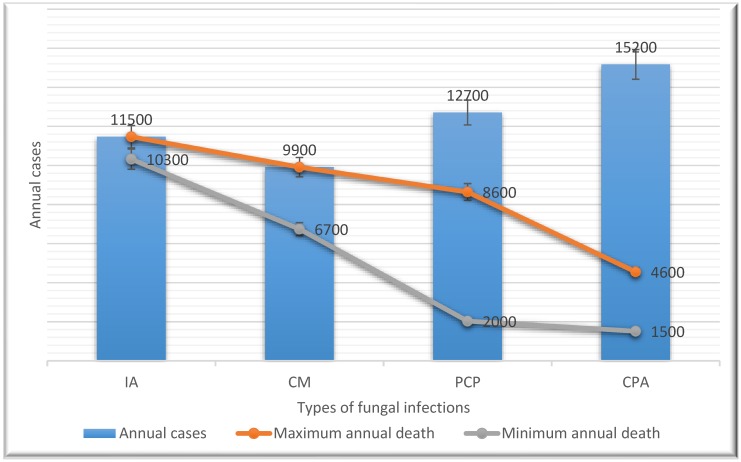
The burden of severe fungal infections (FIs) is not well addressed in Ethiopia. We have estimated the burden of FIs from multiple demographic sources and by searching articles from PubMed. Opportunistic FIs were estimated using modelling and 2017 national HIV data. The burdens of chronic pulmonary aspergillosis (CPA) and allergic bronchopulmonary aspergillosis (ABPA) were estimated by using the prevalence of asthma, chronic obstructive pulmonary disease, and annual the incidence of tuberculosis. Of the 105,000,000 estimated Ethiopian population, 610,000 are thought to have HIV infection. Our estimation of HIV-related FIs were: 9900 cryptococcal meningitis (CM), 12,700 Pneumocystis jirovecii pneumonia (PCP), 76,300 oral and 56,000 oesophageal candidiasis cases. A remarkable 7,051,700 4-14-year-olds probably have tinea capitis and 1,469,000 women probably have recurrent Candida vaginitis. There were 15,200 estimated CPA cases (prevalence) and 11,500 invasive aspergillosis (IA) cases (incidence). Data are scant, but we estimated 5300 candidaemia and 800 Candida peritonitis cases. In conclusion, approximately 8% of Ethiopians suffer from FIs annually, mostly schoolchildren with tinea capitis. IA, CM and PCP are the major causes of fungal deaths. The absence of CD4 count is challenging the identification of HIV patients at risk of opportunistic FIs. There is a pressing need to improve FI diagnosis, probably including national surveillance.
Keywords: Ethiopia; epidemiology; invasive fungal infections; tinea capitis.
Conflict of interest statement
All TBT and DD have no conflict of interest to declare.
Figures
References
-
- Visentin A., Gurrieri C., Imbergamo S., Lessi F., Di Maggio S.A., Frezzato F., Adami F., Zambello R., Raumer F., Piazza F., et al. Epidemiology and Risk Factors of Invasive Fungal Infections Among 795 Patients with Chronic Lymphocytic Leukemia from the Padua University. Blood. 2016;128:2527. doi: 10.1182/blood.V128.22.2527.2527. - DOI
-
- Loyse A., Burry J., Cohn J., Ford N., Chiller T., Ribeiro I., Koulla-Shiro S., Mghamba J., Ramadhani A., Nyirenda R., et al. Leave no one behind: Response to new evidence and guidelines for the management of cryptococcal meningitis in low-income and middle-income countries. Lancet Infect. Dis. 2018 doi: 10.1016/S1473-3099(18)30493-6. - DOI - PubMed
Publication types
LinkOut - more resources
Full Text Sources
Research Materials
