


Stem cell-derived extracellular vesicles: role in oncogenic processes, bioengineering potential, and technical challenges
- PMID: 31771657
- PMCID: PMC6880555
- DOI: 10.1186/s13287-019-1468-6
Stem cell-derived extracellular vesicles: role in oncogenic processes, bioengineering potential, and technical challenges
Abstract
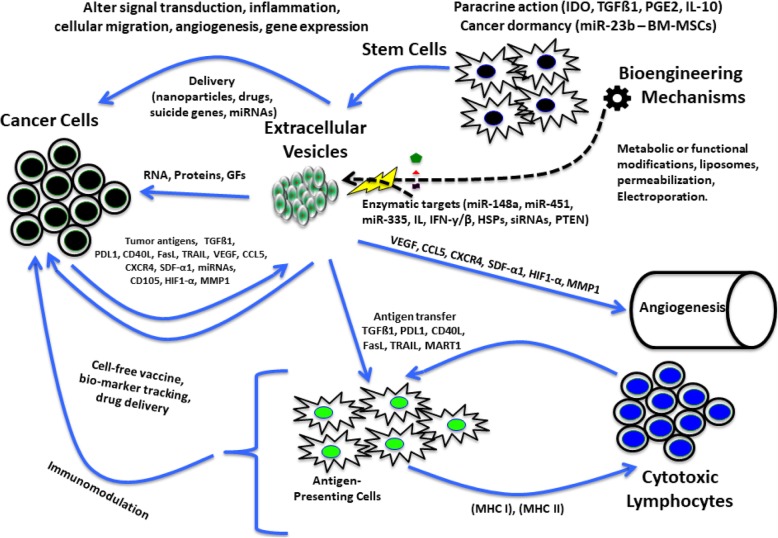
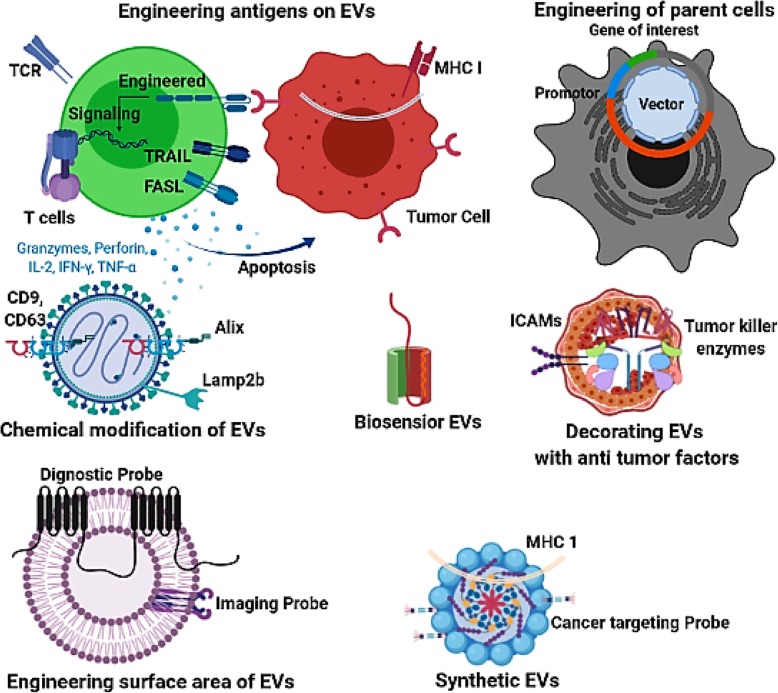
Extracellular vesicles (EVs) are cellular-derived versatile transporters with a specialized property for trafficking a variety of cargo, including metabolites, growth factors, cytokines, proteins, lipids, and nucleic acids, throughout the microenvironment. EVs can act in a paracrine manner to facilitate communication between cells as well as modulate immune, inflammatory, regenerative, and remodeling processes. Of particular interest is the emerging association between EVs and stem cells, given their ability to integrate complex inputs for facilitating cellular migration to the sites of tissue injury. Additionally, stem cell-derived EVs can also act in an autocrine manner to influence stem cell proliferation, mobilization, differentiation, and self-renewal. Hence, it has been postulated that stem cells and EVs may work synergistically in the process of tissue repair and that dysregulation of EVs may cause a loss of homeostasis in the microenvironment leading to disease. By harnessing the property of EVs for delivery of small molecules, stem cell-derived EVs possess significant potential as a platform for developing bioengineering approaches for next-generation cancer therapies and targeted drug delivery methods. Although one of the main challenges of clinical cancer treatment remains a lack of specificity for the delivery of effective treatment options, EVs can be modified via genetic, biochemical, or synthetic methods for enhanced targeting ability of chemotherapeutic agents in promoting tumor regression. Here, we summarize recent research on the bioengineering potential of EV-based cancer therapies. A comprehensive understanding of EV modification may provide a novel strategy for cancer therapy and for the utilization of EVs in the targeting of oncogenic processes. Furthermore, innovative and emerging new technologies are shifting the paradigm and playing pivotal roles by continually expanding novel methods and materials for synthetic processes involved in the bioengineering of EVs for enhanced precision therapeutics.
Keywords: Cancer; Extracellular vesicles; Immunology; Inflammation; Regeneration; Repair; Stem cells; Transplantation.
Conflict of interest statement
The authors declare that they have no competing interests.
Figures

References
Publication types
MeSH terms
LinkOut - more resources
Full Text Sources
Medical
