The Treatment of Proximal Humerus Fracture Using Internal Fixation with Fixed-angle Plates
- PMID: 31775999
- PMCID: PMC6916705
- DOI: 10.3238/arztebl.2019.0757
The Treatment of Proximal Humerus Fracture Using Internal Fixation with Fixed-angle Plates
Abstract
Background: Implants made of various types of material can be used for the internal fixation of fractures. Carbon fiber reinforced polyetheretherketone (CFR-PEEK) is a radiolucent material that may have advantageous handling properties compared with titanium implants.
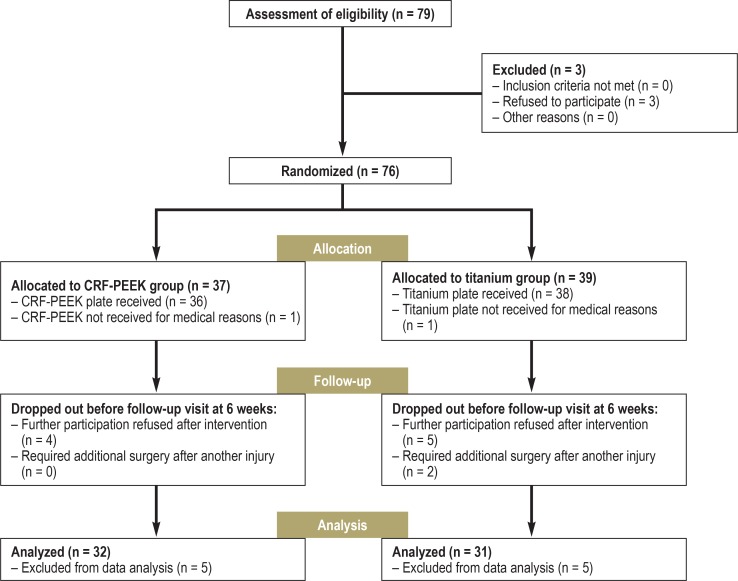
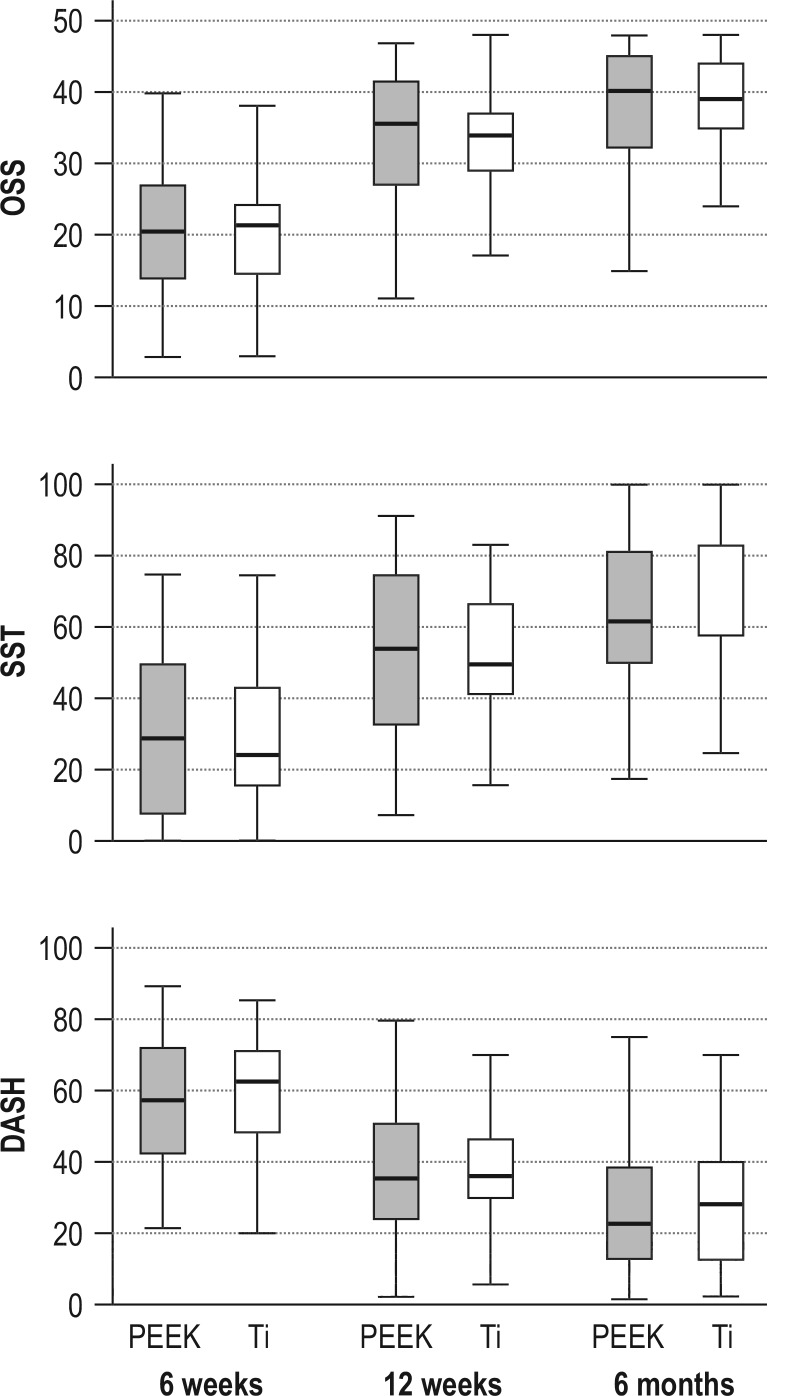
Methods: Seventy-six patients with proximal humerus fractures requiring surgery were randomized to receive a fixed-angle plate made out of either titanium or CFR- PEEK. To measure the functional outcome, the DASH score (Disabilities of Arm, Shoulder, and Hand; primary endpoint), the Simple Shoulder Test (SST), and the Oxford Shoulder Score (OSS) were determined in 63 patients at 6 weeks, 12 weeks, and 6 months after surgery, accompanied at each time point by radiological evaluation.
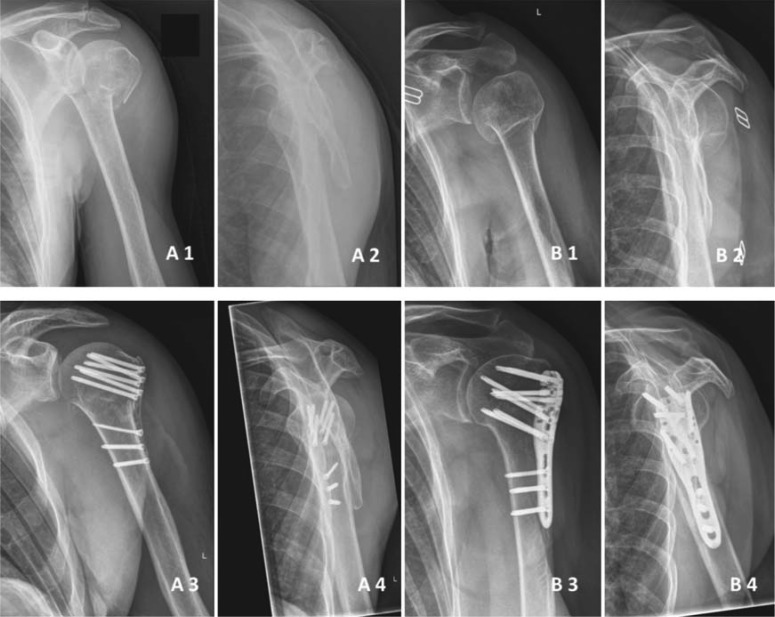
Results: Both groups displayed improvement in DASH scores 6 months after surgery (CFR-PEEK: 27.5 ± 20.5; titanium: 28.5 ± 17.9; p = 0.82). Sensitivity analysis with multiple imputations confirmed this result (27.4 ± 19.2 versus 28.5 ± 16.6). The OSS and SST scores were likewise improved in both groups. All patients displayed full bony consolidation 12 weeks after surgery. In no case was material failure, secondary dislocation, or screw perforation seen. No difference was seen in the maintenance of postoperative reposition between the CFR-PEEK group and the titanium group.
Conclusion: The internal fixation of proximal humerus fractures with either CFR-PEEK or titanium led to clinical improvement 6 months after surgery. No clinical or radiological difference in outcomes was seen between the two groups. Because of the study design, however, the equivalence of the two interventions was not con- clusively demonstrated; a non-inferiority study would have been needed for this purpose.
Figures
References
-
- Passaretti D, Candela V, Sessa P, Gumina S. Epidemiology of proximal humeral fractures: a detailed survey of 711 patients in a metropolitan area. J Shoulder Elbow Surg. 2017;26:2117–2124. - PubMed
-
- Baron JA, Karagas M, Barrett J, et al. Basic epidemiology of fractures of the upper and lower limb among Americans over 65 years of age. Epidemiology. 1996;7:612–618. - PubMed
-
- Palvanen M, Kannus P, Niemi S, Parkkari J. Update in the epidemiology of proximal humeral fractures. Clin Orthop Relat Res. 2006;442:87–92. - PubMed
Publication types
MeSH terms
LinkOut - more resources
Full Text Sources
Medical