


Impact of transport electrification on critical metal sustainability with a focus on the heavy-duty segment
- PMID: 31776343
- PMCID: PMC6881386
- DOI: 10.1038/s41467-019-13400-1
Impact of transport electrification on critical metal sustainability with a focus on the heavy-duty segment
Abstract
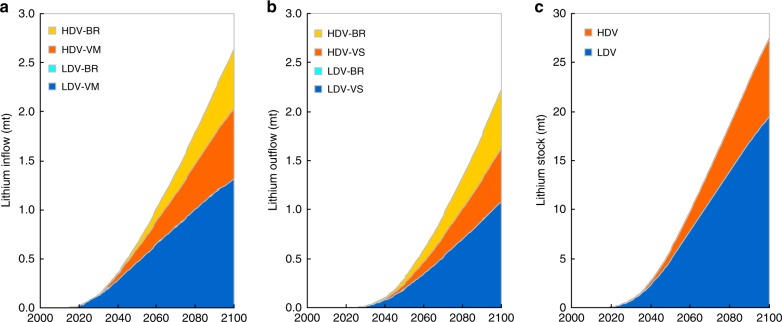
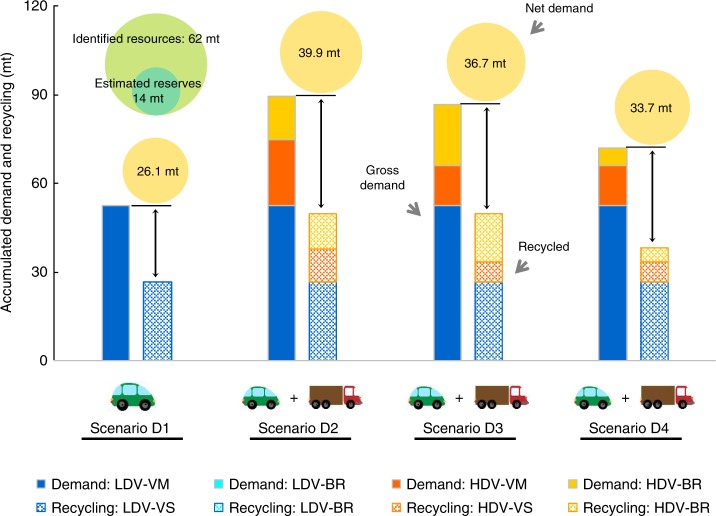
The majority of transport electrification studies, examining the demand and sustainability of critical metals, have focused on light-duty vehicles. Heavy-duty vehicles have often been excluded from the research scope due to their smaller vehicle stock and slower pace of electrification. This study fills this research gap by evaluating the lithium resource impacts from electrification of the heavy-duty segment at the global level. Our results show that a mass electrification of the heavy-duty segment on top of the light-duty segment would substantially increase the lithium demand and impose further strain on the global lithium supply. The significant impact is attributed to the large single-vehicle battery capacity required by heavy-duty vehicles and the expected battery replacement needed within the lifetime of heavy-duty vehicles. We suggest that the ambition of mass electrification in the heavy-duty segment should be treated with cautions for both policy makers and entrepreneurs.
Conflict of interest statement
The authors declare no competing interests.
Figures
References
-
- S&P Global. Global EV car sales surge 63% in 2018 to top 2 million vehicles. https://www.spglobal.com/platts/en/market-insights/latest-news/electric-... (2019)
-
- International Council on Clean Transportation (ICCT). Transitioning to zero-emission heavy-duty freight vehicles. https://www.theicct.org/publications/transitioning-zero-emission-heavy-d... (2017)
-
- Gao Z, Lin Z, Franzese O. Energy consumption and cost savings of truck electrification for heavy-duty vehicle applications. Transportation Res. Rec. 2017;2628:99–109. doi: 10.3141/2628-11. - DOI
-
- Tesla. Tesla Semi Specifications. https://www.tesla.com/semi (2018)
-
- Sripad S, Viswanathan V. Quantifying the economic case for electric semi-trucks. ACS Energy Lett. 2019;4:149–155. doi: 10.1021/acsenergylett.8b02146. - DOI
Publication types
LinkOut - more resources
Full Text Sources
Miscellaneous
