


Untargeted Metabolomics-Based Screening Method for Inborn Errors of Metabolism using Semi-Automatic Sample Preparation with an UHPLC- Orbitrap-MS Platform
- PMID: 31779119
- PMCID: PMC6950026
- DOI: 10.3390/metabo9120289
Untargeted Metabolomics-Based Screening Method for Inborn Errors of Metabolism using Semi-Automatic Sample Preparation with an UHPLC- Orbitrap-MS Platform
Abstract
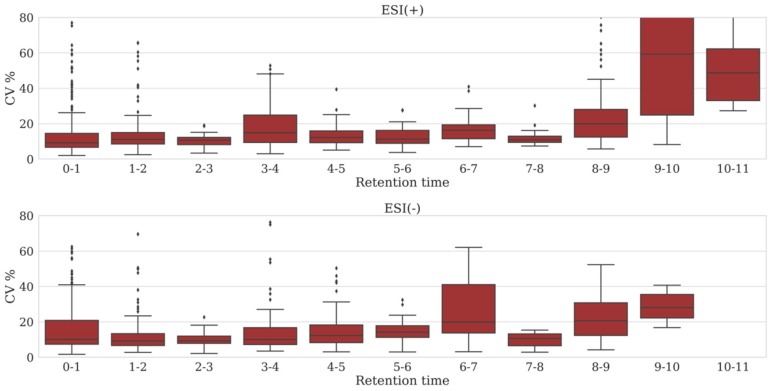
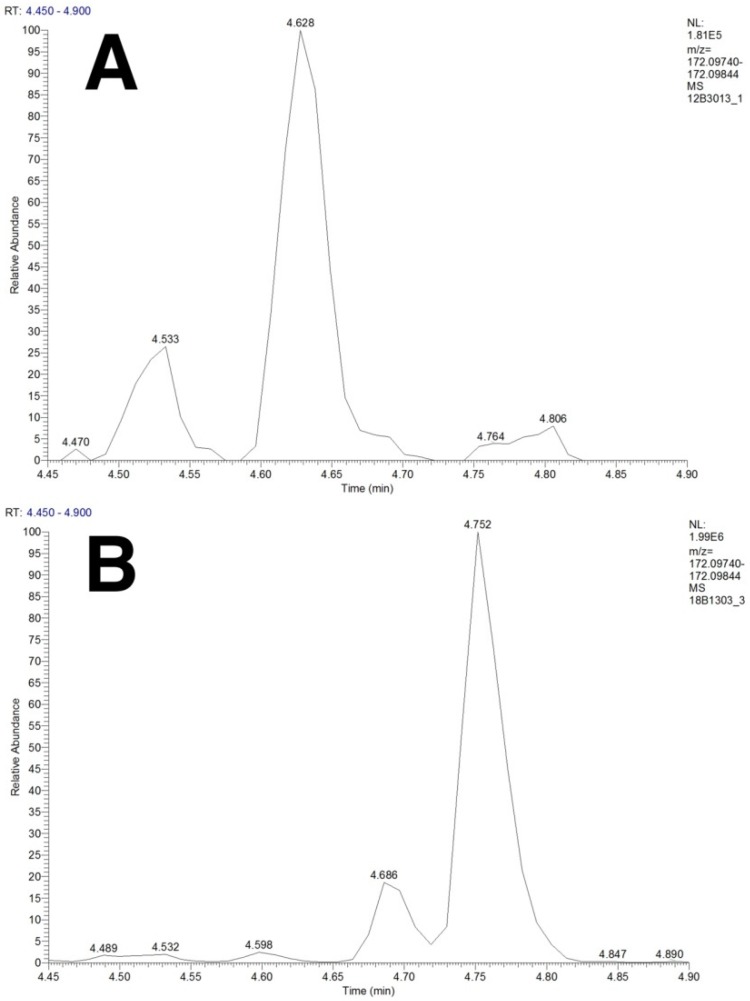
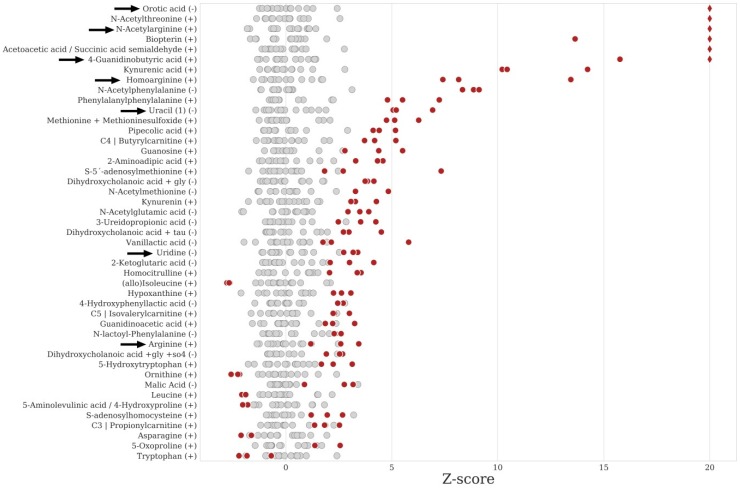
Routine diagnostic screening of inborn errors of metabolism (IEM) is currently performed by different targeted analyses of known biomarkers. This approach is time-consuming, targets a limited number of biomarkers and will not identify new biomarkers. Untargeted metabolomics generates a global metabolic phenotype and has the potential to overcome these issues. We describe a novel, single platform, untargeted metabolomics method for screening IEM, combining semi-automatic sample preparation with pentafluorophenylpropyl phase (PFPP)-based UHPLC- Orbitrap-MS. We evaluated analytical performance and diagnostic capability of the method by analysing plasma samples of 260 controls and 53 patients with 33 distinct IEM. Analytical reproducibility was excellent, with peak area variation coefficients below 20% for the majority of the metabolites. We illustrate that PFPP-based chromatography enhances identification of isomeric compounds. Ranked z-score plots of metabolites annotated in IEM samples were reviewed by two laboratory specialists experienced in biochemical genetics, resulting in the correct diagnosis in 90% of cases. Thus, our untargeted metabolomics platform is robust and differentiates metabolite patterns of different IEMs from those of controls. We envision that the current approach to diagnose IEM, using numerous tests, will eventually be replaced by untargeted metabolomics methods, which also have the potential to discover novel biomarkers and assist in interpretation of genetic data.
Keywords: HRAM-MS; IEM; LC-MS; Orbitrap; PFPP; PKU; inborn errors of metabolism; metabolomics; organic aciduria; urea cycle defects.
Conflict of interest statement
All authors state that they have no conflict of interest to declare. None of the authors accepted any reimbursements, fees, or funds from any organization that may in any way gain or lose financially from the results of this study. The authors have not been employed by such an organization. The authors have not act as an expert witness on the subject of the study. The authors do not have any other conflict of interest.
Figures
References
LinkOut - more resources
Full Text Sources
