


Toxicity Assessment of Herbal Medicine Using Zebrafish Embryos: A Systematic Review
- PMID: 31781278
- PMCID: PMC6875295
- DOI: 10.1155/2019/7272808
Toxicity Assessment of Herbal Medicine Using Zebrafish Embryos: A Systematic Review
Abstract
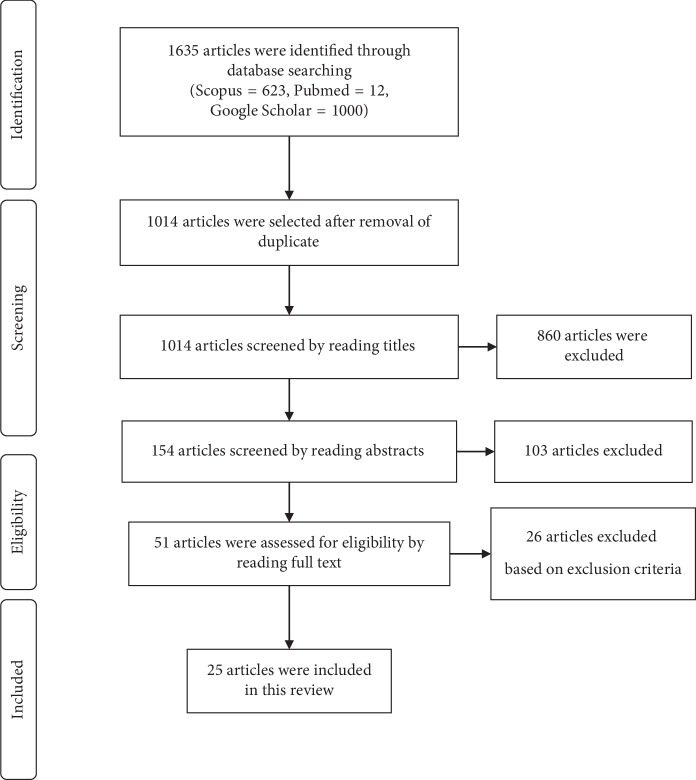
Herbal remedies have been practiced by humans over centuries and therefore possess time-proven safety. However, it is imperative to evaluate the toxic effects of herbal medicine to confirm their safety, particularly when developing therapeutic leads. Use of laboratory animals such as rats, mice, and rabbits was considered as gold standard in herbal toxicity assessments. However, in the last few decades, the ethical consideration of using higher vertebrates for toxicity testing has become more contentious. Thus, possible alternative models entailing lower vertebrates such as zebrafish were introduced. The zebrafish embryotoxicity model is at the forefront of toxicology assessment due to the transparent nature of embryos, low cost, short cycle, higher fecundity, and genetic redundancy to the humans. Recently, its application has been extended to herbal toxicology. The present review intends to provide a comprehensive assembly of studies that applied the zebrafish embryo model for the assessment of herbal toxicity. A systematic literature survey was carried out in popular scientific databases. The literature search identified a total of 1014 articles in PubMed = 12, Scopus SciVerse® = 623, and Google Scholar = 1000. After screening, 25 articles were included in this review, and they were categorized into three groups in which the zebrafish embryotoxicity assay has been applied to investigate the toxicity of (1) polyherbal formulae/medical prescription (2 full texts), (2) crude extracts (12 full texts), and (3) phytocompounds/isolated constituents (11 full texts). These studies have investigated the toxicity of 6 polyherbal formulae, 16 crude extracts, and more than 30 phytocompounds/isolated constituents using the zebrafish embryotoxicity model. Moreover, this model has explicated the teratogenic effects and specific organ toxicities such as the kidney, heart, and liver. Furthermore, in some studies, the molecular mechanisms underlying the toxicity of herbal medicine have been elucidated. This comprehensive collection of scientific data solidifies the zebrafish embryo model as an effective model system for studying toxicological effects of a broad spectrum of herbal remedies. Henceforth, it provides a novel insight into the toxicity assessment of herbal medicine.
Copyright © 2019 Chanika D. Jayasinghe and Uthpala A. Jayawardena.
Conflict of interest statement
The authors declare that there are no conflicts of interest regarding the publication of this paper.
Figures
References
-
- Bodeker G., Ong C. K. WHO Global Atlas of Traditional, Complementary and Alternative Medicine. Vol. 1. Geneva, Switzerland: World Health Organization; 2005.
-
- Shyur L. F. Recent Trends in Medicinal Plants Research. Vol. 62. Cambridge, MA, USA: Academic Press; 2012.
-
- Ifeoma O., Oluwakanyinsola S. New Insights into Toxicity and Drug Testing. London, UK: IntechOpen; 2013. Screening of herbal medicines for potential toxicities.
Publication types
LinkOut - more resources
Full Text Sources
