


BIOPEP-UWM Database of Bioactive Peptides: Current Opportunities
- PMID: 31783634
- PMCID: PMC6928608
- DOI: 10.3390/ijms20235978
BIOPEP-UWM Database of Bioactive Peptides: Current Opportunities
Abstract
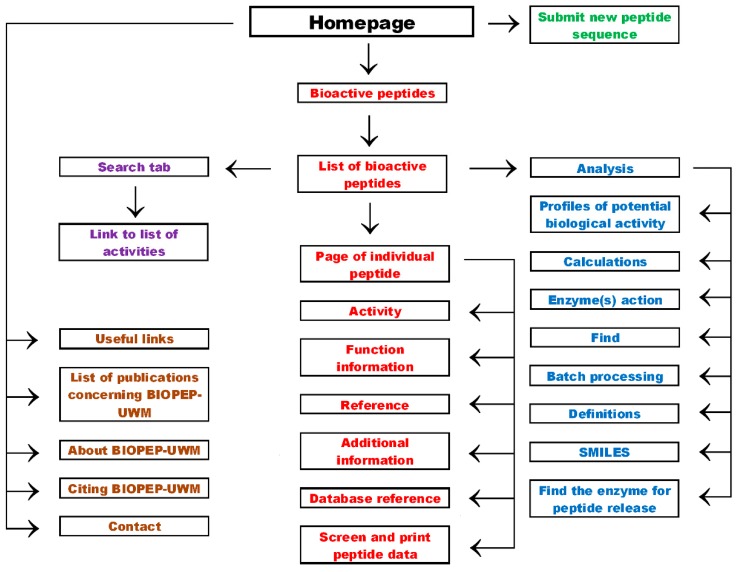
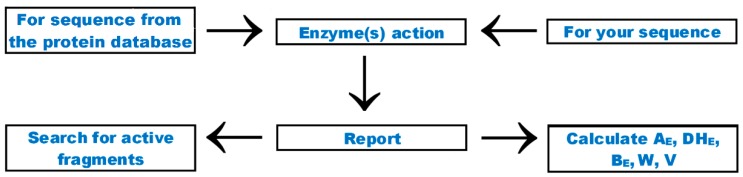
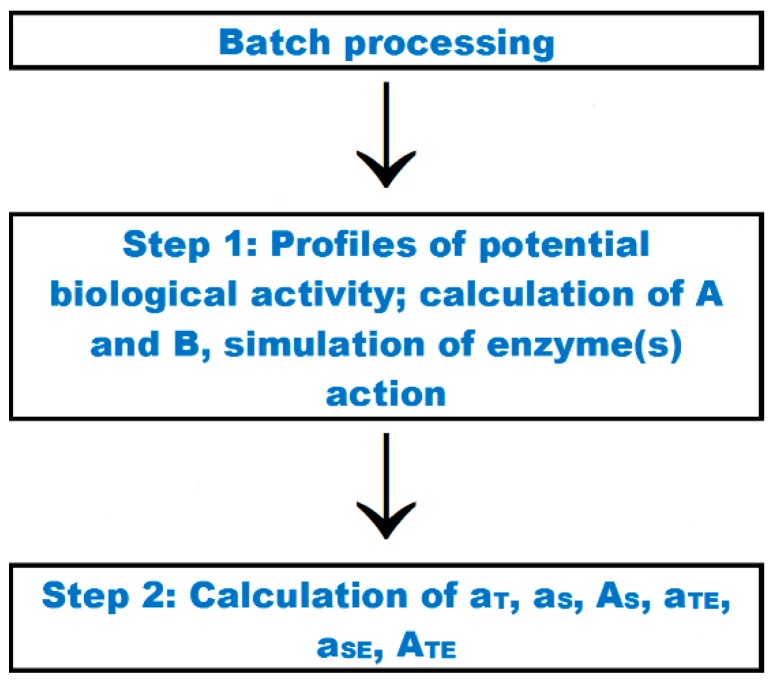
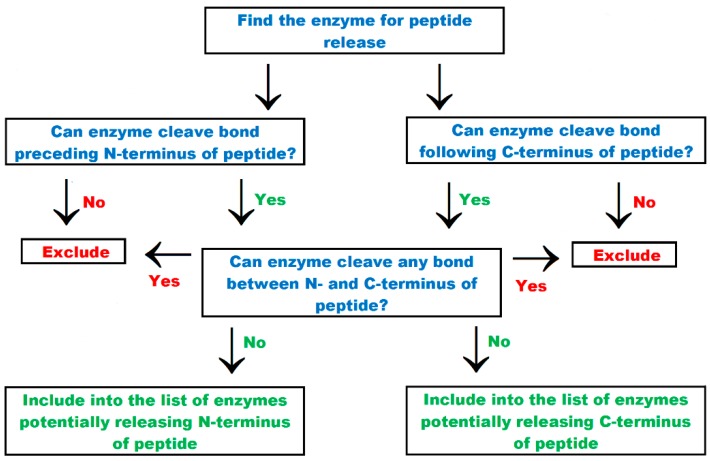
The BIOPEP-UWM™ database of bioactive peptides (formerly BIOPEP) has recently become a popular tool in the research on bioactive peptides, especially on these derived from foods and being constituents of diets that prevent development of chronic diseases. The database is continuously updated and modified. The addition of new peptides and the introduction of new information about the existing ones (e.g., chemical codes and references to other databases) is in progress. New opportunities include the possibility of annotating peptides containing D-enantiomers of amino acids, batch processing option, converting amino acid sequences into SMILES code, new quantitative parameters characterizing the presence of bioactive fragments in protein sequences, and finding proteinases that release particular peptides.
Keywords: SMILES code; bioactive peptides; chronic diseases; database; foods; nutraceuticals; nutrition; proteolysis.
Conflict of interest statement
The Authors declare no conflict of interests.
Figures
References
-
- Holton T.A., Vijayakumar V., Khaldi N. Bioinformatics: Current perspectives and future directions for food and nutritional research facilitated by a food-wiki database. Trends Food Sci. Technol. 2013;34:5–17. doi: 10.1016/j.tifs.2013.08.009. - DOI
-
- Udenigwe C.C. Bioinformatics approaches, prospects and challenges of food bioactive peptide research. Trends Food Sci. Technol. 2014;36:134–143. doi: 10.1016/j.tifs.2014.02.004. - DOI
-
- Iwaniak A., Minkiewicz P., Darewicz M., Protasiewicz M., Mogut D. Chemometrics and cheminformatics in the analysis of biologically active peptides from food sources. J. Funct. Foods. 2015;16:334–351. doi: 10.1016/j.jff.2015.04.038. - DOI
-
- Iwaniak A., Darewicz M., Mogut D., Minkiewicz P. Elucidation of the role of in silico methodologies in approaches to studying bioactive peptides derived from foods. J. Funct. Foods. 2019;61:103486. doi: 10.1016/j.jff.2019.103486. - DOI
MeSH terms
Substances
LinkOut - more resources
Full Text Sources
Other Literature Sources
