. 2019 Nov 8:10:1386.
doi: 10.3389/fphys.2019.01386. eCollection 2019.

Evaluation of Divers' Neuropsychometric Effectiveness and High-Pressure Neurological Syndrome via Computerized Test Battery Package and Questionnaires in Operational Setting

Affiliations

Evaluation of Divers' Neuropsychometric Effectiveness and High-Pressure Neurological Syndrome via Computerized Test Battery Package and Questionnaires in Operational Setting

Simin Berenji Ardestani et al. Front Physiol. .

Abstract

Introduction: When divers are compressed to water depths deeper than 150 meter sea water (msw), symptoms of high-pressure neurological syndrome (HPNS) might appear due to rapid increase in pressure on the central nervous system during compression. The aim of this study was to first operate a new computerized tool, designed to monitor divers' wellbeing and cognitive function, and to record the results. The second aim was to evaluate the feasibility and validity of the Physiopad software and HPNS questionnaires as a new tool for monitoring divers wellbeing in an operational setting, including sensible visualization and presentation of results. Methods: The Physiopad was operated onboard Deep Arctic (TechnipFMC Diving Support Vessel). The diving work was performed between 180 and 207 msw. The data from 46 divers were collected from the HPNS questionnaires, Hand dynamometry test, Critical Flicker Fusion Frequency test (CFFF), Adaptive Visual Analog Scale (AVAS), Simple Math Process (MathProc test), Perceptual Vigilance Task (PVT), and Time Estimation Task (time-wall). Result: Diver's subjective evaluation revealed different symptoms, possibly also HPNS related, which lasted from 1 to 5 days in storage, with the common duration being 1 day. The results from Physiopad battery testing showed no signs of significant neurological alteration. Conclusion: The present study showed that there was no association between subjective measurements of HPNS and neuropsychometric test results. We also confirmed the feasibility of using the computerized test battery to monitor saturation divers at work. The HPNS battery and Physiopad software could be an important tool for monitoring diver's health in the future. This tool was not used during the Bahr Essalam project to operationally evaluate any HPNS effect on divers as data analysis was performed post-project.

Keywords: arousal; central nervous system; high-pressure neurological syndrome; neuropsychology; saturation diving.


Figures

Figure 1
Figure 1
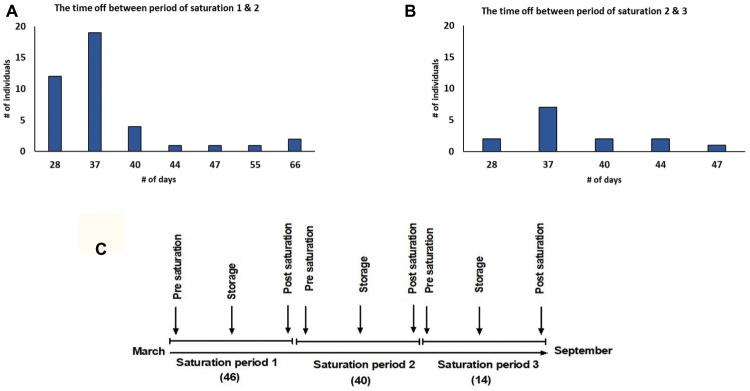
(A) Intermission between 1st and 2nd saturation periods; (B) intermission between 2nd and 3rd saturation periods; (C) study timeline. The study was performed between March and September 2018. Forty six divers in saturation period 1, 40 divers in saturation period 2, and 14 divers in saturation period 3 participated in the study. Data were collected during Pre-saturation, Storage, and Post-saturation periods.
Figure 2
Figure 2
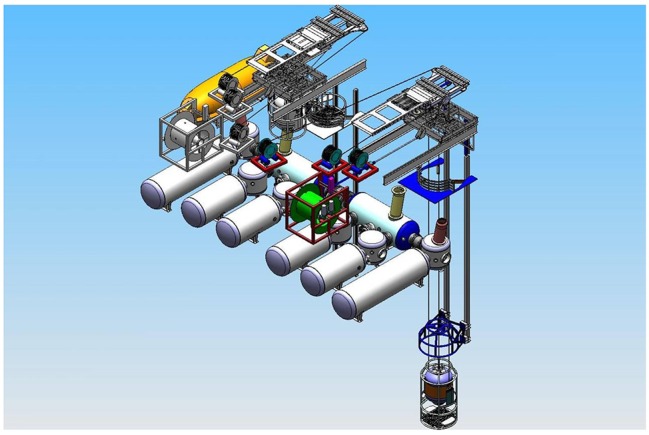
Schematic illustration of saturation system in Deep Arctic. Six living chambers were used for depth adaptation of divers.
Figure 3
Figure 3
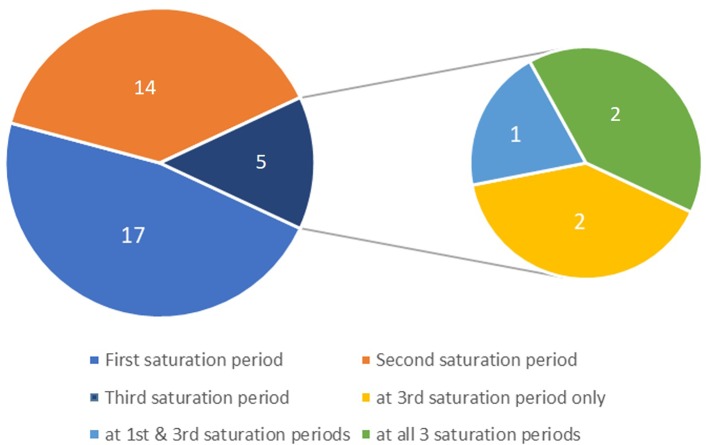
The distribution of HPNS-related symptoms during saturation periods.
Figure 4
Figure 4
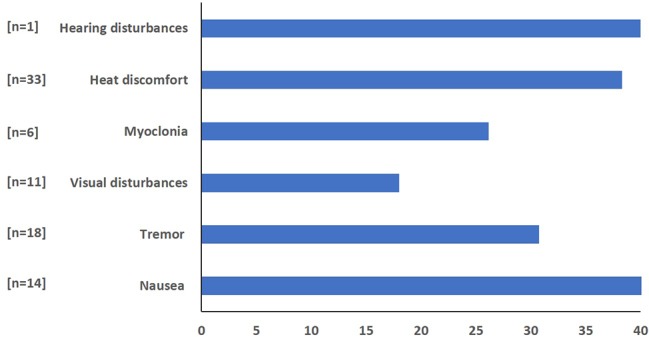
Reported discomfort during all saturation periods; 0 (no discomfort)–100.
Figure 5
Figure 5
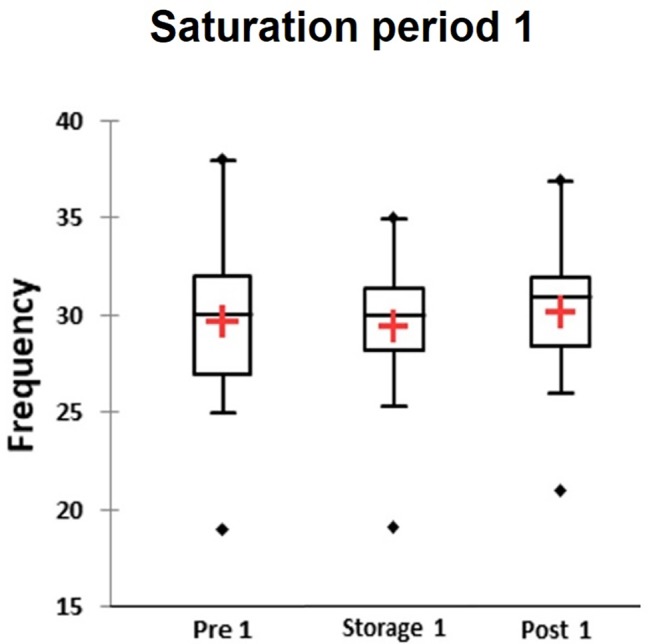
The average value from three attempts per day was calculated for each participants and results of Critical Flicker fusion frequency test presented as frequency in three different phases of the saturation period 1: Pre-saturation (Pre), Storage (Storage), and Post-saturation (Post). The red cross is mean, the horizontal line inside the boxes is median, edges of the box show inter-quartile range, and whisker indicates 95% CI.
Figure 6
Figure 6
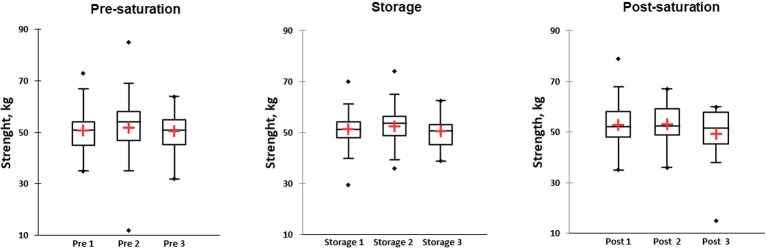
Results of hand dynamometry test represented as kilograms in three different phases of the saturation: Pre-saturation (Pre), Storage (Storage), and Post-saturation (Post) over three saturation periods (1, 2, and 3). The red cross is mean, the horizontal line inside the boxes is median, edges of the box show inter-quartile range, and whisker indicates 95% CI.
Figure 7
Figure 7
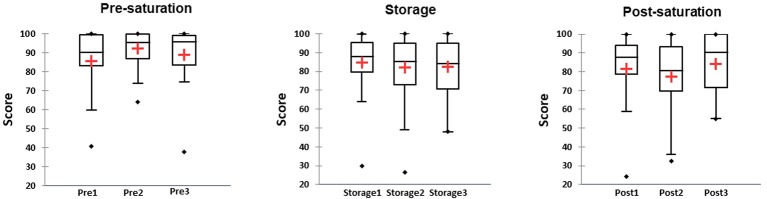
The score of the adaptive visual analogic scale (AVAS) in three different phases of the saturation: Pre-saturation (Pre), Storage (Storage), and Post-saturation (Post) for three saturation periods (1, 2, and 3). The red cross is mean, the horizontal line inside the boxes is median, edges of the box show inter-quartile range, and whisker indicates 95% CI.
Figure 8
Figure 8
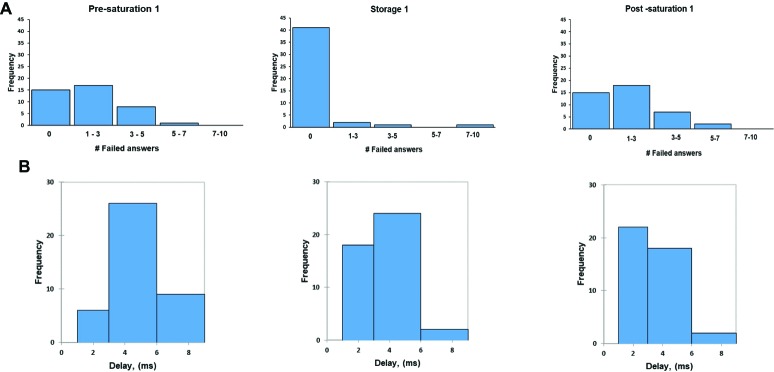
The frequency of failed answer (A); the frequency of average delay (B) in MathProc test in three different phases in the first saturation period.
Figure 9
Figure 9
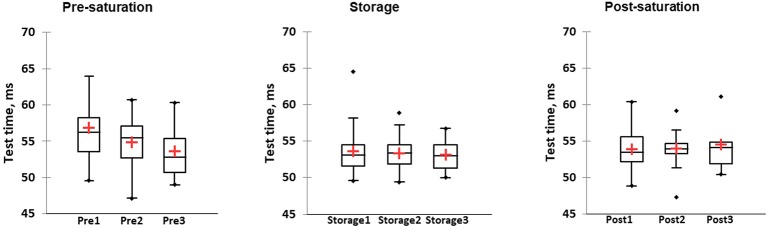
The perceptual vigilance task (PVT) test duration is presented in milliseconds in three different phases of the saturation period: Pre-saturation (Pre), Storage (Storage), and Post-saturation (Post) during three saturation periods (1, 2, and 3). The red cross is mean, the horizontal line inside the boxes is median, edges of the box show inter-quartile range, and whisker indicates 95% CI.
Figure 10
Figure 10
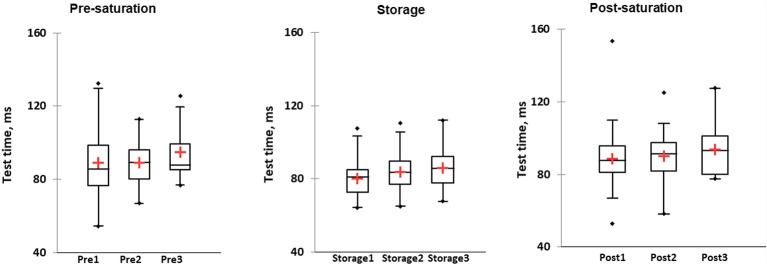
The wall-test duration is presented in milliseconds in three different phases: Pre-saturation (Pre), Storage (Storage), and Post-saturation (Post) in three saturation periods (1, 2, and 3). The red cross is mean, the horizontal line inside the boxes is median, edges of the box show inter-quartile range, and whisker indicates 95% CI.

References

    1. Aarli J. A., Vaernes R., Brubakk A. O., Nyland H., Skeidsvoll H., Tonjum S. (1985). Central nervous dysfunction associated with deep-sea diving. Acta Neurol. Scand. 71, 2–10. 10.1111/j.1600-0404.1985.tb03159.x, PMID: - DOI - PubMed
    1. Abraini J. H., Rostain J. C. (1991). Pressure-induced striatal dopamine release correlates hyperlocomotor activity in rats exposed to high pressure. J. Appl. Physiol. 71, 638–643. 10.1152/jappl.1991.71.2.638 - DOI - PubMed
    1. Anouti A., Koller W. C. (1995). Tremor disorders. Diagnosis and management. West. J. Med. 162, 510–513. PMID: - PMC - PubMed
    1. Balestra C., Machado M. L., Theunissen S., Balestra A., Cialoni D., Clot C., et al. (2018). Critical flicker fusion frequency: a marker of cerebral arousal during modified gravitational conditions related to parabolic flights. Front. Physiol. 9:1403. 10.3389/fphys.2018.01403 - DOI - PMC - PubMed
    1. Berka C., Levendowski D. J., Lumicao M. N., Yau A., Davis G., Zivkovic V. T., et al. (2007). EEG correlates of task engagement and mental workload in vigilance, learning, and memory tasks. Aviat. Space Environ. Med. 78(Suppl. 5), B231–B244. PMID: - PubMed

LinkOut - more resources