


Prospective virome analyses in young children at increased genetic risk for type 1 diabetes
- PMID: 31792456
- PMCID: PMC6898786
- DOI: 10.1038/s41591-019-0667-0
Prospective virome analyses in young children at increased genetic risk for type 1 diabetes
Abstract
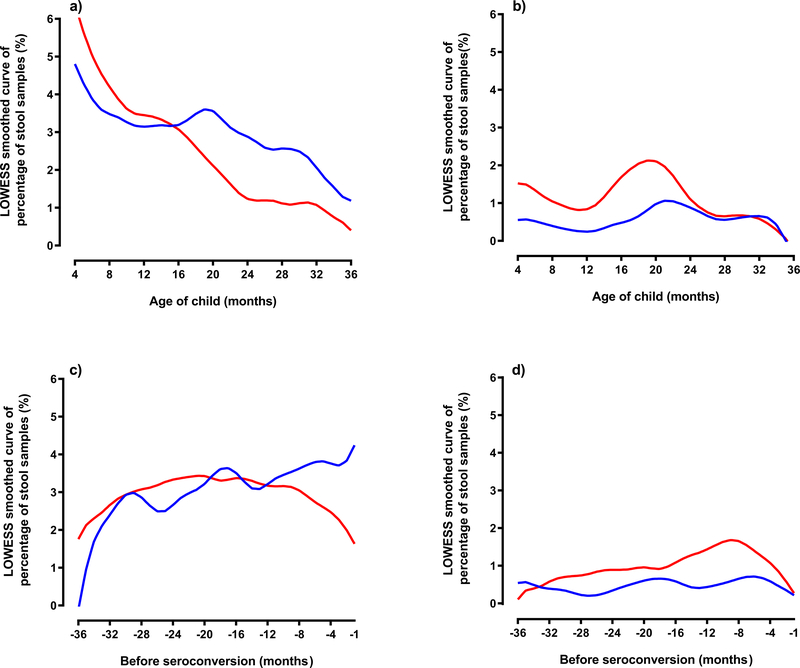
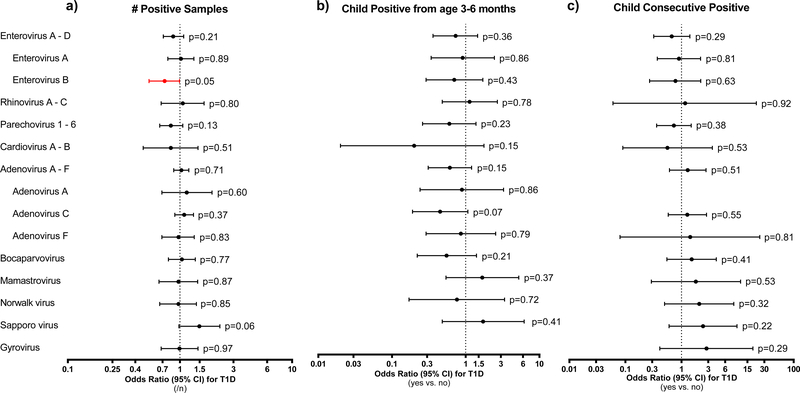
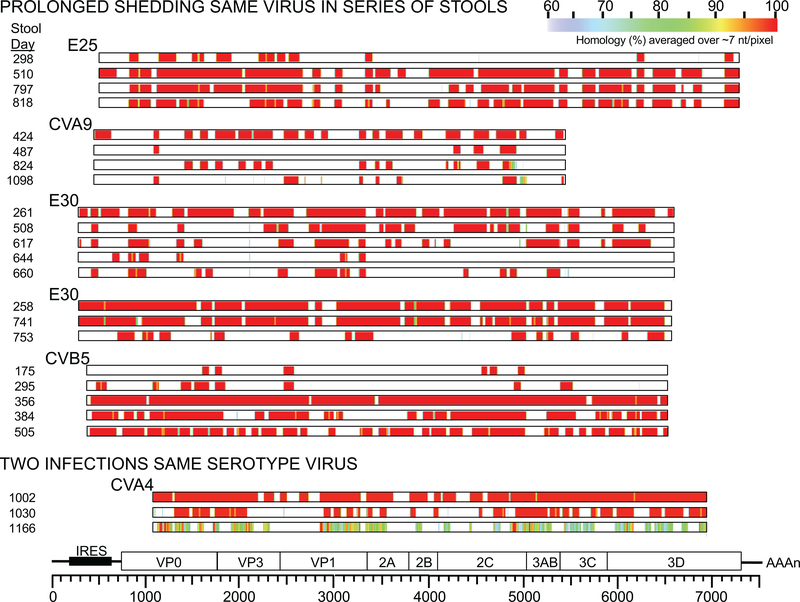
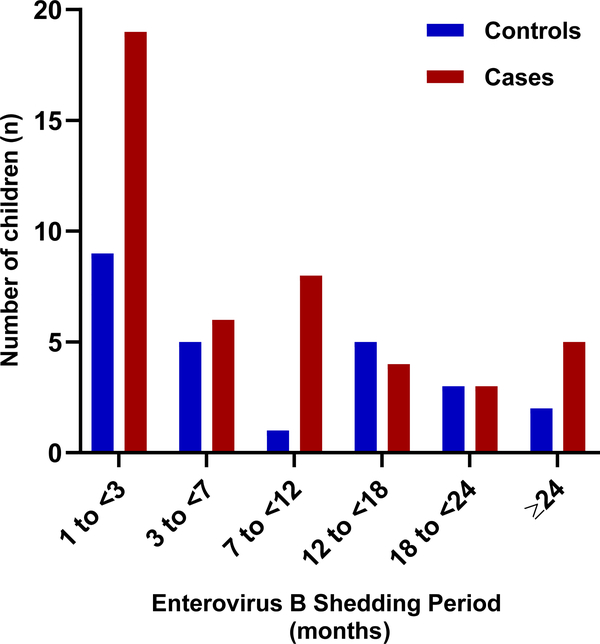
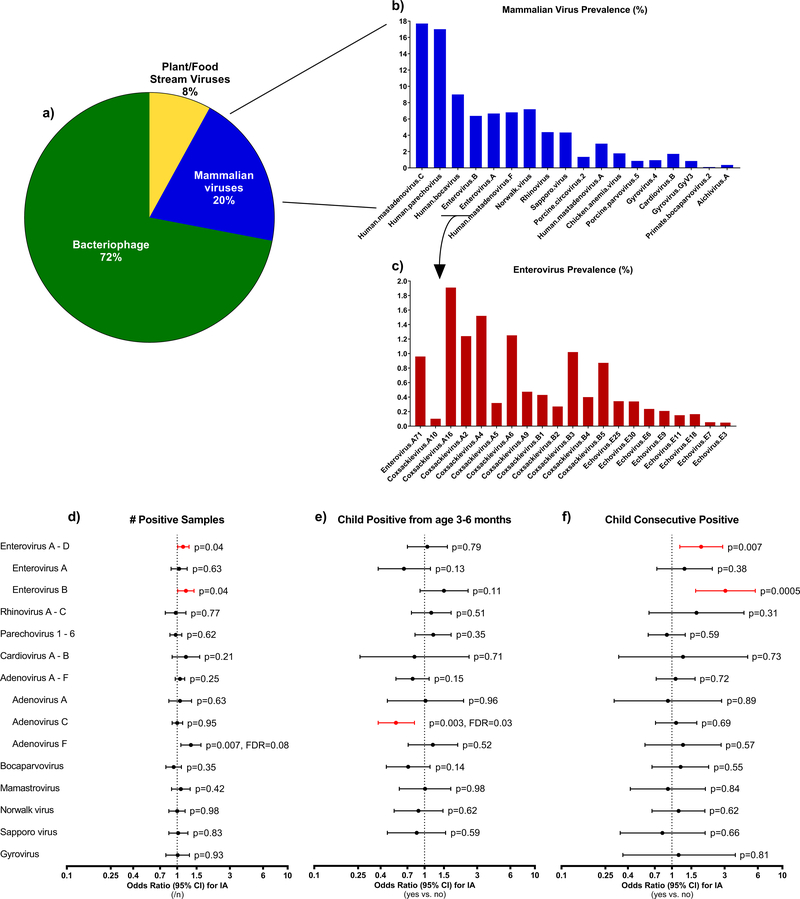
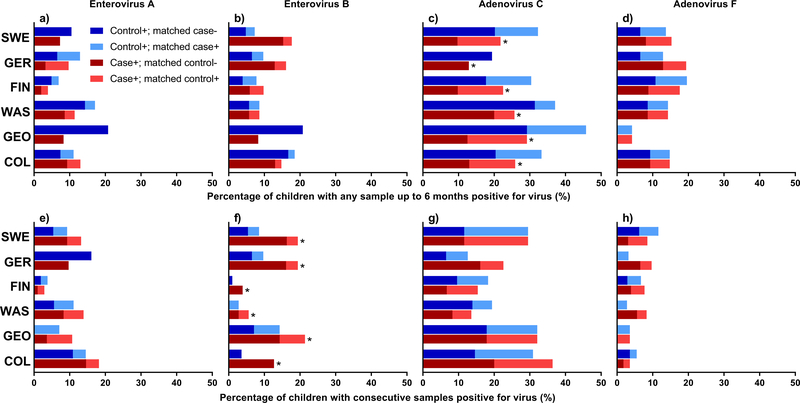
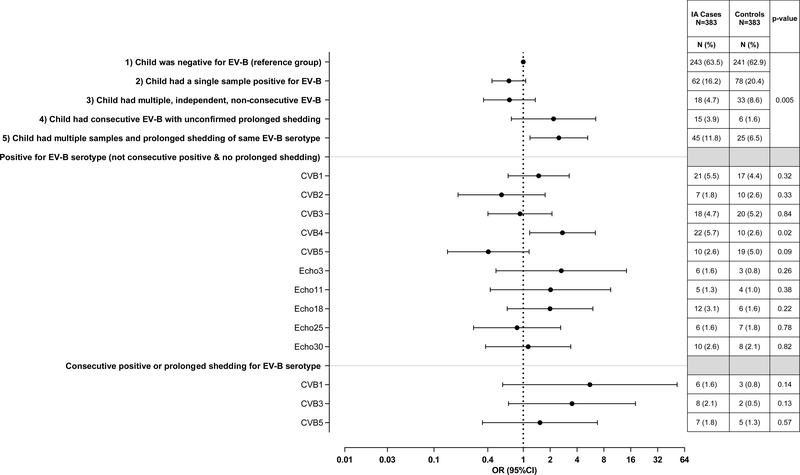
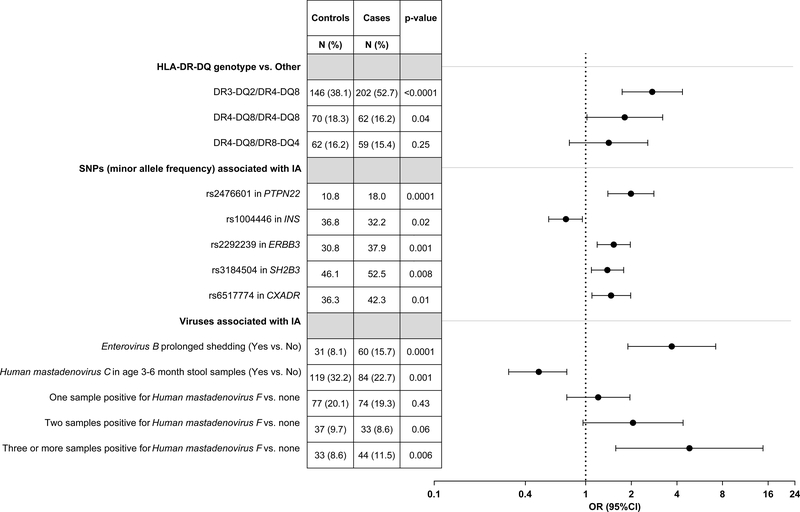
Viruses are implicated in autoimmune destruction of pancreatic islet β cells, which results in insulin deficiency and type 1 diabetes (T1D)1-4. Certain enteroviruses can infect β cells in vitro5, have been detected in the pancreatic islets of patients with T1D6 and have shown an association with T1D in meta-analyses4. However, establishing consistency in findings across studies has proven difficult. Obstacles to convincingly linking RNA viruses to islet autoimmunity may be attributed to rapid viral mutation rates, the cyclical periodicity of viruses7 and the selection of variants with altered pathogenicity and ability to spread in populations. β cells strongly express cell-surface coxsackie and adenovirus receptor (CXADR) genes, which can facilitate enterovirus infection8. Studies of human pancreata and cultured islets have shown significant variation in enteroviral virulence to β cells between serotypes and within the same serotype9,10. In this large-scale study of known eukaryotic DNA and RNA viruses in stools from children, we evaluated fecally shed viruses in relation to islet autoimmunity and T1D. This study showed that prolonged enterovirus B rather than independent, short-duration enterovirus B infections may be involved in the development of islet autoimmunity, but not T1D, in some young children. Furthermore, we found that fewer early-life human mastadenovirus C infections, as well as CXADR rs6517774, independently correlated with islet autoimmunity.
Conflict of interest statement
Competing Interests
H.H. is a shareholder and chairman of the Board of Vactech Ltd. and member of the Scientific Advisory Board of Provention Bio, Inc., which develop vaccines against picornaviruses and coxsackievirus B. The authors have no other relevant affiliations or financial involvement with any organization or entity with a financial interest in or financial conflict with the subject matter or materials discussed in the manuscript apart from the disclosed.
Figures
References
-
- van der Werf N, Kroese FGM, Rozing J & Hillebrands JL Viral infections as potential triggers of type 1 diabetes. Diabetes-Metab Res 23, 169–183 (2007). - PubMed
-
- Laitinen OH, et al. Coxsackievirus B1 is associated with induction of beta-cell autoimmunity that portends type 1 diabetes. Diabetes 63, 446–455 (2014). - PubMed
-
- Anagandula M, et al. Infection of human islets of Langerhans with two strains of Coxsackie B virus serotype 1: assessment of virus replication, degree of cell death and induction of genes involved in the innate immunity pathway. J Med Virol 86, 1402–1411 (2014). - PubMed
Publication types
MeSH terms
Substances
Grants and funding
- U01 DK063821/DK/NIDDK NIH HHS/United States
- UC4 DK063863/DK/NIDDK NIH HHS/United States
- UL1 TR002535/TR/NCATS NIH HHS/United States
- HHSN267200700014C/DK/NIDDK NIH HHS/United States
- U01 DK063861/DK/NIDDK NIH HHS/United States
- U01 DK063790/DK/NIDDK NIH HHS/United States
- UL1 TR001082/TR/NCATS NIH HHS/United States
- UL1 TR000064/TR/NCATS NIH HHS/United States
- U01 DK063836/DK/NIDDK NIH HHS/United States
- U01 DK063829/DK/NIDDK NIH HHS/United States
- U01 DK063865/DK/NIDDK NIH HHS/United States
- UC4 DK095300/DK/NIDDK NIH HHS/United States
- UC4 DK063861/DK/NIDDK NIH HHS/United States
- UC4 DK063829/DK/NIDDK NIH HHS/United States
- UC4 DK063821/DK/NIDDK NIH HHS/United States
- UC4 DK117483/DK/NIDDK NIH HHS/United States
- UC4 DK063836/DK/NIDDK NIH HHS/United States
- UC4 DK112243/DK/NIDDK NIH HHS/United States
- UC4 DK063865/DK/NIDDK NIH HHS/United States
- U01 DK063863/DK/NIDDK NIH HHS/United States
- UC4 DK106955/DK/NIDDK NIH HHS/United States
- UC4 DK100238/DK/NIDDK NIH HHS/United States
LinkOut - more resources
Full Text Sources
Other Literature Sources
Medical
