


Validation of a multisubstance online Timeline Followback assessment
- PMID: 31793226
- PMCID: PMC6955818
- DOI: 10.1002/brb3.1486
Validation of a multisubstance online Timeline Followback assessment
Abstract
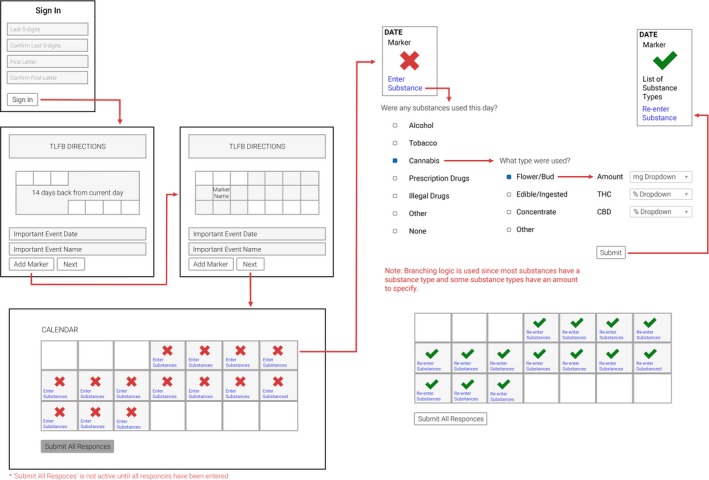
Objectives: The Timeline Followback (TLFB) was originally developed to assess alcohol consumption patterns (American Journal of Public Health, 86, 1996, 966) and has been increasingly modified for Web-based use. Additionally, new modes of substance use administration have emerged, creating a need for an adaptable TLFB tool than can capture data such as cannabis product potency or prescription drug use. Our goal was to validate an online TLFB that reliably assesses a wide range of substances in greater detail.
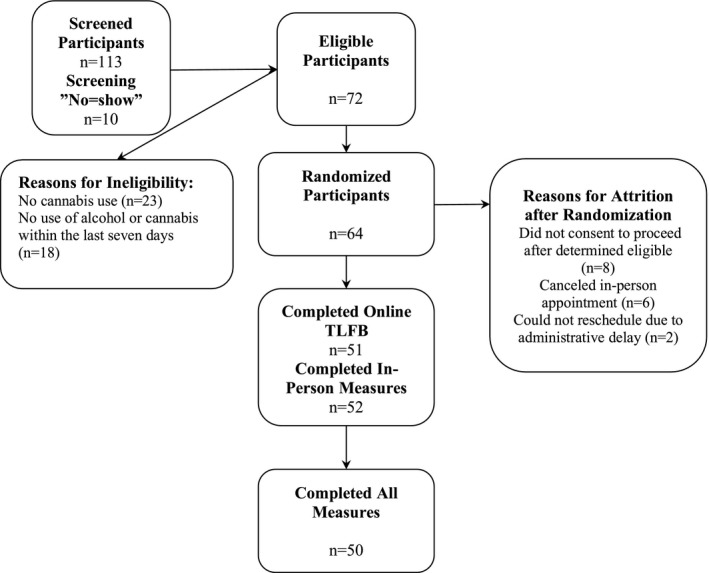
Methods: Using a within-subjects counterbalanced design, daily substance use data were collected from 50 college students over a 14-day retrospective period using both the traditional in-person TLFB and online TLFB (O-TLFB).
Results: All substance use variables, including detailed measures of cannabis metrics, correlated significantly (r's ranged from .653 to .944, p < .001) between TLFB versions. Further, results demonstrated that both the online TLFB and in-person TLFB demonstrated concurrent validity with both the Alcohol Use Disorders Identification Test (AUDIT) and Marijuana Dependence Scale (MDS).
Conclusion: Overall, the data suggest that this new O-TLFB demonstrates strong reliability and delivers a versatile and secure tool for substance use assessment that is relevant to a variety of biomedical and psychological research contexts.
Keywords: Timeline Followback; alcohol; cannabis; online assessment; substance use.
© 2019 University of Colorado Boulder. Brain and Behavior published by Wiley Periodicals, Inc.
Conflict of interest statement
The authors declare that they have no conflict of interest.
Figures
References
-
- Babor, T. F. , Higgins‐Biddle, J. C. , Saunders, J. B. , & Monteiro, M. G. (2001). The alcohol use disorders identification test guidelines for use in primary care (pp. 1–40). Geneva, Switzerland: World Health Organization.
Publication types
MeSH terms
Grants and funding
LinkOut - more resources
Full Text Sources
Medical
Research Materials
Miscellaneous
