


Development and initial testing of a new instrument to measure the experience of eczema control in adults and children: Recap of atopic eczema (RECAP)
- PMID: 31794074
- PMCID: PMC7496132
- DOI: 10.1111/bjd.18780
Development and initial testing of a new instrument to measure the experience of eczema control in adults and children: Recap of atopic eczema (RECAP)
Abstract
Background: Eczema control has been identified as an important outcome by key stakeholders in eczema research (including patients, carers, healthcare professionals and researchers) but no validated instruments for the domain have been identified.
Objectives: To develop a measurement instrument to capture a patient's perspective of eczema control that is suitable for use in eczema clinical trials.
Methods: Best practice for the development of a patient-reported outcome was followed. A mixed-methods approach was used to develop and refine a conceptual framework, generate, refine and select items and to test the distribution and construct validity of the final scale. The mixed-methods approach involved expert panel meetings (including patient representatives, healthcare professionals and methodologists), and data collection using a focus group, cognitive interviews and an online survey with people with eczema and caregivers. Multivariable linear regression was used in the item selection process.
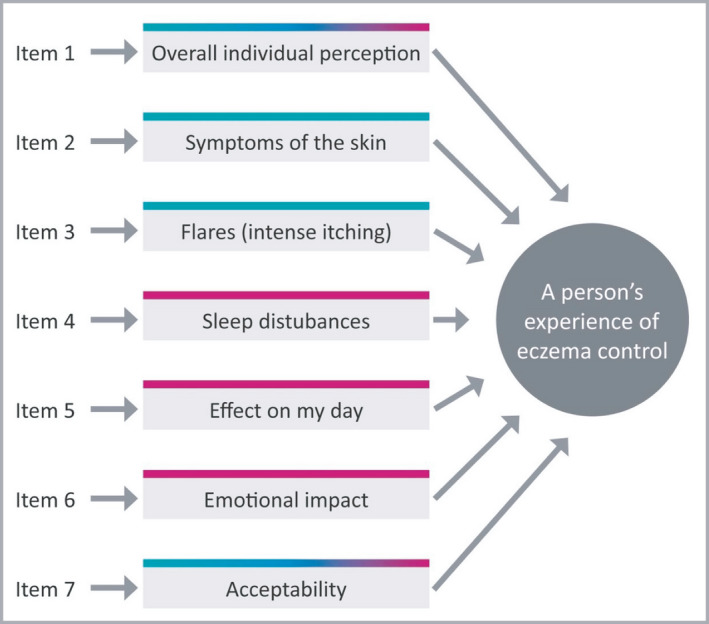
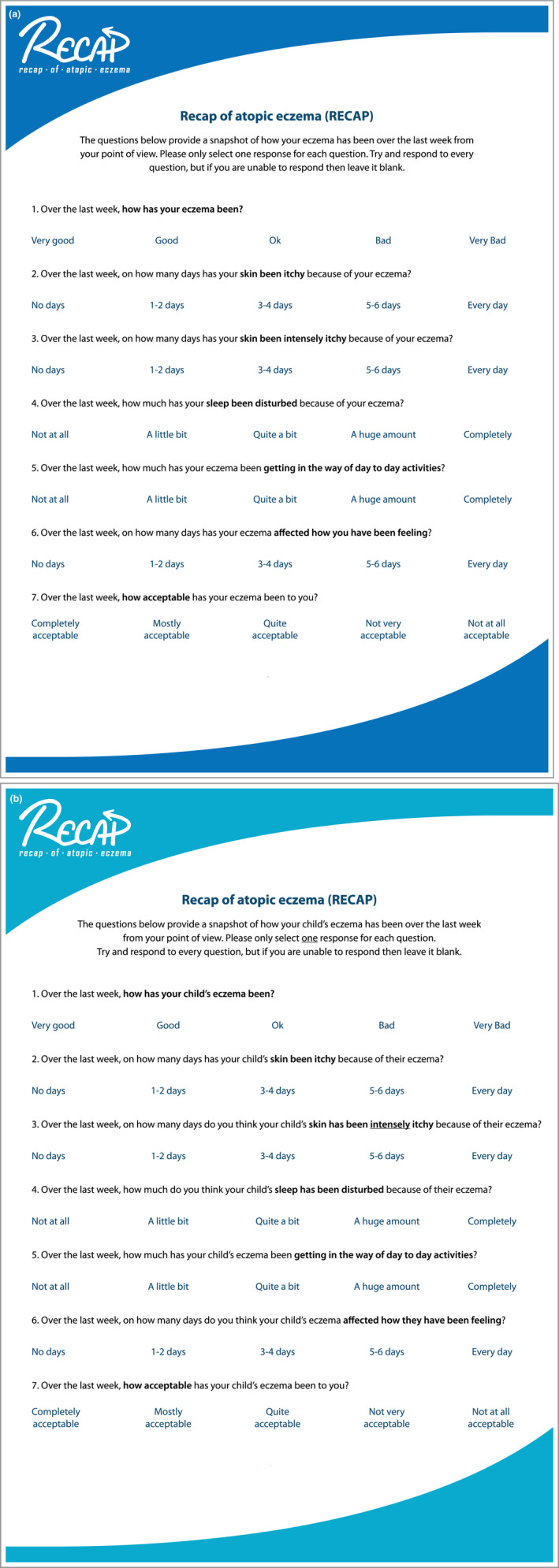
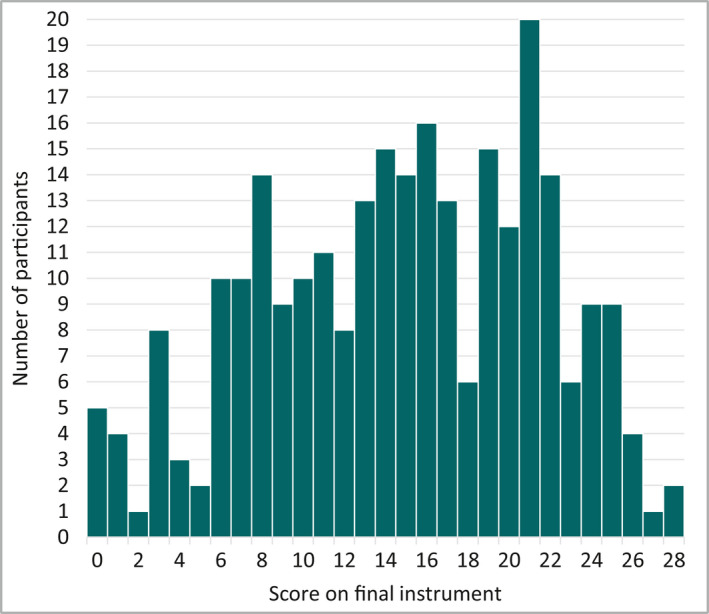
Results: Fourteen expert panel members co-produced the instrument, with input from people with eczema and caregivers via a focus group (n = 6), cognitive interviews (n = 13) and an online survey (n = 330). The resulting instrument, Recap of atopic eczema (RECAP), is a seven-item questionnaire that captures eczema control via self or caregiver report. The development process aimed to ensure good content validity and feasibility. Initial testing suggested no floor or ceiling effects and good construct validity. Hypothesized correlation with the Patient-Oriented Eczema Measure was confirmed [r(258) = 0·83, P < 0·001].
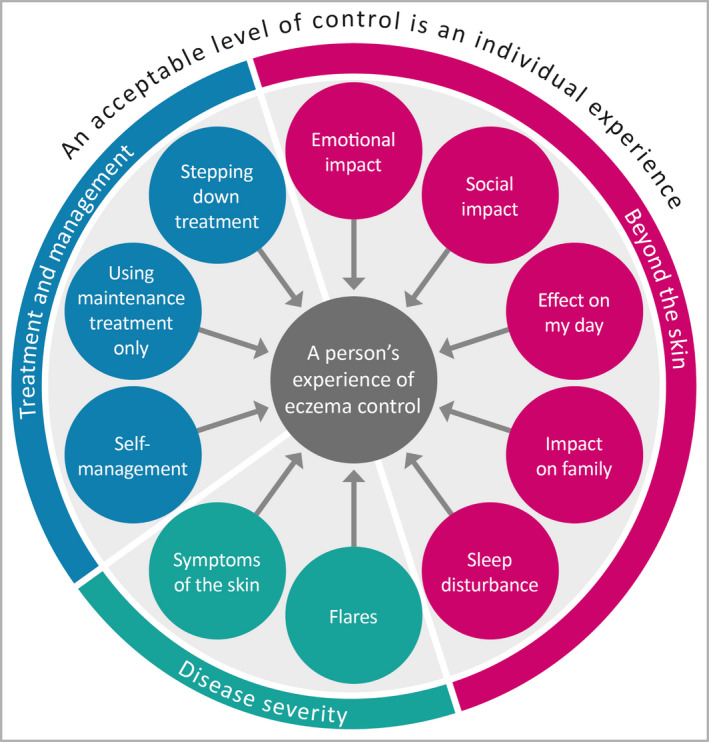
Conclusions: RECAP has the potential to improve reporting of eczema control in research and clinical practice. Further exploration of measurement properties is required. Linked Comment: Pattinson and Bundy. Br J Dermatol 2020; 183:418-419. What's already known about this topic? Eczema control has been identified as an important outcome by key stakeholders in eczema research (including patients, carers, healthcare professionals and researchers). Qualitative studies suggest eczema control is a multifaceted and individual experience and no instrument has been identified that captures eczema control in this way. What does this study add? We have developed Recap of atopic eczema (RECAP), a seven-item questionnaire to capture the experience of eczema control in all ages and eczema severities; there are two versions: a self-reported version for adults and older children with eczema, and a caregiver-reported version for younger children with eczema. Designed with input from people with eczema, caregivers and healthcare professionals to ensure good content validity. Initial testing of score distributions and construct validity suggests good measurement properties. What are the clinical implications of the work? The RECAP instrument is appropriate and feasible for measuring eczema control in clinical trials and may also be useful in routine practice.
© 2019 The Authors. British Journal of Dermatology published by John Wiley & Sons Ltd on behalf of British Association of Dermatologists.
Figures

Comment in
-
Self-management: PROMs can prompt support.Br J Dermatol. 2020 Sep;183(3):418-419. doi: 10.1111/bjd.18894. Epub 2020 Feb 23. Br J Dermatol. 2020. PMID: 32090316 No abstract available.
References
-
- Chalmers JR, Simpson E, Apfelbacher CJ et al Report from the fourth international consensus meeting to harmonize core outcome measures for atopic eczema/dermatitis clinical trials (HOME initiative). Br J Dermatol 2016; 175:69–79. - PubMed
-
- Chalmers JR, Thomas KS, Apfelbacher C et al Report from the fifth international consensus meeting to harmonize core outcome measures for atopic eczema/dermatitis clinical trials (HOME initiative). Br J Dermatol 2018; 178:e332–41. - PubMed
-
- Howells L, Thomas K, Sears AV et al; the long‐term control of eczema working group for the HOME initiative . Defining and measuring ‘eczema control’: an international qualitative study to explore the views of those living with and treating atopic eczema. J Eur Acad Dermatol Venereol 2019; 33:1124–32. - PMC - PubMed
-
- Weller K, Groffik A, Church MK et al Development and validation of the Urticaria Control Test: a patient‐reported outcome instrument for assessing urticaria control. J Allergy Clin Immunol 2014; 133:1365–72.e6. - PubMed
Publication types
MeSH terms
Grants and funding
LinkOut - more resources
Full Text Sources
Other Literature Sources
Medical
