


CT-assessed sarcopenia is a predictive factor for both long-term and short-term outcomes in gastrointestinal oncology patients: a systematic review and meta-analysis
- PMID: 31796090
- PMCID: PMC6892174
- DOI: 10.1186/s40644-019-0270-0
CT-assessed sarcopenia is a predictive factor for both long-term and short-term outcomes in gastrointestinal oncology patients: a systematic review and meta-analysis
Abstract
Background: The impact of sarcopenia on the outcome of gastrointestinal (GI) oncological patients is still controversial. We aim to discuss the prevalence of sarcopenia and its relation to the oncological outcome.
Methods: Embase, Medline, PubMed, and the Cochrane library were systematically searched for related keywords. Studies using CT to assess sarcopenia and evaluate its relationship with the outcome of GI oncological patients were included. Long-term outcomes, including overall survival and disease-free survival, were compared by hazard ratios (HRs) with 95% confidence intervals (CIs). Short-term outcomes, including total complications and major complications (Clavien-Dindo ≥IIIa) after curable surgery, were compared by the risk ratio (RR) and 95% CI.
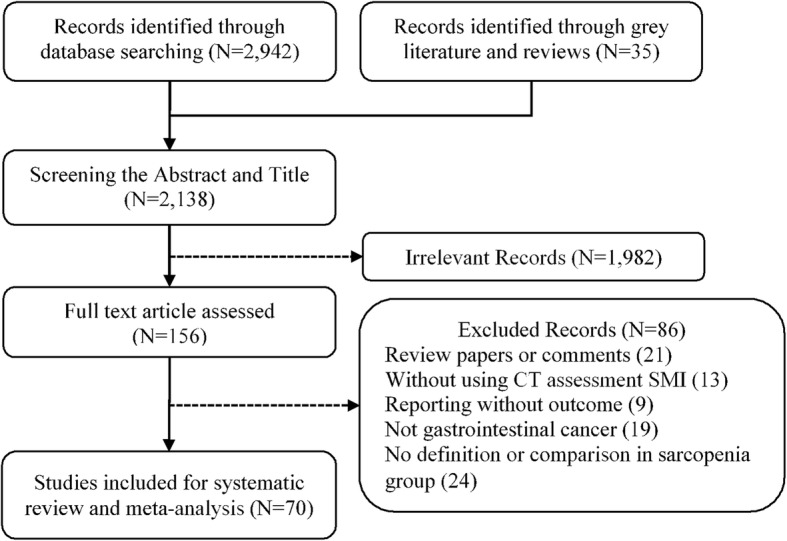
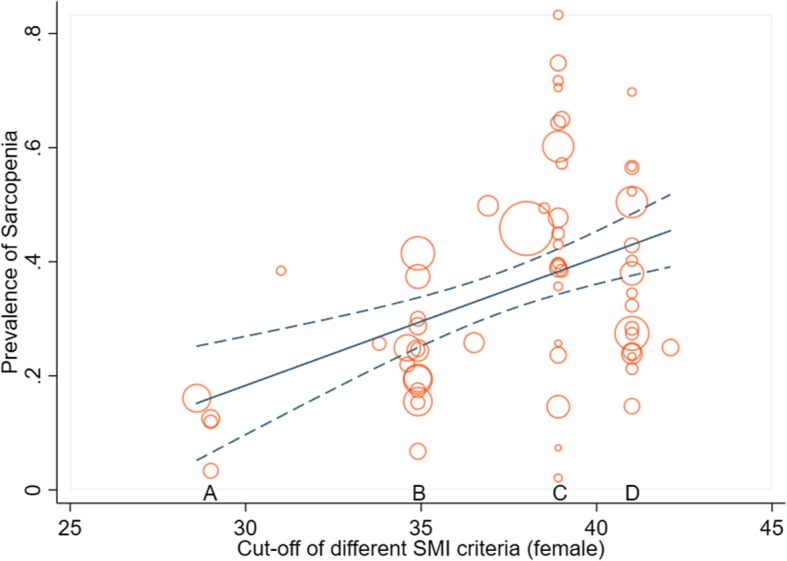
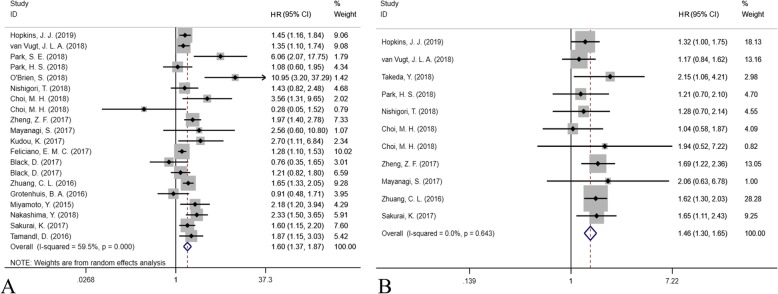
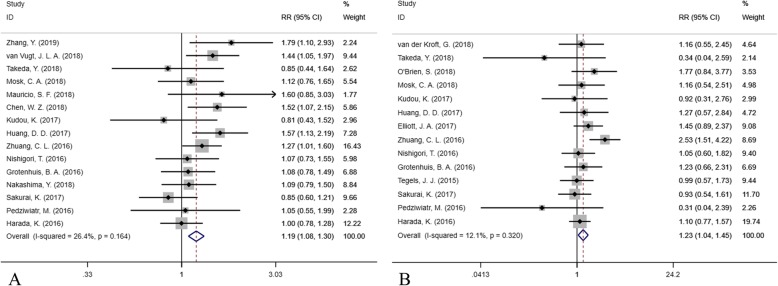
Results: A total of 70 studies including 21,875 patients were included in our study. The median incidence of sarcopenia was 34.7% (range from 2.1 to 83.3%). A total of 88.4% of studies used skeletal muscle index (SMI) in the third lumbar level on CT to define sarcopenia, and a total of 19 cut-offs were used to define sarcopenia. An increasing trend was found in the prevalence of sarcopenia when the cut-off of SMI increased (β = 0.22, 95% CI = 0.12-0.33, p < 0.001). The preoperative incidence of sarcopenia was associated both with an increased risk of overall mortality (HR = 1.602, 95% CI = 1.369-1.873, P < 0.001) and with disease-free mortality (HR = 1.461, 95% CI = 1.297-1.646, P < 0.001). Moreover, preoperative sarcopenia was a risk factor for both total complications (RR = 1.188, 95% CI = 1.083-1.303, P < 0.001) and major complications (RR = 1.228, 95% CI = 1.042-1.448, P = 0.014).
Conclusion: The prevalence of sarcopenia depends mostly on the diagnostic cut-off points of different criteria. Preoperative sarcopenia is a risk factor for both long-term and short-term outcomes.
Keywords: Gastrointestinal oncology; Nutrient; Operation; Sarcopenia.
Conflict of interest statement
The authors declare that they have no competing interests.
Figures
References
-
- Mislang AR, Di Donato S, Hubbard J, Krishna L, Mottino G, Bozzetti F, Biganzoli L. Nutritional management of older adults with gastrointestinal cancers: an International Society of Geriatric Oncology (SIOG) review paper. J Geriatr Oncol. 2018;9(4):382–392. doi: 10.1016/j.jgo.2018.01.003. - DOI - PubMed
-
- Fukuda Y, Yamamoto K, Hirao M, Nishikawa K, Nagatsuma Y, Nakayama T, Tanikawa S, Maeda S, Uemura M, Miyake M, et al. Sarcopenia is associated with severe postoperative complications in elderly gastric cancer patients undergoing gastrectomy. Gastric Cancer. 2016;19(3):986–993. doi: 10.1007/s10120-015-0546-4. - DOI - PubMed
Publication types
MeSH terms
LinkOut - more resources
Full Text Sources
Medical
