Emergency department front-end split-flow experience: 'physician in intake'
- PMID: 31799448
- PMCID: PMC6863656
- DOI: 10.1136/bmjoq-2019-000817
Emergency department front-end split-flow experience: 'physician in intake'
Abstract
Background: Emergency department (ED) crowding is a critical problem in the delivery of acute unscheduled care. Many causes are external to the ED, but antiquated operational traditions like triage also contribute. A physician intake model has been shown to be beneficial in a single-centre study, but whether this solution is generalisable is not clear. We aimed to characterise the current state of front-end intake models in a national sample of EDs and quantify their effects on throughput measures.
Methods: We performed a descriptive mixed-method analysis of ED process changes implemented by a cross section of self-selecting institutions who reported 2 years of demographic/operational data and structured process descriptions of any 'new front-end processes to replace traditional nurse-based triage'.
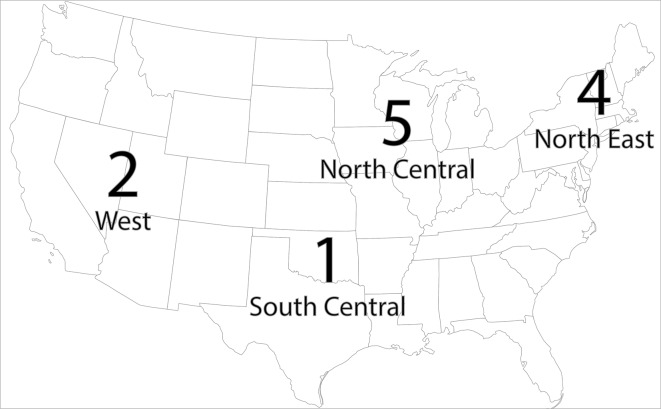
Results: Among 25 participating institutions, 19 (76%) provided data. While geographically diverse, most were urban, academic adult level 1 trauma centres. Thirteen (68%) reported implementing a new intake process. All were run by attending emergency physicians, and six (46%) also included advanced practice providers. Daily operating hours ranged from 8 to 16 (median 12, IQR 10.25-15.85), and the majority performed labs, imaging and medication administration and directly discharged patients. Considering each site's before-and-after data as matched pairs, physician-driven intake was associated with mean decreases in arrival-to-provider time of 25 min (95% CI 13 to 37), ED length of stay 36 min (95% CI 12 to 59), and left before being seen rate 1.2% (95% CI 0.6% to 1.8%).
Conclusions: In this cross section of primarily academic EDs, implementing a physician-driven front-end intake process was feasible and associated with improvement in operational metrics.
Keywords: emergency department; healthcare quality improvement; implementation science; management; teamwork.
© Author(s) (or their employer(s)) 2019. Re-use permitted under CC BY-NC. No commercial re-use. See rights and permissions. Published by BMJ.
Conflict of interest statement
Competing interests: None declared.
Figures
References
-
- Institute of Medicine Hospital-Based emergency care. Washington, DC: National Academies Press, 2007.
Publication types
MeSH terms
Grants and funding
LinkOut - more resources
Full Text Sources