


Cutaneous neurofibromas: patients' medical burden, current management and therapeutic expectations: results from an online European patient community survey
- PMID: 31801570
- PMCID: PMC6894276
- DOI: 10.1186/s13023-019-1265-4
Cutaneous neurofibromas: patients' medical burden, current management and therapeutic expectations: results from an online European patient community survey
Abstract
Background: Neurofibromatosis type 1 is an inherited condition with variable phenotypic expression and a high medical and social burden. The objectives of this patient survey were to better understand the real-world experiences of patients living with cutaneous neurofibromas (cNF), to perceive their satisfaction and feelings about cNF current management (only laser and surgery are currently available), and to highlight their expectations of new therapeutic modalities.
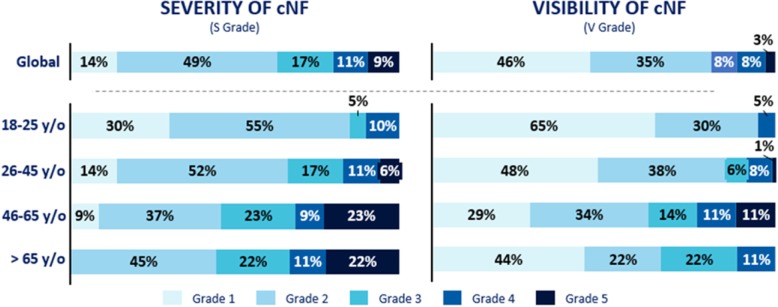
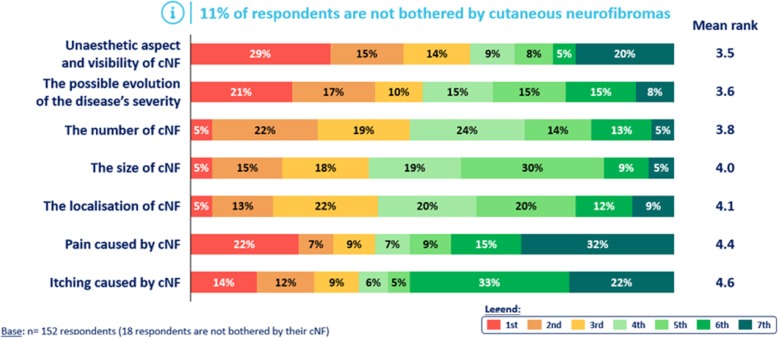
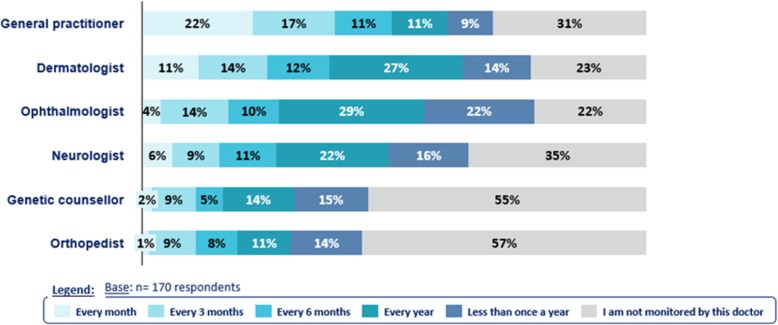
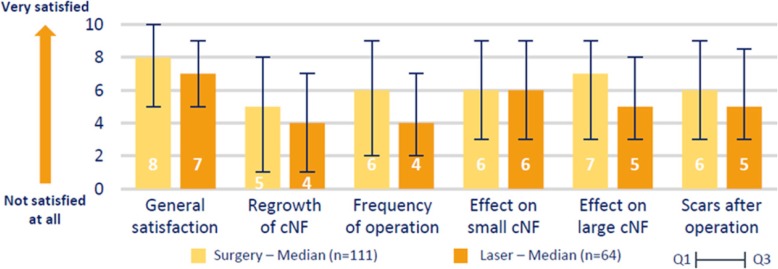
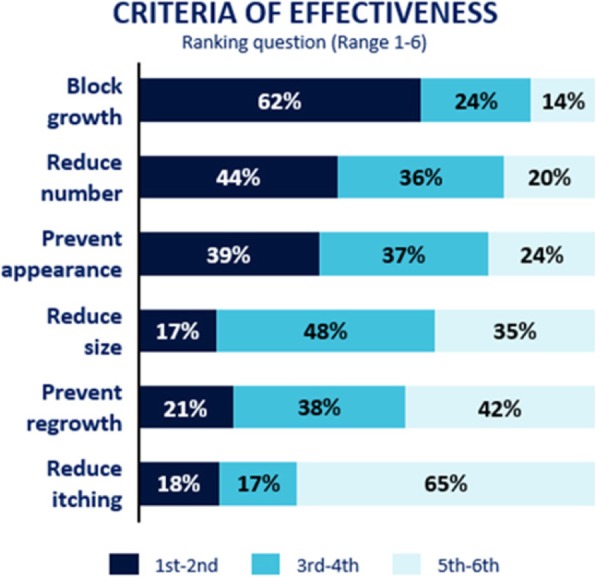
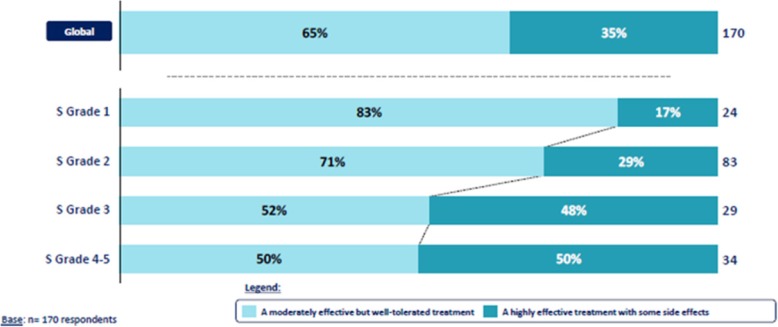
Results: One hundred seventy patients from 4 European countries took part in the study, 65% (n = 110) were women and mean age was 39 years old. 96% (n = 164) of respondents have cNF on visible parts of the body and the survey confirmed that total number of cNF and visibility increase with age. Patients reported that cNF mainly impacts everyday mood, general daily life and social life. The visibility of cNF had a higher impact than their number. 92% (n = 156) of patients have a regular and multidisciplinary medical follow-up. The dermatologist is one of the most consulted healthcare professionals. 76% (n = 130) of respondents have treated their cNF: 65% (n = 111) had surgery and 38% (n = 64) had multiple laser sessions. Frequency of operations and regrowth of cNF were the two most unsatisfactory aspects with both treatments for patients. Indeed, after removal, new cNF appear in more than 75% (n = 128) of cases. As a future treatment, patients expected a topical (30%, n = 51) or oral medication (29%, n = 50). Around 2 out of 3 patients would agree to take it at least once a day or more for life but they would like a well-tolerated treatment. According to patients, the most important effectiveness criteria of a new treatment are to block cNF growth and reduce their number. 70% (n = 119) of patients would consider a future treatment moderately effective to very effective if it could clear 30% of cNF.
Conclusions: This first cNF European patient community survey confirmed that the visible stigma and unaesthetic aspect of cNF have an important impact on patients' quality of life. The survey highlighted that patients were not entirely satisfied with the actual surgery and laser treatments and revealed their clear and realistic expectations for future treatment of cNF.
Keywords: Cutaneous neurofibromas; Future medication; Neurofibromatosis type 1; Patient community survey; Quality of life; Real-world experience.
Conflict of interest statement
The authors declare that they have no competing interests.
Figures
References
Publication types
MeSH terms
LinkOut - more resources
Full Text Sources
Medical
Research Materials
