


Hyperosmolar dehydration: A predictor of kidney injury and outcome in hospitalised older adults
- PMID: 31801657
- PMCID: PMC7403861
- DOI: 10.1016/j.clnu.2019.11.030
Hyperosmolar dehydration: A predictor of kidney injury and outcome in hospitalised older adults
Abstract
Background & aims: Hospitalised older adults are vulnerable to dehydration. However, the prevalence of hyperosmolar dehydration (HD) and its impact on outcome is unknown. Serum osmolality is not measured routinely but osmolarity, a validated alternative, can be calculated using routinely measured serum biochemistry. This study aimed to use calculated osmolarity to measure the prevalence of HD (serum osmolarity >300 mOsm/l) and assess its impact on acute kidney injury (AKI) and outcome in hospitalised older adults.
Methods: This retrospective cohort study used data from a UK teaching hospital retrieved from the electronic database relating to all medical emergency admissions of patients aged ≥ 65 years admitted between 1st May 2011 and 31st October 2013. Using these data, Charlson comorbidity index (CCI), National Early Warning Score (NEWS), length of hospital stay (LOS) and mortality were determined. Osmolarity was calculated using the equation of Krahn and Khajuria.
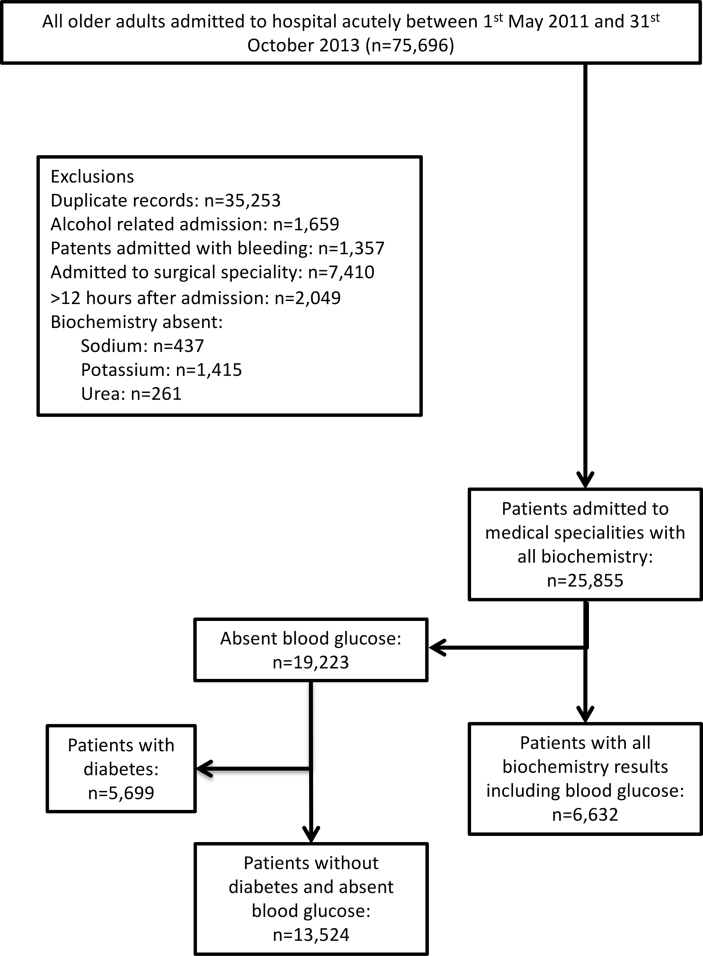
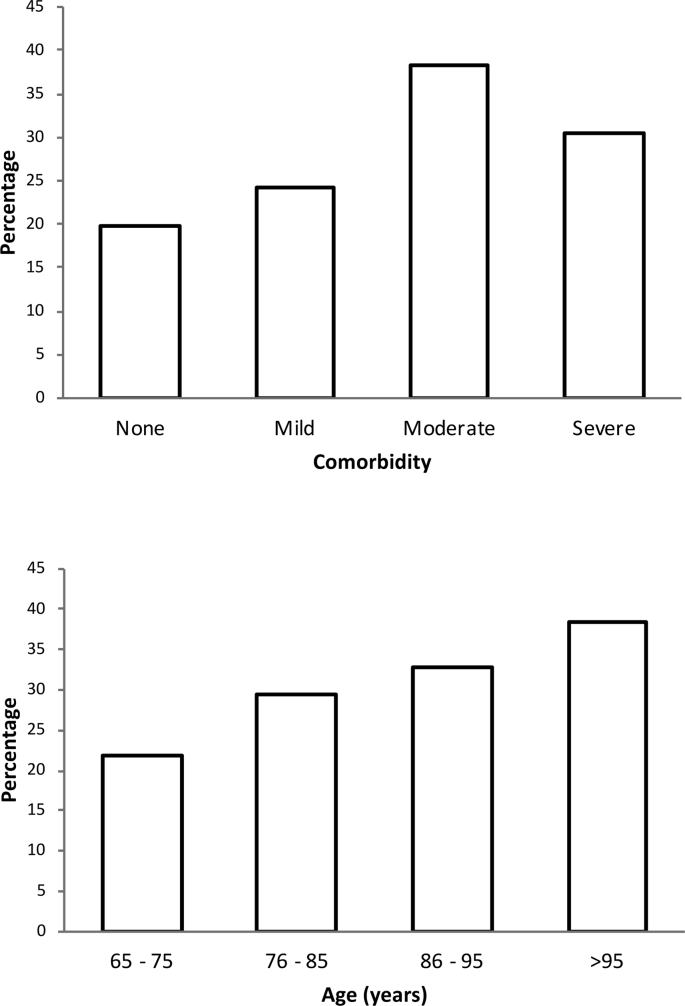
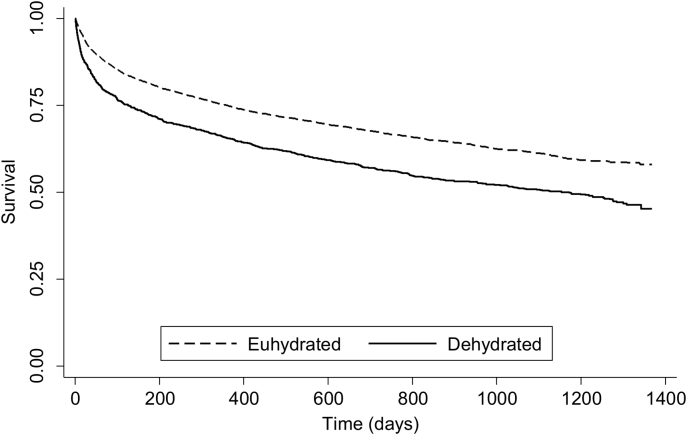
Results: A total of 6632 patients were identified; 27% had HD, 39% of whom had AKI. HD was associated with a median (Q1, Q3) LOS of 5 (1, 12) days compared with 3 (1, 9) days in the euhydrated group, P < 0.001. Adjusted Cox-regression analysis demonstrated that patients with HD were four-times more likely to develop AKI 12-24 h after admission [Hazards Ratio (95% Confidence Interval) 4.5 (3.5-5.6), P < 0.001], and had 60% greater 30-day mortality [1.6 (1.4-1.9), P < 0.001], compared with those who were euhydrated.
Conclusion: HD is common in hospitalised older adults and is associated with increased LOS, risk of AKI and mortality. Further work is required to assess the validity of osmolality or osmolarity as an early predictor of AKI and the impact of HD on outcome prospectively.
Keywords: Acute kidney injury; Dehydration; Hypohydration; Older adults; Osmolarity; Serum biochemistry.
Copyright © 2019 The Author(s). Published by Elsevier Ltd.. All rights reserved.
Conflict of interest statement
Conflict of interest None of the authors has a direct conflict of interest to declare. DNL has received unrestricted research funding from B. Braun and speaker's honoraria from Fresenius Kabi, B. Braun, Shire and Baxter Healthcare for unrelated work.
Figures
References
-
- El-Sharkawy A.M., Sahota O., Maughan R.J., Lobo D.N. The pathophysiology of fluid and electrolyte balance in the older adult surgical patient. Clin Nutr. 2014;33:6–13. - PubMed
-
- El-Sharkawy A.M., Virdee A., Wahab A., Humes D.J., Sahota O., Devonald M.A. Dehydration and clinical outcome in hospitalised older adults: a cohort study. Eur Geriatr Med. 2017;8:22–29.
-
- Institute of Medicine . National Academy Press; Washington DC: 2005. Dietary Reference Intakes for Dietary reference intakes for water, potassium, sodium, chloride, and sulfate.
Publication types
MeSH terms
Grants and funding
LinkOut - more resources
Full Text Sources
Medical
