


Asthma Control and Its Predictive Factors in Adult Asthma Patients
- PMID: 31803325
- PMCID: PMC6879035
- DOI: 10.14740/jocmr4021
Asthma Control and Its Predictive Factors in Adult Asthma Patients
Erratum in
-
Correction to: Asthma Control and Its Predictive Factors in Adult Asthma Patients.J Clin Med Res. 2020 Feb;12(2):127. doi: 10.14740/jocmr4021c1. Epub 2020 Feb 1. J Clin Med Res. 2020. PMID: 32095183 Free PMC article.
Abstract
Background: Asthma is a highly prevalent condition that remains difficult to control, as its associated factors remain poorly understood. Thus, the primary aim of the present investigation was to determine the prevalence of uncontrolled asthma in hospital units in south Jordan and to evaluate the risk factors that may contribute to uncontrolled asthma.
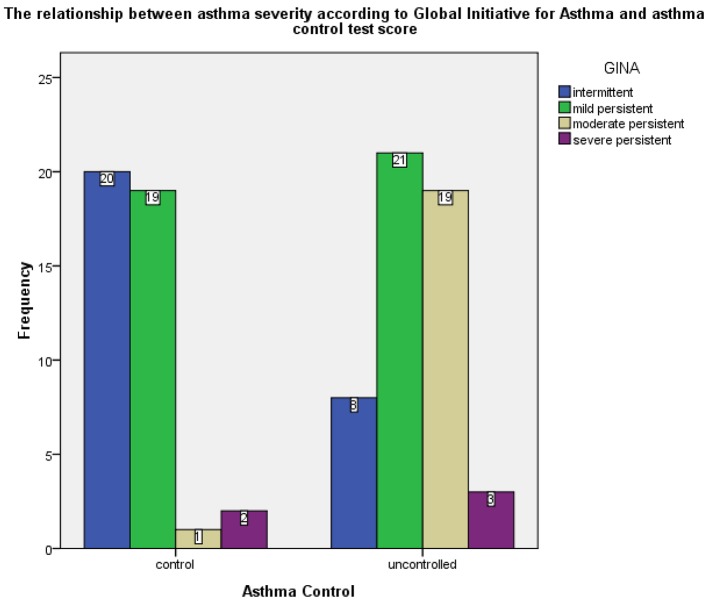
Methods: This was a cross-sectional study involving 93 patients aged 40.5 ± 13.6 years that met the criteria of the Global Initiative for Asthma (GINA). Relevant patient data were collected via a questionnaire and through a review of medical records. The questionnaire comprised of sections pertaining to sociodemographic and clinical characteristics, as well as pharmacological asthma treatment, asthma severity and asthma control. Asthma severity was determined in line with the GINA guidelines, whereby the patients were classified into four groups (intermittent, mild persistent, moderate persistent or severe persistent). Moreover, based on the findings yielded by the asthma control questionnaire (ACQ), patients were divided into three levels, whereby those diagnosed with partly controlled and uncontrolled asthma were combined into one group, denoted as "poorly controlled asthma", with "uncontrolled asthma" and "controlled asthma" as the remaining two groups. Atopy was defined as one or more positive reactions (A/H ratio > 1) on a skin prick test.
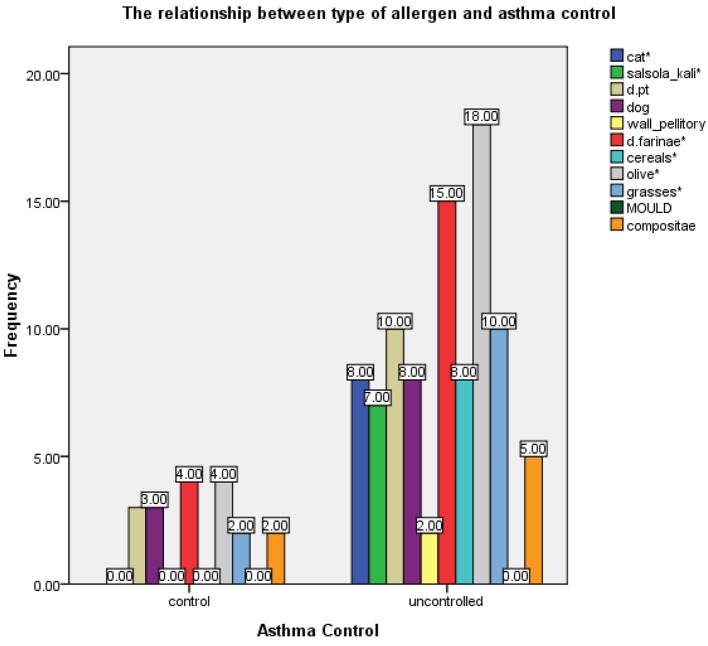
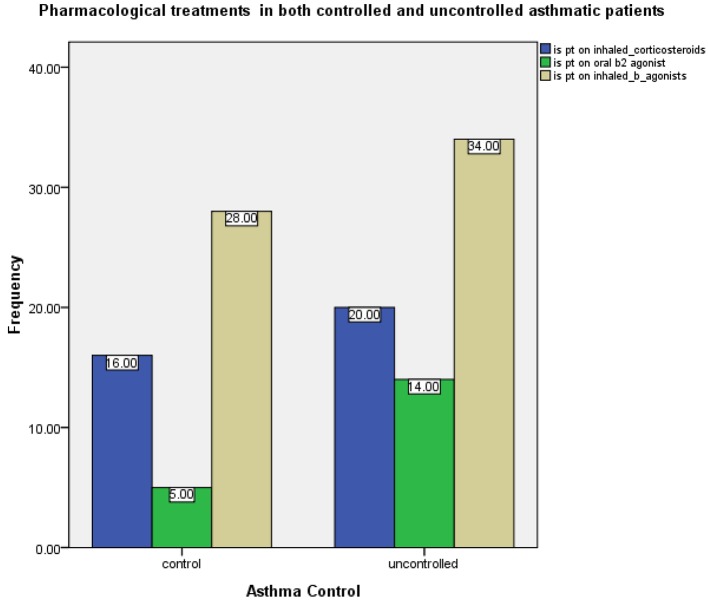
Results: Asthma control was achieved in 45.2% of the sample. Moreover, older age, severe asthma according to the GINA guidelines, longer duration of asthma, atopy, being on treatment for asthma and history of allergic rhinitis were identified as the main risk factors contributing to poorly controlled asthma. Multivariate analyses, however, revealed that only atopy to two or more allergens and having severe asthmatic attacks were statistically significantly associated with poorly controlled asthma, for which the odds ratio Mantel-Haenszel (ORMH) of 17.2 and 2.2 was obtained, respectively.
Conclusion: Our findings indicate that severe asthma and atopy to two or more allergens are the main risk factors for uncontrolled asthma. However, further studies with larger sample sizes are needed to confirm these results.
Keywords: Asthma control; Asthma severity; Atopy.
Copyright 2019, Albataineh et al.
Conflict of interest statement
The authors declare no conflict of interest.
Figures
References
LinkOut - more resources
Full Text Sources
Miscellaneous