


Newly diagnosed patients with advanced non-small cell lung cancer: A clinical description of those with moderate to severe depressive symptoms
- PMID: 31806360
- PMCID: PMC7239743
- DOI: 10.1016/j.lungcan.2019.11.015
Newly diagnosed patients with advanced non-small cell lung cancer: A clinical description of those with moderate to severe depressive symptoms
Abstract
Objectives: The aims of this observational study were to 1) accrue newly diagnosed patients with advanced-stage non-small cell lung cancer (NSCLC) awaiting the start of first-line treatment and identify those with moderate to severe depressive symptoms and, 2) provide a clinical description of the multiple, co-occurring psychological and behavioral difficulties and physical symptoms that potentially exacerbate and maintain depressive symptoms.
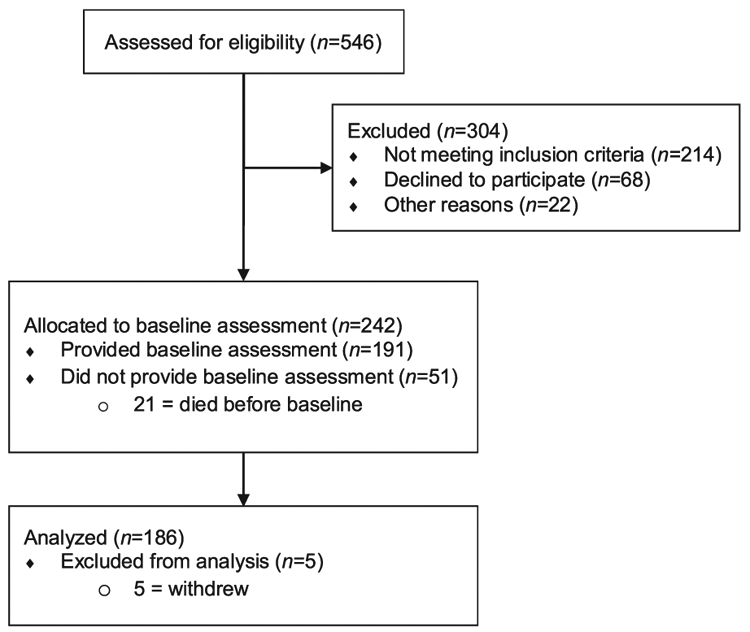
Materials and methods: Patients with stage IV NSCLC (N = 186) were enrolled in an observational study (ClinicalTrials.gov Identifier: NCT03199651) and completed the American Society of Clinical Oncology-recommended screening measure for depression (Patient Health Questionnaire-9 [PHQ-9]). Individuals with none/mild (n = 119; 64 %), moderate (n = 52; 28 %), and severe (n = 15; 8 %) depressive symptoms were identified. Patients also completed measures of hopelessness, generalized anxiety disorder (GAD) symptoms, stress, illness perceptions, functional status, and symptoms.
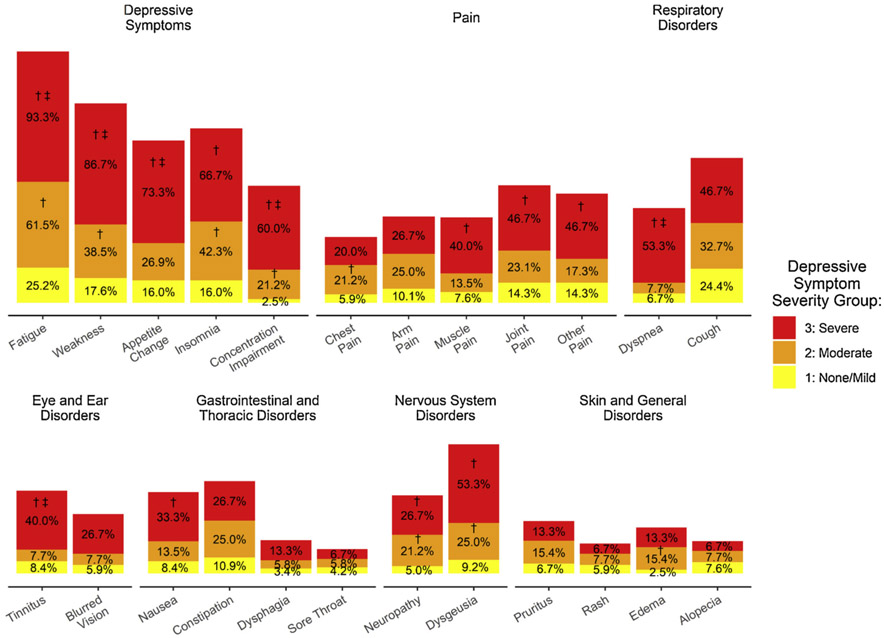
Results: Patients with severe depressive symptoms reported concomitant feelings of hopelessness (elevating risk for suicidal behavior), anxiety symptoms suggestive of GAD, and traumatic, cancer-specific stress. They perceived lung cancer as consequential for their lives and not controllable with treatment. Pain and multiple severe symptoms were present along with substantial functional impairment. Patients with moderate depressive symptoms had generally lower levels of disturbance, though still substantial. The most salient differences were low GAD symptom severity and fewer functional impairments for those with moderate symptoms.
Conclusions: Depressive symptoms of moderate to severe levels co-occur in a matrix of clinical levels of anxiety symptoms, traumatic stress, impaired functional status, and pain and other physical symptoms. All of the latter factors have been shown, individually and collectively, to contribute to the maintenance or exacerbation of depressive symptoms. As life-extending targeted and immunotherapy use expands, prompt identification of patients with moderate to severe depressive symptoms, referral for evaluation, and psychological/behavioral treatment are key to maximizing treatment outcomes and quality of life for individuals with advanced NSCLC.
Keywords: Anxiety; Depression; Illness perceptions; Lung cancer; Quality of life.
Copyright © 2019 Elsevier B.V. All rights reserved.
Conflict of interest statement
Declaration of Competing Interest Barbara L. Andersen, Stephen B. Lo, and Peter G. Shields received funding from The Ohio State University Comprehensive Cancer Center Pelotonia. In addition to Peletonia, David P. Carbone reports personal fees from Abbvie, Adaptimmune, Agenus, Amgen, Ariad, AstraZeneca, Boehringer-Ingelheim, EMD Serono, Inc., Foundation Medicine, Genentech/Roche, Gritstone, Guardant Health, Helsinn, Incyte, Inivata, Inovio, Janssen, Kyowa Kirin, Loxo Oncology, Merck, MSD, Nexus Oncology, Novartis, Palobiofarma, Pfizer, prIME Oncology, Stemcentrx, and Takeda Oncology, and research funding and personal fees from Bristol Myers-Squibb (BMS). Carolyn J. Presley received funding from the National Cancer Institute through The Ohio State University K12 Training Grant for Clinical Faculty Investigators (K12CA133250). Thomas R. Valentine has no declarations of interest.
Figures
Comment in
-
A comment on "Newly diagnosed patients with advanced non-small cell lung cancer: A clinical description of those with moderate to severe depressive symptoms".Lung Cancer. 2020 Jul;145:205-207. doi: 10.1016/j.lungcan.2020.05.010. Epub 2020 May 20. Lung Cancer. 2020. PMID: 32466986 No abstract available.
References
Publication types
MeSH terms
Associated data
Grants and funding
LinkOut - more resources
Full Text Sources
Medical
Research Materials
