Microenvironmental contributions to hematopoietic stem cell aging
- PMID: 31806690
- PMCID: PMC6939521
- DOI: 10.3324/haematol.2018.211334
Microenvironmental contributions to hematopoietic stem cell aging
Abstract
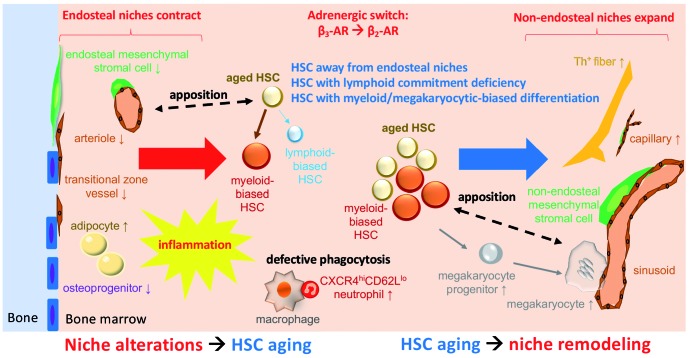
Hematopoietic stem cell (HSC) aging was originally thought to be essentially an HSC-autonomous process, which is the focus of another review in the same issue of Haematologica However, studies on the microenvironment that maintains and regulates HSC (HSC niche) over the past 20 years have suggested that microenvironmental aging contributes to declined HSC function over time. The HSC niches comprise a complex and dynamic molecular network of interactions across multiple cell types, including endothelial cells, mesenchymal stromal cells, osteoblasts, adipocytes, neuroglial cells and mature hematopoietic cells. Upon aging, functional changes in the HSC niches, such as microenvironmental senescence, imbalanced bone marrow mesenchymal stromal cell differentiation, vascular remodeling, changes in adrenergic signaling and inflammation, coordinately and dynamically influence the fate of HSC and their downstream progeny. The end result is lymphoid deficiency and myeloid skewing. During this process, aged HSC and their derivatives remodel the niche to favor myeloid expansion. Therefore, the crosstalk between HSC and the microenvironment is indispensable for the aging of the hematopoietic system and might represent a therapeutic target in age-related pathological disorders.
Copyright© 2020 Ferrata Storti Foundation.
Figures
References
-
- Carrelha J, Meng Y, Kettyle LM, et al. Hierarchically related lineage-restricted fates of multipotent haematopoietic stem cells. Nature. 2018;554(7690):106–111. - PubMed
-
- Kent DG, Copley MR, Benz C, et al. Prospective isolation and molecular characterization of hematopoietic stem cells with durable self-renewal potential. Blood. 2009;113(25):6342–6350. - PubMed
Publication types
MeSH terms
Grants and funding
LinkOut - more resources
Full Text Sources
Other Literature Sources
Medical
Miscellaneous