


Progress and challenges of a pioneering hepatitis C elimination program in the country of Georgia
- PMID: 31811882
- PMCID: PMC7418146
- DOI: 10.1016/j.jhep.2019.11.019
Progress and challenges of a pioneering hepatitis C elimination program in the country of Georgia
Abstract
Background & aims: Georgia, with a high prevalence of HCV infection, launched the world's first national hepatitis C elimination program in April 2015. A key strategy is the identification, treatment, and cure of the estimated 150,000 HCV-infected people living in the country. We report on progress and key challenges from Georgia's experience.
Methods: We constructed a care cascade by analyzing linked data from the national hepatitis C screening registry and treatment databases during 2015-2018. We assessed the impact of reflex hepatitis C core antigen (HCVcAg) testing on rates of viremia testing and treatment initiation (i.e. linkage to care).
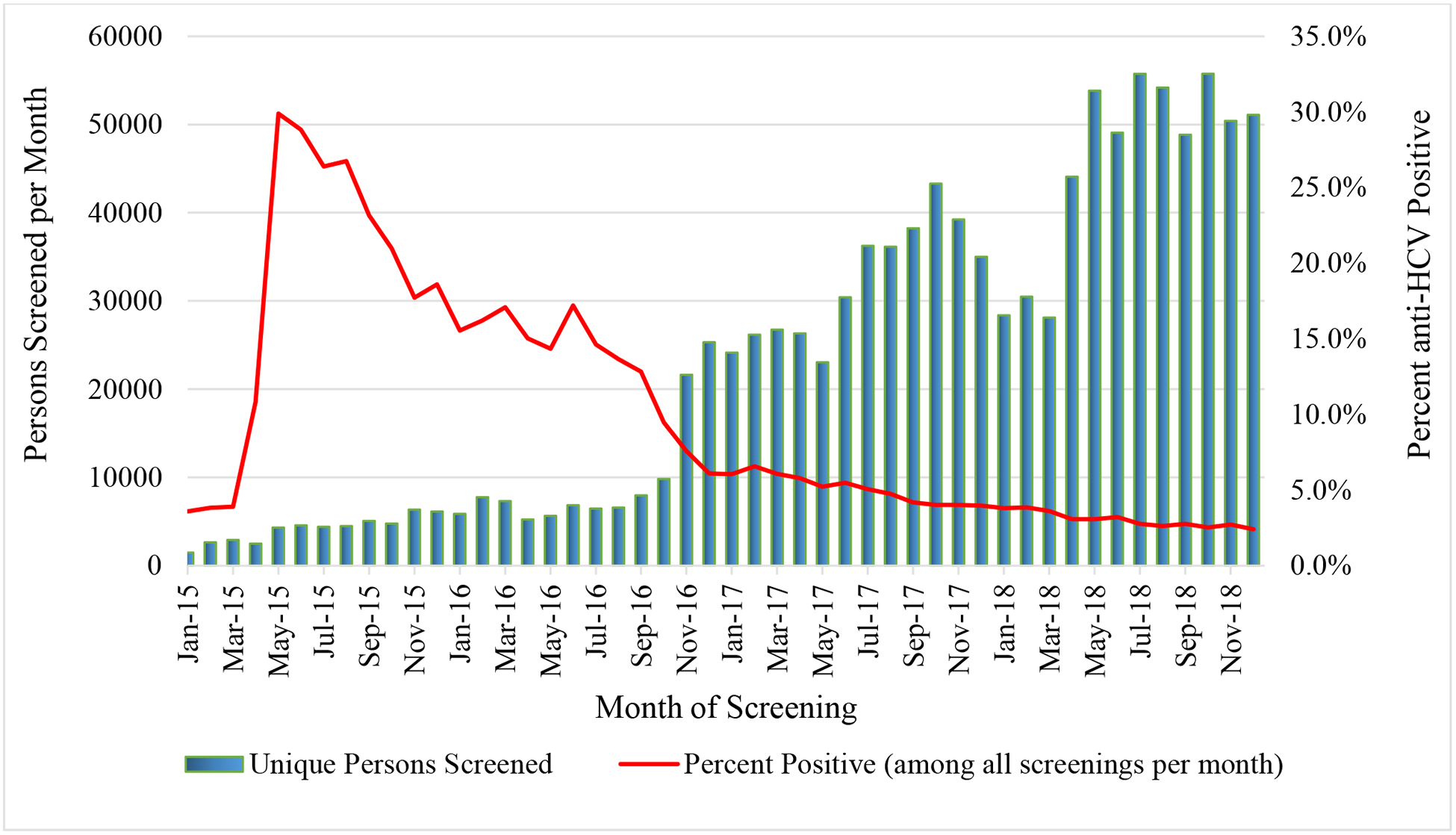
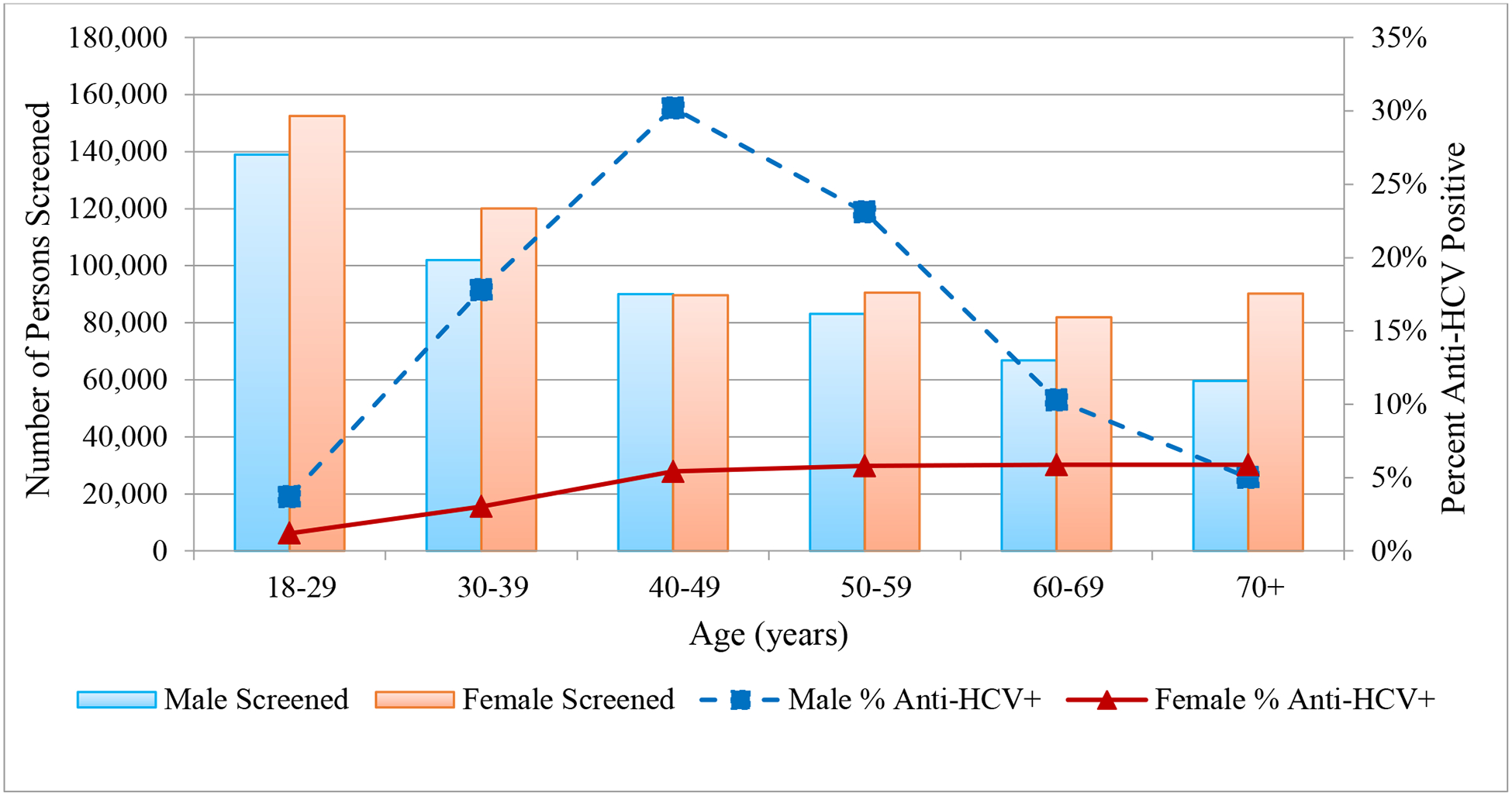
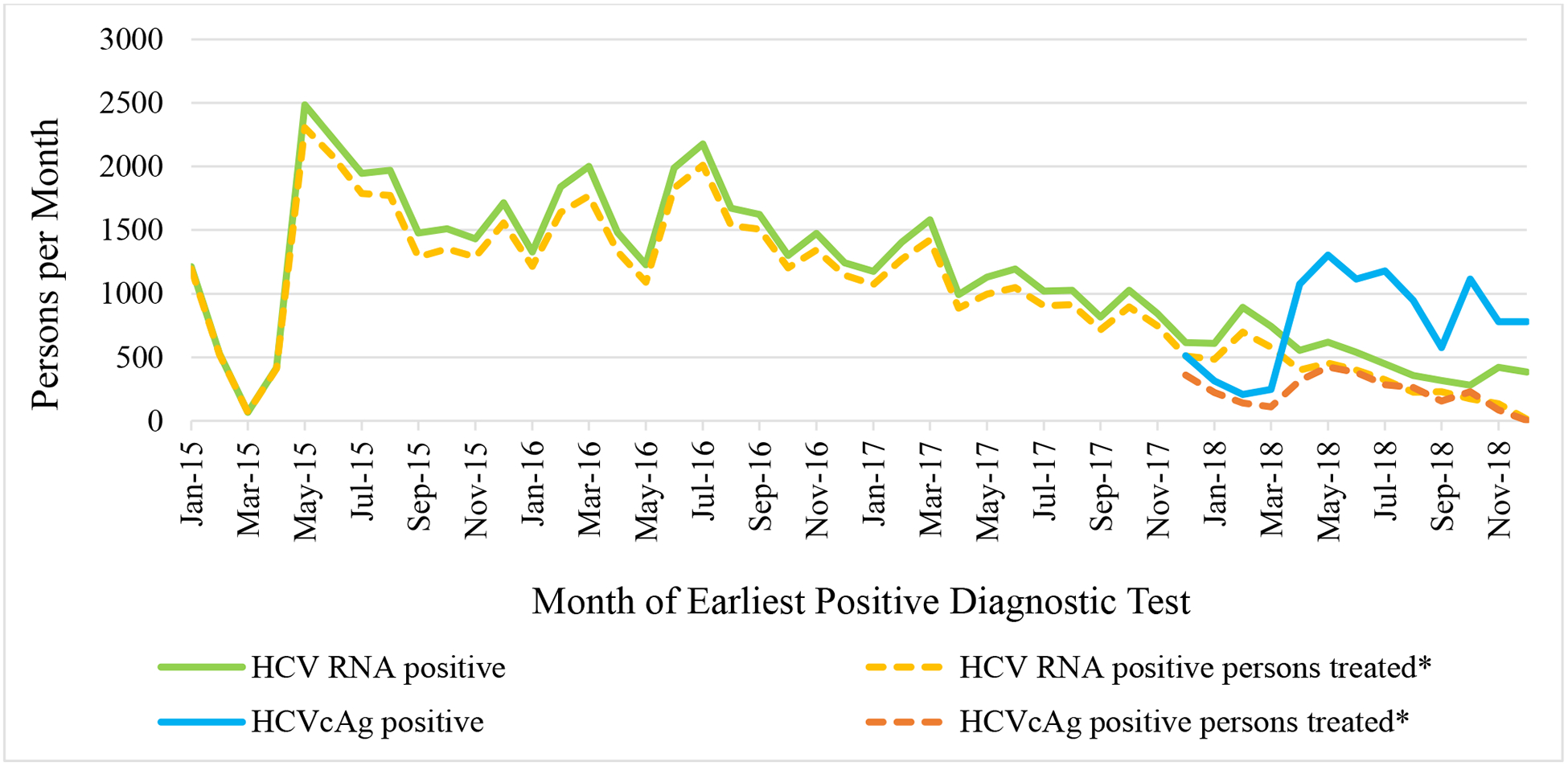
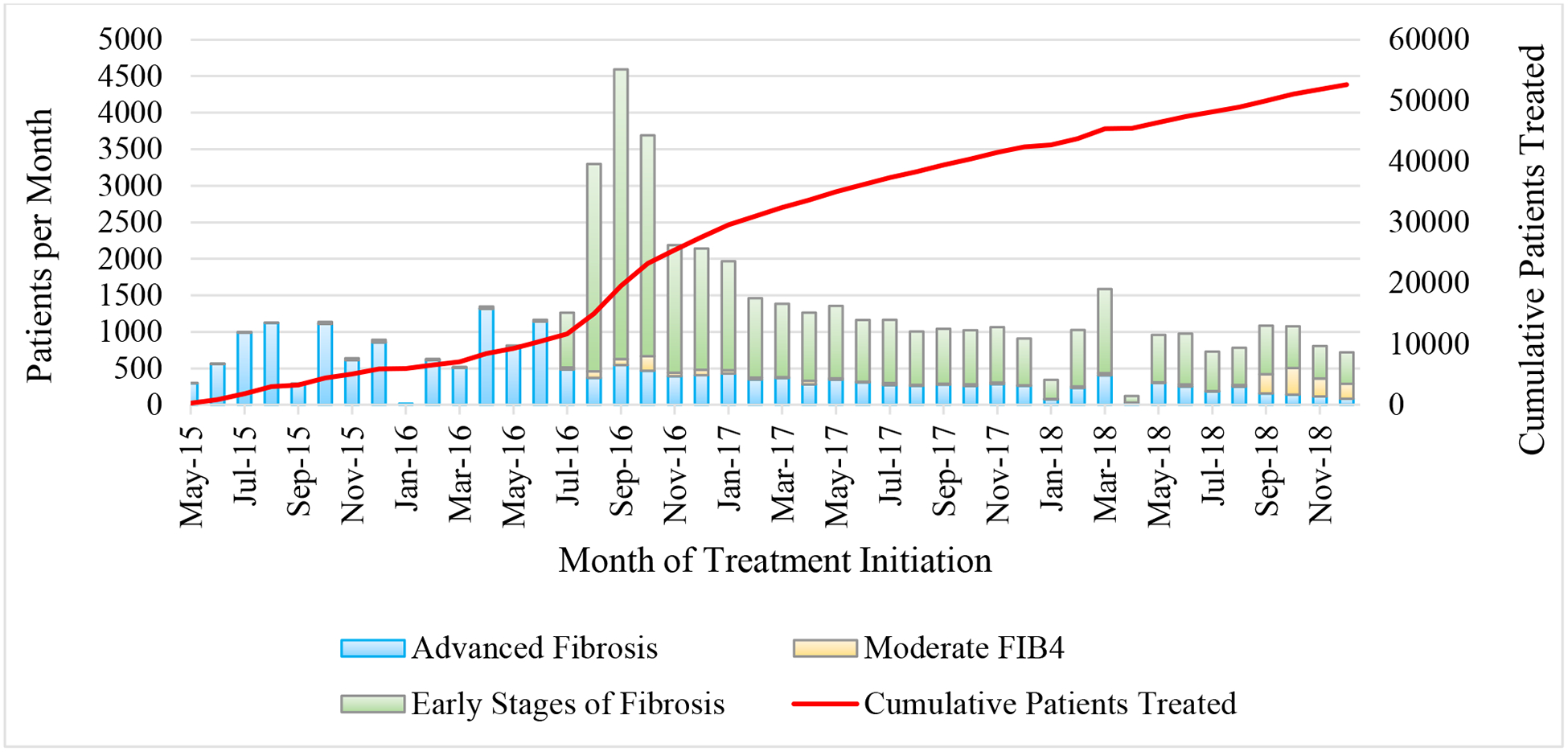
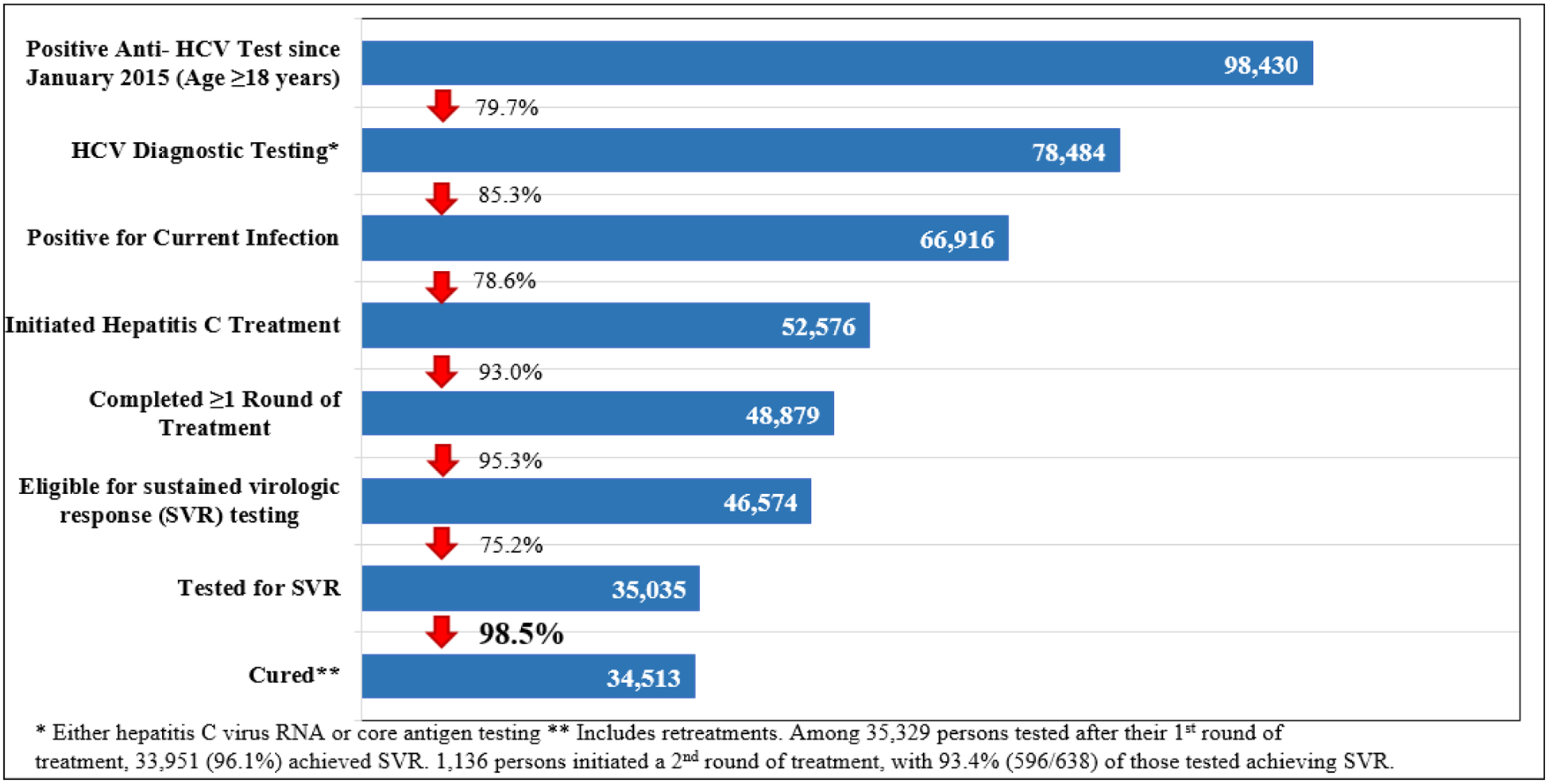
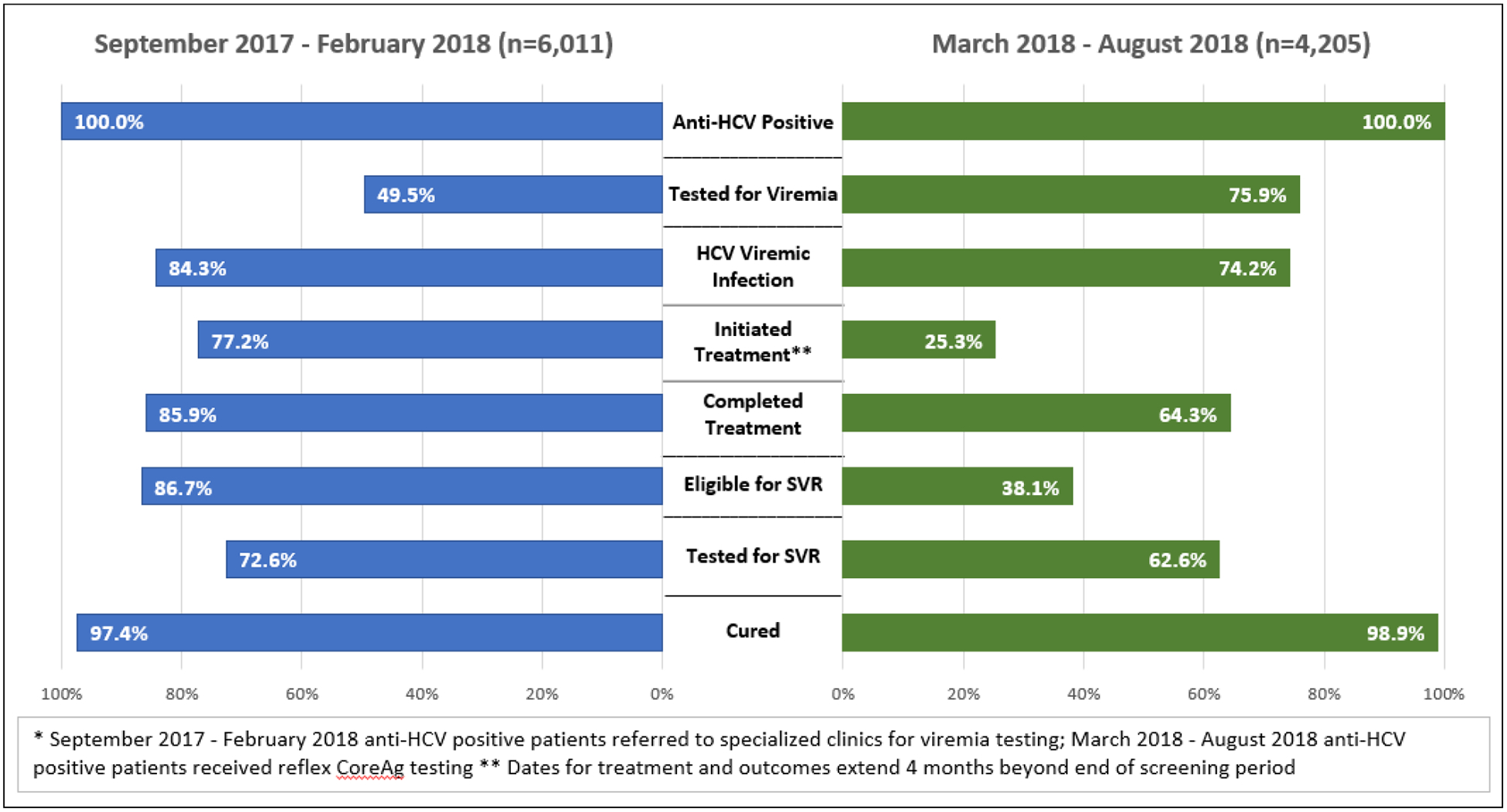
Results: As of December 31, 2018, 1,101,530 adults (39.6% of the adult population) were screened for HCV antibody, of whom 98,430 (8.9%) tested positive. Of the individuals who tested positive, 78,484 (79.7%) received viremia testing, of whom 66,916 (85.3%) tested positive for active HCV infection. A total of 52,576 people with active HCV infection initiated treatment and 48,879 completed their course of treatment. Of the 35,035 who were tested for cure (i.e., sustained virologic response [SVR]), 34,513 (98.5%) achieved SVR. Reflex HCVcAg testing, implemented in March 2018, increased rates of monthly viremia testing by 97.5% among those who screened positive for anti-HCV, however, rates of treatment initiation decreased by 60.7% among diagnosed viremic patients.
Conclusions: Over one-third of people living with HCV in Georgia have been detected and linked to care and treatment, however, identification and linkage to care of the remaining individuals with HCV infection is challenging. Novel interventions, such as reflex testing with HCVcAg, can improve rates of viremia testing, but may result in unintended consequences, such as decreased rates of treatment initiation. Linked data systems allow for regular review of the care cascade, allowing for identification of deficiencies and development of corrective actions.
Lay summary: This report describes progress in Georgia's hepatitis C elimination program and highlights efforts to promote hepatitis C virus screening and treatment initiation on a national scale. Georgia has made progress towards eliminating hepatitis C, treating over 50,000 people, approximately one-third of the number infected, and achieving cure for 98.5% of those tested. However, identifying infected individuals and linking them to care remains challenging. Novel approaches to increase diagnostic testing can have unintended consequences further down the care cascade.
Keywords: Georgia; HCV; Hepatitis C diagnostic testing; Linkage to care; Reflex testing; Screening.
Published by Elsevier B.V.
Conflict of interest statement
The authors declare no conflicts of interest that pertain to this work.
Figures
References
-
- Gvinjilia L, Nasrullah M, Sergeenko D, Tsertsvadze T, Kamkamidze G, Butsashvili M, et al. National progress toward hepatitis C elimination - Georgia, 2015–2016. MMWR Morb Mortal Wkly Rep 2016;65(41):1132–1135. - PubMed
MeSH terms
Substances
Grants and funding
LinkOut - more resources
Full Text Sources
Medical
Research Materials
Miscellaneous
